



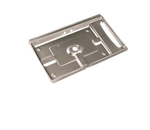
Continuous Hinges
A continuous hinge, also known as a piano hinge, is a long, single hinge that runs the full length of a door, cabinet, lid, or enclosure entrance. They are often used for heavy doors that are subject to a lot of use and abuse.
Why Choose Us
Quality assurance
Our A strong Quality Management Department ensures that all forks meet highest quality standards.
Reasonable price
Our experienced team focuses daily on supplying you the right product at the right time for the right price.
Customer Service
We prioritize open communication to address our clients' specific requirements and deliver personalized solutions.
Technical Support
Our team of experts is available to assist with troubleshooting, answer technical inquiries, and provide guidance.


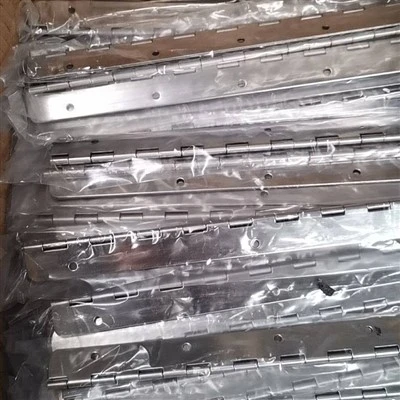
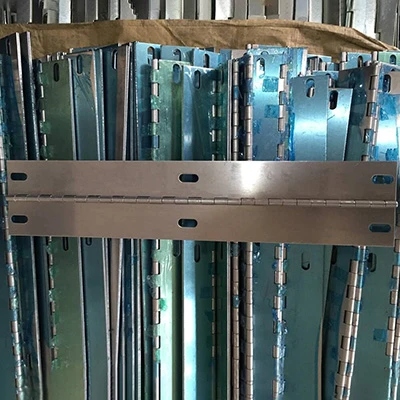
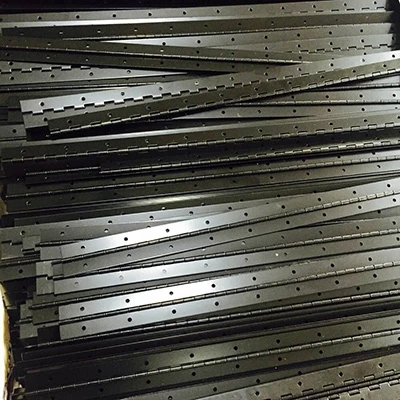

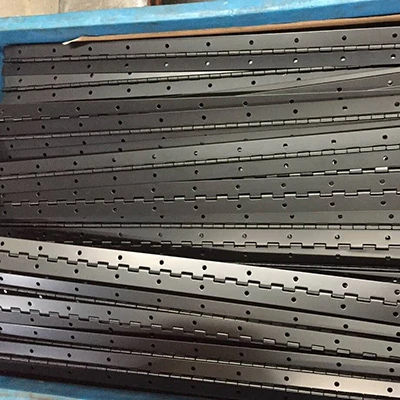

Conventional butt hinges are used at regular intervals on a door frame to fix and control their movement. Piano hinges are different because they run across the length of a door or lid creating a more seamless flow of operations. Here are some of the benefits that continuous piano hinges offer in terms of construction and installation:
Equal weight distribution:One of the biggest advantages that commercial door piano hinges or normal ones is that they distribute the weight of the door equally throughout its length. This is more efficient and seamless when installing heavier lids or doors during construction.
Easy maintenance: Small piano hinges are also available if personal preferences of the homeowner or installation specific requirements demand their use. They are easier to maintain especially when used in smaller sizes.
Durability: Since the weight of the door is equally distributed with a piano, they are stronger and more durable. This provides numerous benefits in commercial applications mostly.
Security: The aspect of higher durability also highlights another benefit of piano hinges which is added security. Continuous piano hinges like these Stainless Steel ones offer exceptional strength when safety is a concern during installation in a home or office.
Types of Continuous Hinges
Continuous hinges are made from a variety of materials that include metals such as steel, stainless steel, aluminum, nickel, brass, plastics, and fiber. The many uses of continuous hinges include grades classified for commercial, residential, heavy duty, military, and marine use.
Carbon-Kevlar Continuous Hinges
Carbon-Kevlar continuous hinges are made from carbon fiber with a flexible gap between the wings. Unlike gear, pin and barrel, and pin and barrel plastic hinges, carbon-Kevlar continuous hinges are one unit with a flexible space between the wings that serves the same function as a pin in a barrel. The flex unit is woven Kevlar that has urethane injected into it.
As with all continuous hinges, carbon-Kevlar continuous hinges come in various sizes and come as heavy duty hinges with a double Kevlar layer.
Friction Continuous Hinges
Friction continuous hinges, also known as torque hinges, use internal friction to be held in position. When a door or lid is opened, the hinge keeps the door of the application in a set position, preventing it from accidentally closing. Friction continuous hinges are designed in accordance with the axial and radial tensile load strength necessary to support a lid or door and hold it in position.
Geared Continuous Hinges
Geared continuous hinges are designed for high traffic areas such as stores, businesses, or offices. They have geared teeth that fit under a cap with gears running the full length of the hinge. Due to the types of applications where they are used, geared teeth continuous hinges are made of highly resilient, durable, and heavy duty materials.
There are many kinds of geared teeth continuous hinges, with each having the common feature of the gears being placed in a concealed leaf similar to a channel.
Interleaf Continuous Hinges
The interleaf continuous hinge drastically limits the clearance gap found in other continuous hinges by its unique design. The normal clearance gap for most continuous hinges is 12 mm. The interleaf continuous hinge cuts the clearance gap to 3 mm. The unique configuration of the interleaf continuous hinge significantly changes the amount of time necessary for hinge installation.
Pin and Barrel Continuous Hinges
Pin and barrel continuous hinges have a long barrel that runs the full length of the hinge with a pin inserted in the barrel. They are like traditional three to five inch door hinges but with a far longer barrel and pin, up to ten feet. Some designs of pin and barrel continuous hinges have edge protectors that wrap around the edge of the door to add greater strength and are capable of carrying additional weight. The wrap can be single or double, depending on the needs of the customer.
Much like geared continuous hinges, pin and barrel continuous hinges are manufactured to carry heavier loads.
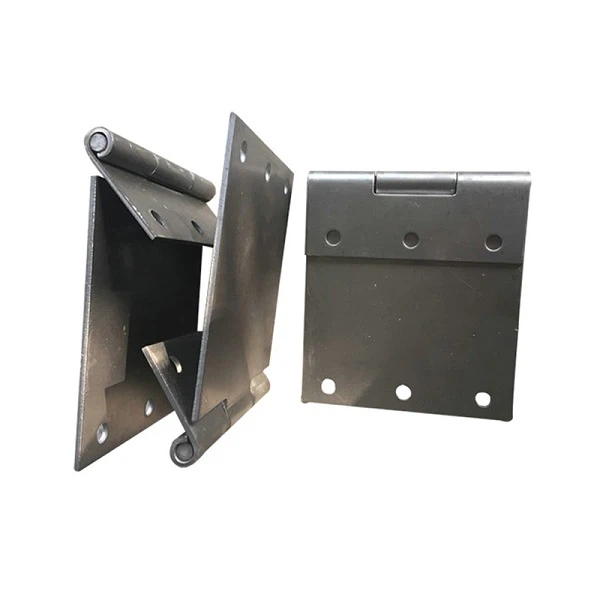
Continuous hinges are an excellent solution to hinging any lid or door with a sleek, high-quality, aesthetic appeal. They provide alignment over the whole length of the application whilst achieving even distribution of the load. From traditional hand-made cabinetry to heavy duty doors in secure and arduous environments, continuous hinges offer an elegant aesthetic as well as enhanced security and safety. They are an excellent alternative to butt hinges, ideal for a variety of applications and environments.
Continuous hinges are the perfect solution for a range of applications from high traffic commercial environments, that require robust heavy-duty hinges, to cabinets where light duty hinges are best suited. Apart from being used on pianos, here are some other key applications for continuous hinges:
Electric doors
Barn Doors
Sheet metal work
Cabinetry
Toolboxes
Electrical doors
Blast doors
Warehouse doors
When shopping for hinges, you may come across continuous hinges. They are mechanical bearings that allow a limited angle of rotation between two objects. You can install them on doors, gates, cabinets and other objects. Continuous hinges work like most other hinges by allowing these objects to rotate. Below are five facts about continuous hinges.
Features a Knuckle and Pin
They may be longer than most other hinges, but continuous hinges still feature a knuckle and pin. The knuckle is the interlocked middle section of a hinge. Both traditional hinges and continuous hinges consist of two leafs. The leafs interlock together while subsequently forming a knuckle. A pin is placed through the center of the knuckle to hold the two leafs together.
Also Known as Piano Hinges
Continuous hinges are also known as piano hinges. This is because they were originally used on pianos. Pianos have a removable lid covering the keys. Lifting the lid will expose the keys so that you can play the piano. Most pianos have a single continuous hinge or "piano" hinge that connects the lid to the base of the piano.
Opens to a Full 270 Degrees
Continuous hinges can open to a full 270 degrees. With such a wide angle of rotation, they are versatile and easy to use. Other hinges offer a narrower and more limited angle of rotation. Once installed, you won't be able to pull them very far. For a wide angle of rotation, look no further than continuous hinges. Continuous hinges support up to 270 degrees of rotation, making them perfect for a variety of objects.
Typically Made of Steel
Most continuous hinges are made of steel. Stainless steel continuous hinges are a popular choice for consumer and commercial applications alike. As you may know, stainless steel is an alloy of iron. If contains iron mixed with carbon, chromium and other elements. The chromium helps to protect the steel from corrosion, whereas the carbon makes the steel stronger. Regardless, stainless steel and other types of steel are commonly used in the production of continuous hinges.
Available With or Without Holes
You can find continuous hinges with holes, and you can find them without holes. Holes, of course, are used for installation. After placing a continuous hinge against the objects — such as a door and a frame — you can drive fasteners through the holes. You can order continuous hinges either with or without holes.
Installation of the Surface Continuous Hinge
Before you begin retrofitting a door with any type of continuous hinge you need to measure the door and the opening in which it fits. As mentioned earlier, a surface-mounted continuous hinge requires about 5/32 inch between the door and the jamb on all sides. Some locksmiths insert slotted screwdrivers on all sides to shim the door while others make use of tongue suppressors or popsicle sticks. Take your pick.
Consider the following steps as a general explanation of how to install a full-surface continuous hinge in an average door opening. However, always refer to the hinge manufacturer's installation instructions before proceeding. Also included is a list of manufacturers as well as installation/service tips that follow.
Remove the door from the frame and strip the hardware from it.
Remove the pivots or other hinges from the door.
Shim the door on all sides, being careful to maintain proper spacing on all sides.
Measure the height of the door and cut the continuous hinge accordingly.
Mount the hinge to the frame first and then the door (Some experts say to mount it first to the door).
Use the screws and other hardware provided by the hinge manufacturer. Substituting may place the door installation in jeopardy.
Be sure to use several through-bolts so the door cannot be removed from the continuous hinge from outside. Be sure to space them over the length of the door and frame.
Where applicable, install a hinge cover over both of the extended leafs.
Installation and Service Tips
● Cover the spot where the mortise hinges were installed on the door and door frame. You can buy filler plates or make your own.
● Keep a variety of fast-drying spray paints of various colors on hand in the van so you can paint the filler plates or solve any other problem you may have.
● You can make filler plates in your shop using a flat piece of aluminum, cutting it to length. Keep a supply of them on the van for occasions such as this.
● You also can make a hinge plate by cutting the pin assembly from the flanges that attach to the door and the frame.
● Many times the metal frame will be filled with concrete. Instead of using regular drill bits to drill the holes for the continuous hinge, use drill-tip screws because they cost a lot less than drill bits. Then drill the concrete using a regular masonry drill bit.
● When preparing to mount the surface-mounted continuous hinge to the door frame, use a sliding combination square and a pencil to draw a line to assure the hinge is straight in reference to the frame.
● This may be a good time to install a new threshold. Often times the original weatherseal is worn or its missing altogether.
● According to Kowal, the ideal scenario is to place the center bend of the new hinge where the door and the jamb come together. But even when you're dealing with a half frame situation, the door will open and close perfectly fine.
● Install the self-tapping screws that come with the hinge, but add through-bolts along the door to assure that the hinge remains in adjustment for years to come. Space them out along the hinge to assure better security.
Our Factory
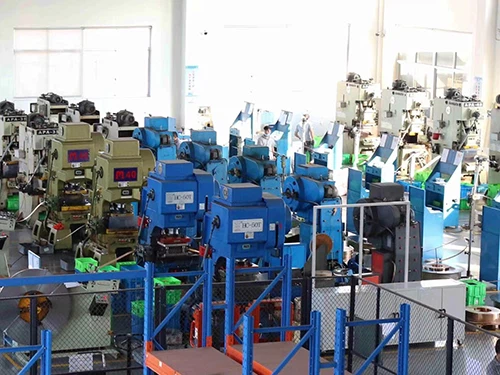
JOYEAR manufactures direct replacement forks for all the main forklift turck brands. Our daily motivation and passion is the development of advanced solutions to improve your safety, precision and efficiency. Working together with you, we are constantly working on new solutions that make JOYEAR forks even better and perfect for the application. As a leading manufacturer, we have the ability to manufacture forks individually with regard to form, design and quantity to ensure that you remain flexible and are always one crucial step ahead of the competition. The JOYEAR solutions meet the highest demands on manufacturing quality, reliability and longevity. Always with an eye towards safety during everyday operations.
FAQ