


Forklift Forks
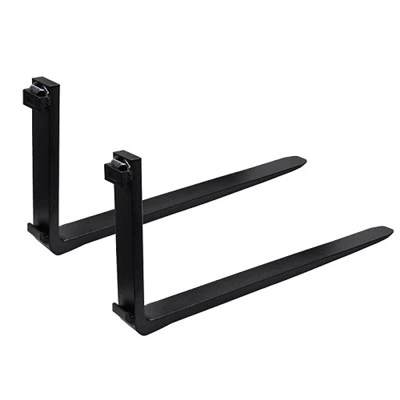
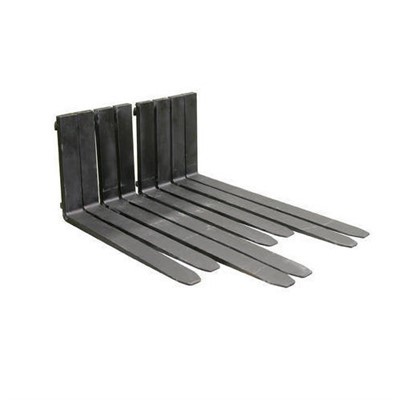
Forklift forks, also known as tines or blades, are the metal arms on a forklift that are used to lift, support, and carry loads. They are an essential part of every forklift and are designed to make direct contact with the load from the bottom.
Why Choose Us
Quality assurance
Our A strong Quality Management Department ensures that all forks meet highest quality standards.
Reasonable price
Our experienced team focuses daily on supplying you the right product at the right time for the right price.
Customer Service
We prioritize open communication to address our clients' specific requirements and deliver personalized solutions.
Technical Support
Our team of experts is available to assist with troubleshooting, answer technical inquiries, and provide guidance.




Materials and Build of Forklift Forks
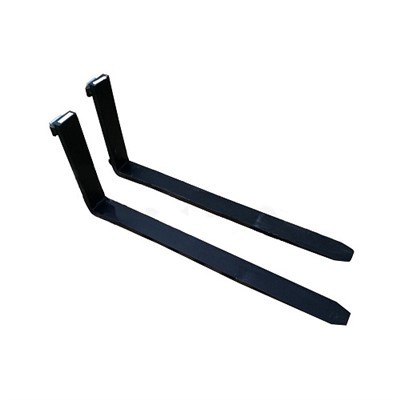
Forklift forks are the metal arms you see on a forklift. They are the parts that go under the load to lift it up. These forks play a big role in moving things around safely in places like warehouses and construction sites.
The size and shape of the forks, such as their length and width, are important. They need to match the size of the load they are lifting. This match is what makes a forklift work well and safely.
Most forklift forks are made of tough steel. Steel is strong and can hold heavy things without bending or breaking. This strength is crucial because forklifts often carry heavy loads. The thickness and width of the forks are also key factors.
They must be thick enough to handle the weight and wide enough to properly support the load. Some forklifts have special forks, like long forklift forks or forklift extension forks, for different jobs. The distance between the forks can also be adjusted.
This flexibility helps the forklift handle many different sizes and types of loads. Measuring the forks correctly is important to ensure they fit the load correctly.
Types and Uses of Forklift Forks

Forklift forks can also be referred to as blades or tines. Different styles of forks have specific rated load capacities to satisfy the requirements of each type of forklift. The individual components of a forklift fork are:
Tip – End of the blade — the first point of contact with loads at the insertion point.
Blade – Lower part of the L-shaped fork that supports loads during movement and carrying.
Shank – Upright support of the L-shape that supports the blade at the bottom.
Heel – Connection point between blade and shank of the fork.
Hooks – Located on the upper and lower part of the shank to attach to the forklift.
Pin Lock – Mechanism placed on the top hook used to change the positioning of forks once they're on the vehicle carriage. Also known as locking pins and latch pins.
Taper – Point of the blade that makes it possible to pick up the load. There are several levels of taper thickness.
Fork construction follows universally accepted production standards, including high-grade steel and alloys, comprehensive heat treatment, and automated welding of upper and lower hooks.
As a vital element of your forklift operation, inspect the condition of your forks as part of your forklift routine maintenance. OSHA recommends that operators conduct daily inspections of the vehicle before use to ensure safe operation.
These classes define the carriage height that they can mount to.
Class 2 = 16″ Carriage Height (1500-5500 lbs. capacity)
Class 3 = 20″ Carriage Height (6000-11,000 lbs. capacity)
Class 4 = 25″ Carriage Height (11,500-17,500 lbs. capacity)
Class 5 = 29″ Carriage Height (18,000-up lbs. capacity)
After we get the style of fork nailed down, next we need to establish the proper length, width, and thickness of the forks. There are usually a couple things to consider with dimensions; maintaining capacity limits and being able to properly support or fit into a load.
Fork Length - The most common fork length is 42-inchs for both Class II and Class III carriages. This size allows for a standard 48-inch length pallet to be adequately supported without the fork tips protruding and possibly damaging whatever is behind the skid.
Fork Width - Fork width is commonly 4-inches for Class II, 5-inches for Class III, and 6-inches for Class IV.
Fork Thickness - Typically, the fork thickness is selected mainly to maintain capacity.

There might be more forklift fork options than you know. Forklift forks are designed for specific functions and as there are many different ways that forklifts support projects and organizations, there are many different types of forks to match. Toyota Forklifts published a list of some of the varied types of forks available, evoking the loquacious tallying of shrimp dishes by Bubba in Forrest Gump, in a blog. Likewise, we've listed some of the common forklift fork options and their associated uses. Check it out:
- Block Forks - Block forks are designed to move blocks or bricks around a job site.
- Stainless Steel Clad Forks - Stainless steel clad forks are used in highly sanitary applications such as the food and beverage industry.
- Fork Extensions - Fork extensions for forklifts increase the length of your existing forks, which increases the versatility and load-bearing power of the equipment. They allow forklifts and their operators to handle large and odd-shaped loads with better stability.
- Shaft Forks - Shaft forks are created for pin-type carriages. This kind of fork is mounted on a pole on the carriage. These are used to suit all pin-type carriages and are also commonly used on telehandlers and wheel loaders.
- Quick Disconnect Forks - Quick disconnect forks are designed for quicker removal and installation. This is made possible by a single hanging point which differs from the standard hang-on modal.
- Lumber Forks - lumber forks are specifically engineered for applications involving stacks of lumber. This function is achieved with custom, finely tapered tips which can be found in a variety of sizes/modals.
- Spark Retardant Forks - Spark retardant forks are ideal for environments containing hazardous materials. These forks are engineered to resist sparks by incorporating a coat of brass in the design. For projects containing significant levels of flammable chemicals, spark retardant forks may be essential.
- Bolt-On Forks - Bolt-on forks are a common choice for large forklifts and associated applications. These forks are designed to limit fork movement and are ideal for functions which require forks to stay in place. Holes in the fork shank facilitate the bolting of forks to the fork carriage. Because of this design, the load-bearing capacity is lower than standard forks and are not right for every application.
- Folding Forks - Folding forks are hinged which allow for simple foldability. This is ideal for machines that often need to maneuver through tight spaces (such as elevators).
- Gypsum Forks - Gypsum forks are specifically engineered to handle gypsum wallboard and similar materials. Slide-in pads for the upright part of the fork is often the avenue manufacturers take to achieve the unique design necessary to efficiently handle these materials.
- Inverted Fork - Inverted forks, or upside down forks, are engineered to be mounted upside down. They are often used to lift large bags with loops and similar loads. These forks are also ideal for material handling in low ceiling areas.
While this list does not cover all the types of forklift forks on the market, it may provide a general idea on the options and applications available to forklift owners/users
Our Factory
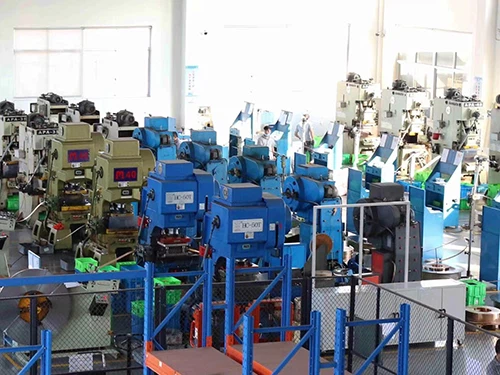
JOYEAR manufactures direct replacement forks for all the main forklift turck brands. Our daily motivation and passion is the development of advanced solutions to improve your safety, precision and efficiency. Working together with you, we are constantly working on new solutions that make JOYEAR forks even better and perfect for the application. As a leading manufacturer, we have the ability to manufacture forks individually with regard to form, design and quantity to ensure that you remain flexible and are always one crucial step ahead of the competition. The JOYEAR solutions meet the highest demands on manufacturing quality, reliability and longevity. Always with an eye towards safety during everyday operations.
FAQ