



Blank Forks
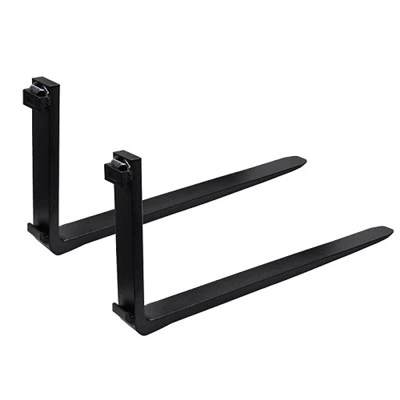
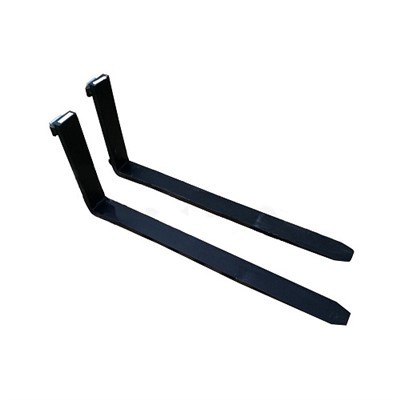
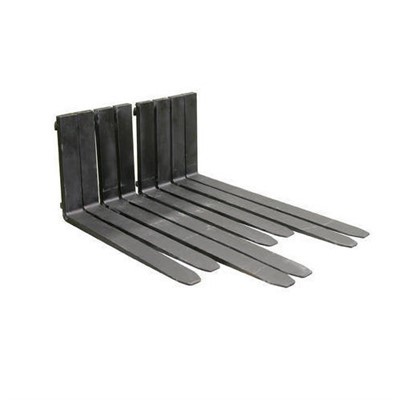
Blank forks are a type of forklift fork that don't have a suspension system. Blank forks are made of high-quality materials like chromium-manganese steel or boron-carbon steel, and are known for their mechanical strength and smooth finish. They also have identical fork tip heights, which means they can be combined with each other without the need to align them in pairs.
Why Choose Us
Quality assurance
Our A strong Quality Management Department ensures that all forks meet highest quality standards.
Reasonable price
Our experienced team focuses daily on supplying you the right product at the right time for the right price.
Customer Service
We prioritize open communication to address our clients' specific requirements and deliver personalized solutions.
Technical Support
Our team of experts is available to assist with troubleshooting, answer technical inquiries, and provide guidance.




High level of safety through tried-and-tested forks attachment
The attachment of the fork to the fork carriage is exceedingly important. After all, part of the load hangs directly on this, making it crucial for the operating reliability. Optimum use due to a high degree of dimensional accuracy and lateral pressing of flanks.
High level of mutual compatibility due to identical fork tip heights
Every fork is individually straightened out to the same angle, generally 90°. The fork tip height is thus identical, guaranteeing low wear rates and making the use of matched fork pairs unnecessary.
FlexHeat: The ideal heat treatment for your application
It isn't visible, but heat treatment plays a major role for the application, safety and the service life. The heat treatment is performed under strictly controlled temperature conditions during the entire manufacturing process and is always selected to perfectly suit the material, the load-bearing capacity, the dimensions and the application.
The best steel for best forks
Only the best steel ensures that the fork is able to withstand the highest loading. The steel used has been optimised especially for quality forks and precisely tailored to meet the requirements of the specific applications. This guarantees the necessary toughness, purity, hardness, workability and ability to withstand severe long-term stress.

Dimensions of forklift forks are normally given as width (W) x thickness (T) x Length (L), in combination with the class. For example 120 x 50 x 2400, 3B.
The main dimensions are:
Carriage plate height (C) = Forks (tines) are mounted on a forklift carriage.
Fork drop (D) = The fork drop is measure from the top of the lower hook to the floor
Length of fork (L) – Measure from the end of the tip to the shank. Length can be given in mm or inches, common lengths are 48" inch, 72" inch and 96" inch.
Width (W) = Width of the fork at its widest point
Thickness (T) = Thickness of the forks is measure on the shank. To measure if the forks have worn then compare the thickness of the blade to the thickness of the shank.
Spread – This is the width between the forks from outside edge to outside edge
Forklift forks, also called blades or tynes, are measured by the width, length, and thickness of the fork. To get precise measurements, you may want to use a tool like a fork caliper. Here's how to measure each of these three key dimensions:
Fork width: Measure the fork from side to side.
Fork length: Measure the fork from the front of the fork to the end of the tip.
Fork thickness: Measure the fork from the shank back to the shank face. It's important to use the back side of the fork, rather than the bottom because the bottom of the fork wears down from its original thickness with use.
Generally, the greater the fork's width and length, the greater the fork's lifting capacity. Sometimes, the thickness of the fork can be the same across forks with different capacities.
Keep in mind that the various parts of a forklift truck—including the forks, mast, forklift carrier or carriage, and attachments—have their own capacities. These parts all contribute to the overall load and lifting capacities of the machine. Understanding the individual capacities of the parts helps you know the capabilities and limitations of your forklift.
For example, your forks may have a higher capacity than your truck. If that's the case, go by the truck capacity rather than the fork capacity. Your forklift operator should also consider the load center of the vehicle because that impacts its capacity allocation.
Spacing Forklift Forks: Finding the Ideal Configuration
What's the ideal spacing for forklift forks? You may ask. If you've ever worked with forklifts, you know they're like the Swiss Army knives of the warehouse world.
These machines can carry and lift a wide range of loads, making them indispensable tools. But this question often gets overlooked. Well, my friends, in this deep dive, we're going to explore why spacing forklift forks matters!
We'll also peak at the various configurations available, and how to pinpoint the perfect setup for your unique needs.
Basics of Ideal Spacing for Forklift Forks
Before we dive into the fascinating world of fork spacing, let's start with the basics. Forklift forks, also known as tines or blades, are those two arms sticking out at the front of a forklift. They're like the forklift's hands, and they play a pivotal role in carrying and lifting goods. Forklifts come in all shapes and sizes, and the spacing and length of those forks can vary to accommodate different types of loads.
Why Fork Spacing is Crucial
Now, you might be wondering, "Why is the spacing of forklift forks such a big deal?" Well, wonder no more because we've got the answers. Read on to see what they are!
Load Stability
Fork spacing determines how stable a load will be during transport. Proper spacing prevents loads from wobbling, shifting, or taking a nosedive off the forks. This not only keeps your goods safe but also reduces the risk of accidents.
Compatibility
Loads come in all shapes and sizes, and you need your forklift to handle them all. The right fork spacing ensures that your forklift can carry a wide range of loads efficiently, from standard pallets to odd-shaped items.
Safety
Fork spacing isn't only about convenience; it's about safety. Incorrect spacing can lead to accidents, injuries, and damage to goods and your forklift. Safety should always be a top priority.
Efficiency
Having the right fork spacing can make your operations run like a well-oiled machine. It means faster and more secure loading and unloading, which translates to less downtime and increased productivity.
Types of Fork Spacing Configurations
Now, let's talk about the different fork spacing configurations at your disposal.
Standard Ideal Spacing for Forklift Forks
This is your run-of-the-mill fork spacing, usually around 43 inches apart. It's great for handling regular pallets and general warehouse tasks. It strikes a balance between stability and versatility.
Wide Spacing
Need to carry wider loads like plywood sheets, lumber, or hefty machinery? Wide spacing sets the forks further apart, providing more stability for wide and heavy items.
Narrow Spacing
Sometimes, you're dealing with smaller pallets or items that require precise placement. Narrow spacing brings the forks closer together, enhancing maneuverability in tight spots.
Adjustable Spacing
If you like versatility, adjustable fork spacing is your jam. Some forklifts come with this feature, allowing operators to change the distance between the forks as needed. It's like having a forklift that can adapt to any load.
How to Determine Ideal Spacing for Forklift Forks
Finding the perfect fork spacing configuration for your forklift involves a bit of detective work. Here's your step-by-step guide...
● Analyze Your Load Requirements
Take a good look at the kinds of loads you typically handle. Consider their dimensions, weights, and any quirks they might have. Are your loads consistent, or do they vary wildly in size and shape?
● Check Your Workspace
Check out your work environment. Are there narrow aisles or cramped spaces where maneuverability is key? Or do you often deal with wide and oversized loads that need extra stability?
● Manufacturer Recommendations
Don't forget to consult your forklift's manufacturer. They usually provide recommendations based on the forklift's capacity and intended use.
● Future-Proofing
Think ahead. Are your operations likely to change? Planning for future requirements can save you from needing constant fork adjustments or even a new forklift.
● Safety First
Always focus on workplace safety. Make sure your chosen fork spacing adheres to safety standards and guidelines. Never compromise safety for convenience.
● Test and Tweak
Once you've settled on a fork spacing configuration, do some test runs with various loads. Make sure everything feels stable and manageable. If you need to fine-tune the setup, go for it.
● Operator Training
Last but not least, ensure your forklift operators are well-trained. You want to be sure they have skills in handling the specific fork spacing configuration. Proper training is the key to safe and efficient forklift operation.
Maintenance and Inspection
After nailing down the ideal fork spacing, set up a maintenance and inspection routine. Regularly check the forks for wear, damage, or any signs of misalignment. Any issues with the forks can jeopardize safety and load stability.
One thing to check is the tires of your forklift. Proper tire care will help you extend their life! This cuts costs and operation interruptions.
When the forks are not compatible with the equipment that they are attached to or the materials that they are handling, it can ultimately lead to:
Various safety hazards
Operational inefficiencies
Potential damage to the equipment & the load
Here are some of the issues that could possibly arise when incompatible forklift forks are being utilized.
Safety Hazards: Incompatible forks may not be able to securely attach to your equipment. Not only that, but a set of incompatible forks are not likely to distribute the load evenly, either. As a result, this could lead to instability, tipping or accidental load drops, which would then cause a serious safety risk.
Structural Damage: Using forks that are not compatible – like having the wrong attachment mechanism – can cause structural damage to your material handling equipment. Structural damage is going to, eventually, result in costly repairs and downtime.
Load Handling Problems: Incompatible forks are not going to have the ability to properly engage with pallets or other types of heavy loads. This will make it challenging to lift, move and position loads accurately. Not only that, but the load handling problems can then lead to reduced operational efficiency, as well.
Reduced Load Capacity: All material handling equipment is designed with specific load capacities in mind. Using a set of forklift forks that exceed the load capacity of your equipment can strain the machinery's lifting mechanism, as well as compromise the stability.
Wear & Tear: Incompatible forks could cause excessive wear and tear on the equipment's carriage or attachment points. Therefore, if you continuously use forks that are not compatible, the overall lifespan of your equipment is going to be significantly reduced.

Our Factory
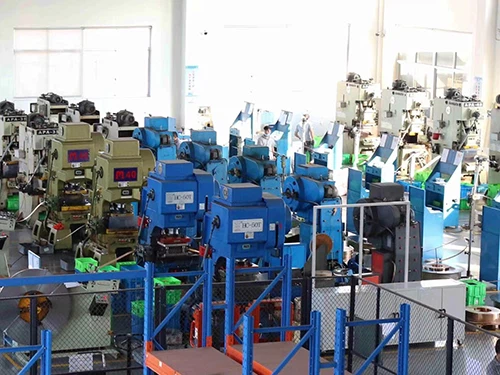
JOYEAR manufactures direct replacement forks for all the main forklift turck brands. Our daily motivation and passion is the development of advanced solutions to improve your safety, precision and efficiency. Working together with you, we are constantly working on new solutions that make JOYEAR forks even better and perfect for the application. As a leading manufacturer, we have the ability to manufacture forks individually with regard to form, design and quantity to ensure that you remain flexible and are always one crucial step ahead of the competition. The JOYEAR solutions meet the highest demands on manufacturing quality, reliability and longevity. Always with an eye towards safety during everyday operations.
FAQ