





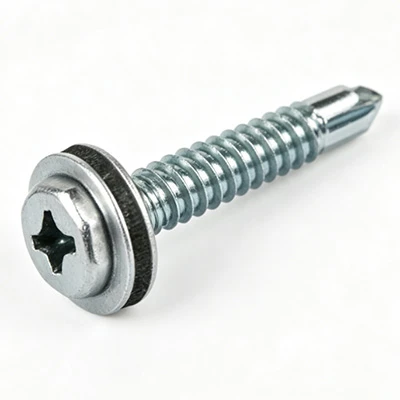
Bolts For Steel Beams
Weight Range : 0.5g–500kg
Dimensional tolerance : ±0.1 mm
Please provide product specifications so that we can offer specific pricing and MOQ.
The residual compressive stress layer introduced by the thread roll forming process of Bolts For Steel Beams at the bottom of the thread significantly affects the fatigue resistance. According to the SAE J1237 test method for the fatigue life of fastener rolling threads, after rolling the M22 grade 10.9 bolts, the surface hardness of the thread bottom can reach HRC 38 to 42, which is about 15% higher than the base hardness. At the same time, according to ASTM In the E606 low-cycle fatigue test, when the axial stress amplitude is 150 MPa, the number of failure cycles of rolled threaded bolts can reach more than 4 million times, while cutting threads can only maintain 2.5 million times under the same stress, and the fatigue life is extended by about 60%. During the manufacturing process, three pieces from each batch need to be randomly inspected for magnetic particle testing to confirm that there are no micro-cracks or folding defects at the thread root according to ISO 9934 standards. The Vickers hardness of the finished bolts must be stable in the range of 320 to 360 when measured according to ISO 6507 to ensure uniformity of the quenching structure, thereby providing reliable connections in high-rise building transfer beams and heavy-duty truss nodes.
Anti-corrosion solutions have a significant impact on the durable performance of steel beam bolts. Hot-dip galvanizing and Dacromet coatings perform very differently in different environments. According to the ASTM B117 salt spray test, when the thickness of the hot-dip galvanized layer is not less than 85 microns, it can withstand more than 1,000 hours in neutral salt spray before red rust appears, making it suitable for coastal atmospheric environments. Although the Dacromet coating is only 8 to 12 microns thick, its flaky zinc-aluminum structure can maintain no matrix corrosion for 800 hours when tested according to DIN 50021, and its absence of hydrogen embrittlement risk is particularly critical for high-strength bolts. According to the ISO 16047 torque-clamping force test method, the friction coefficient of Dacromet coating is between 0.08 and 0.15, which is more stable than that of hot-dip galvanizing from 0.15 to 0.25.
It reduces the actual preload force deviation from plus or minus 15% to plus or minus 8%, making the installation torque calculated according to VDI 2230 more repeatable. After installation, the torque coefficient must be retested in accordance with GB/T 3632 to ensure that the standard deviation of the torque coefficient of each batch of bolts does not exceed 0.02 to avoid uneven stress on the steel beam nodes due to discrete friction factors. Especially in long-span roofs of stadiums and driving beams of industrial plants, this control requirement is directly related to the long-term safety of the structure.
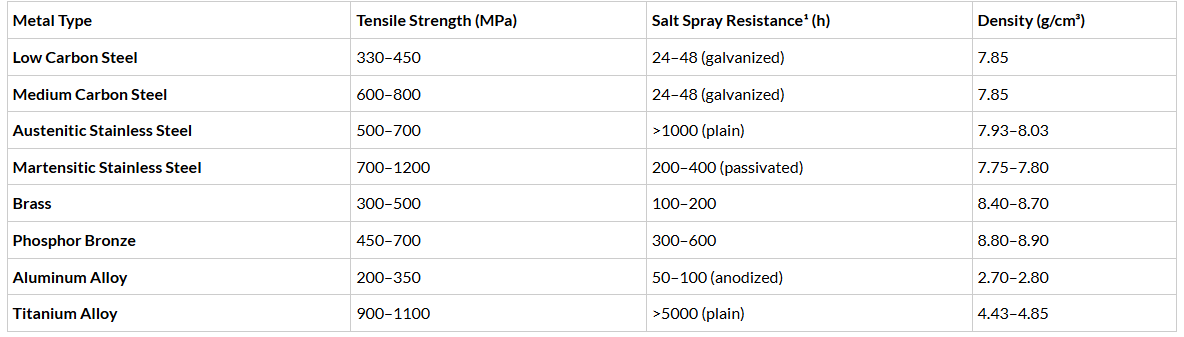
Parameters
Drawing Design & Confirm
Obtain drawings from customers or create drawings based on their specifications or samples.
The drawings, product raw materials, surface treatment, and other details are attested to by both parties.

Price & Order
Provide a quote, ensure that the order quantity is accurate, and include all relevant details,
such as the terms of payment, the terms of trade, the type of packaging, etc.

Production & Shipping
Follow the original drawings and samples exactly when producing the goods.
It was carefully packaged and delivered to the clients following a final inspection.


Hot Tags: bolts for steel beams, China bolts for steel beams manufacturers, suppliers, factory
Previous
No InformationYou Might Also Like



Send Inquiry