



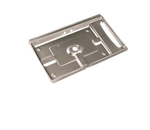


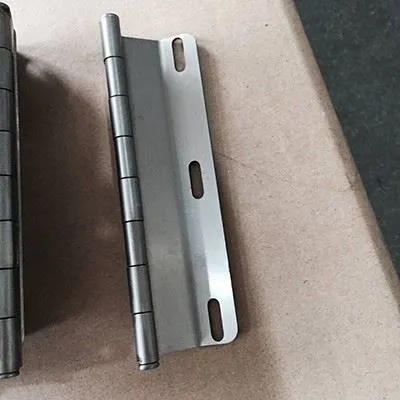
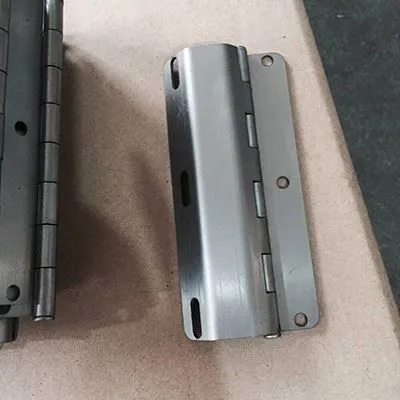

Cranked Piano Hinge
Weight Range : 0.5g–500kg
Dimensional tolerance : ±0.1 mm
Please provide product specifications so that we can offer specific pricing and MOQ.
The core of cranked piano hinge lies in its unique "Z"-shaped bending structure, which keeps the axis of rotation away from the mounting surface of the connector, thereby achieving a 180° completely flat position without interfering with each other. This feature is widely used in piano music stand flaps, stage monitor covers and folding workbenches. When the crank height is 15 mm and the blade width is 25 mm, the permanent deformation of the hinge is less than 0.3° after bearing a torque of 120 N·m. At the same time, the body is made of SUS316 stainless steel, which contains molybdenum to significantly improve its resistance to chloride ion corrosion. After a 96-hour neutral salt spray test, the rating reached level 10, making it especially suitable for outdoor performances or coastal venues.
In dynamic load scenarios, the wear resistance of the crank hinge determines the maintenance cycle of the equipment. The shaft core of this product has been carburized and heat treated, and the surface hardness reaches HV 600. With an oil-containing powder metallurgy copper sleeve, the initial starting torque is only 0.15 N·m. Under the conditions of a frequency of 15 times/minute and a load of 8 kg, the gap increment after the hinge is opened and closed continuously for 75,000 times does not exceed 0.12 mm, and there is no abnormal noise or sticking. In comparison, ordinary untreated stainless steel crank hinges will show obvious wear after about 40,000 times. Whether it is the slow-down top cover of a high-end piano or the floor access door of an aviation equipment, this hinge can meet demanding requirements with its advantages of low friction and high durability.
About Us
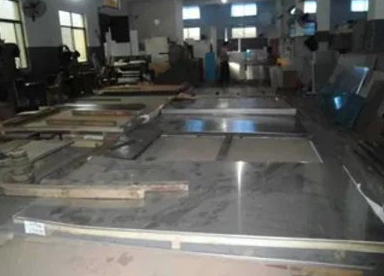
Joyear Metalwork specializes in producing various types of piano hinges. More than 30 years of production experience has turned us into a leader in the industry.
Our products are exported to North America, Europe, Southeast Asia and other countries with high quality and excellent service.
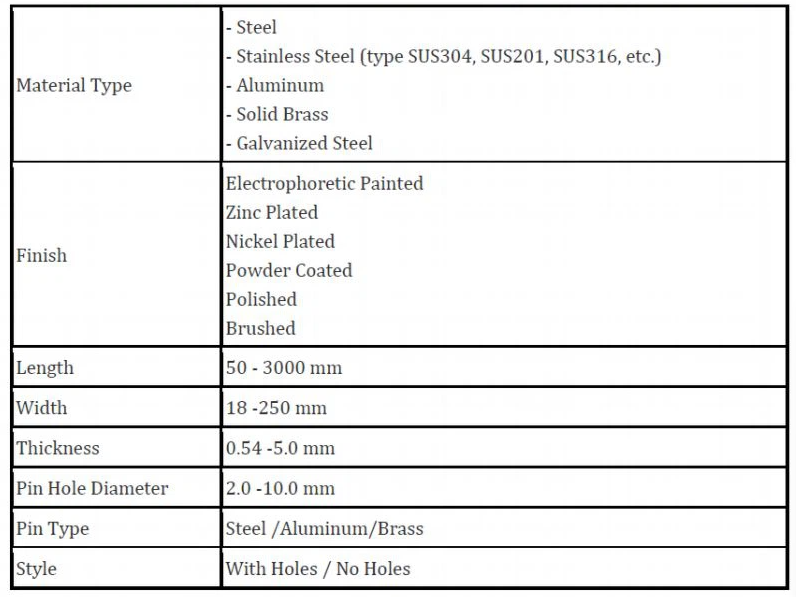
SPECIFICATION
Advantages

Absorb shock and protect connectors
The curved geometry of the crank can produce elastic deformation when subjected to a sudden impact, absorbing part of the impact energy. When the hinge withstands an instantaneous impact force of 150 N, the crank can deform approximately 0.3 mm without permanent damage. This buffering effect reduces the peak force transmitted to the screw hole by 38%. In contrast, rigid flat hinges will conduct almost all of the impact force to the wood or plastic substrate, easily causing screws to pull out or mounting holes to crack. It is especially suitable for equipment flips that are frequently bumped during stage transportation.
Stable starting torque
The relative angle between the hinge's axis core and the crank arm has been optimized so that the starting torque decay rate is only 12% within 100,000 opening and closing cycles. For example, the initial starting torque is 0.18 N·m, and it still remains at about 0.16 N·m after 100,000 uses. However, due to the lack of angle optimization of ordinary crank hinges, the starting torque usually drops by more than 35% after 100,000 times, causing the flap to close weakly or fall off on its own. This constant characteristic allows the piano top to maintain just the right damping feel after years of use.


Adapt to curved mounting surfaces
When the mounting surfaces of the two connectors are not parallel and the angle is within 3°, the crank hinge can still maintain a fit of more than 95% of the two blades by relying on the slight torsional deformation of its arm. However, ordinary flat hinges will partially warp when the angle between the mounting surfaces exceeds 1°, and the effective contact area drops to less than 80%. This adaptability allows the crank hinge to be installed on hand-shaped old pianos or special-shaped instrument cabinets without the need for precision milling of the base material, greatly reducing the difficulty of repair.
Axial limiter prevents cross movement
The partially narrowed structure designed at the root of the crank can serve as an axial stop, limiting the axial movement stroke to within 0.2 mm when no rivet heads are added at both ends of the shaft core. In comparison, the axial movement of ordinary piano hinges usually reaches 0.6 mm. After long-term use, the axis core may partially come out, causing the flap to shake or even get stuck. Even if the top cover of a piano using this hinge is not installed with an end cap, the axis cannot slide out on its own, further simplifying the assembly process and improving safety.

Why choose us

Reduce maintenance frequency
- The crank structure naturally guides dust and debris to non-friction areas, and the cleaning cycle can be extended to every 12 months, while ordinary hinges usually require cleaning every 3 months. After long-term use, maintenance hours are reduced by about 70%.
Improve appearance integrity
- After installation, the outer contour of the hinge is aligned parallel to the edge of the panel, making it visually neater. The crank design with arc transition avoids sharp edges and corners, giving the instrument or cabinet an integrated shape, which meets the aesthetic requirements of high-end products.
Compatible with different fasteners
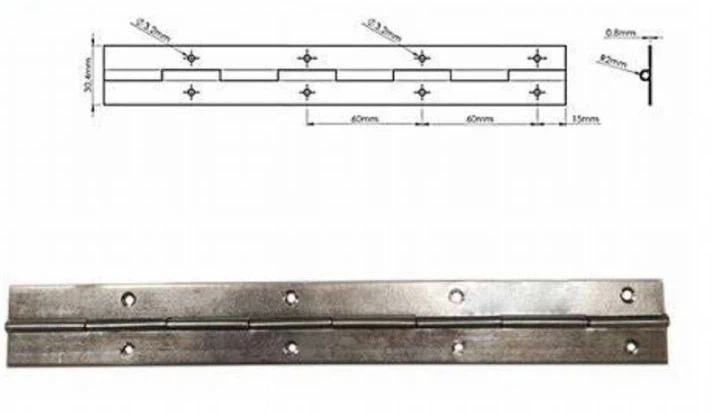
- The countersunk holes and round holes on the blades can be used interchangeably and can accommodate wood screws, machine screws or rivets. A single hinge supports three fixing methods. There is no need to replace accessories during on-site installation, and it can flexibly cope with different base materials.
Reduce parts count
- One crank hinge can achieve offset, rotation and limiting functions at the same time, without the need for additional spacers or positioning blocks. A single set of equipment can save 2 to 3 auxiliary parts, simplifying procurement and inventory management.

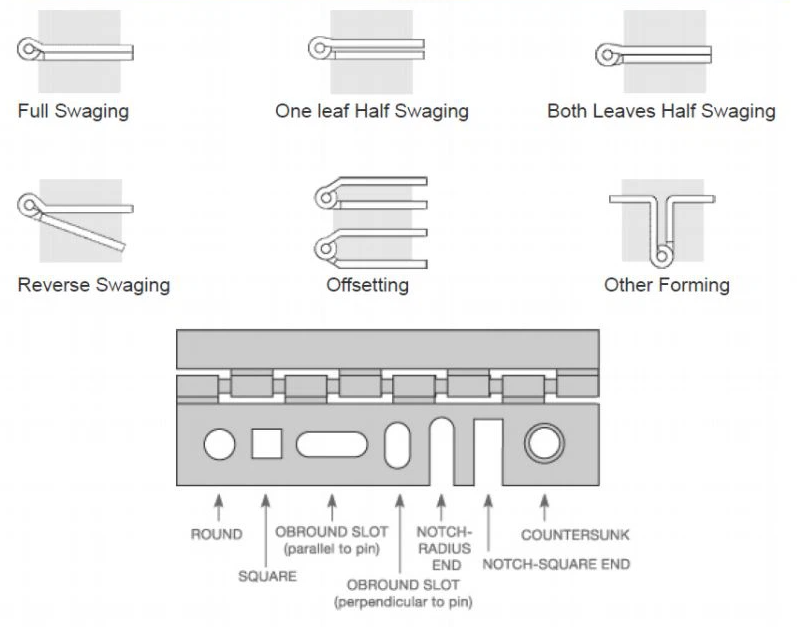
Leaf & Hole Type
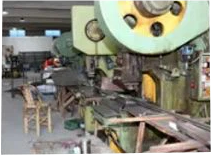
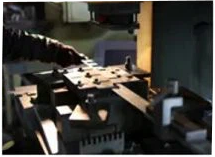
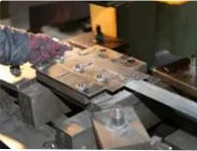
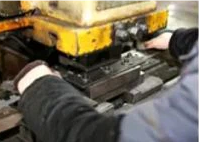
Tooling Manufacturing
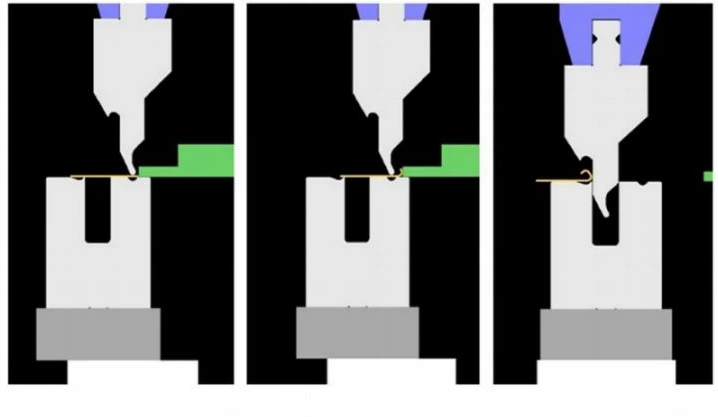
Make tooling according to the confirmed drawing, do the modification if needed while testing.
Sample Approval
Make first samples, send them to the customer for approval.

Production & Shipping
Strictly produce the goods as per the drawings and first samples.
Packed well after final inspection and ship to customers.

Drawing Design & Confirm
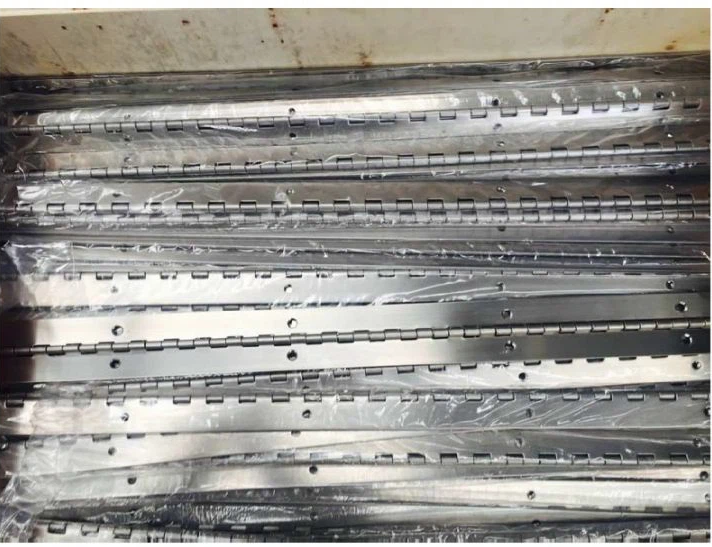
Get drawings from customers, or design drawings according to customers' details requests or sample.
Both parties confirm the drawings.
Price & Order
Quote and confirm order quantity, specify all the details including trade terms, payment terms, type of package, etc.

Hot Tags: cranked piano hinge, China cranked piano hinge manufacturers, suppliers, factory, 72 Inch Stainless Steel Piano Hinge, Brushed Piano Hinge, Heavy Duty Stainless Continuous Hinge, Mirror Surface Piano Hinge, SS304 Continuous Hinge, Stainless Steel Continuous Hinge
Previous
Extra Wide Piano HingeYou Might Also Like




Send Inquiry