As a supplier of slotted piano hinges, I've had the privilege of witnessing firsthand the widespread use and versatility of these hinges in various industries. However, like any product, slotted piano hinges come with their own set of disadvantages. In this blog post, I'll delve into these drawbacks to provide a comprehensive understanding for our customers and potential buyers.
Limited Load - Bearing Capacity
One of the primary disadvantages of slotted piano hinges is their relatively limited load - bearing capacity. Slotted piano hinges are typically designed with slots in the hinge leaves. These slots, while useful for some applications such as easy installation or adjustment, can weaken the overall structure of the hinge. When compared to solid - leaf piano hinges, slotted piano hinges may not be able to support heavy loads as effectively.
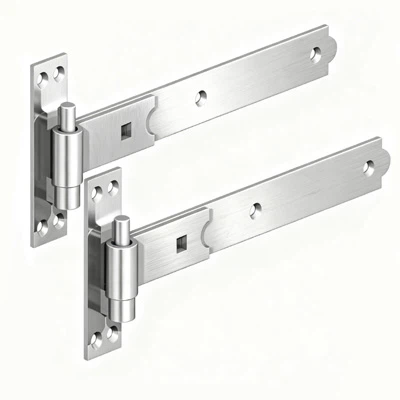
For example, in industrial settings where large and heavy doors or panels need to be supported, a slotted piano hinge might not be the best choice. The slots can cause stress concentrations, which may lead to premature failure of the hinge under heavy use. If you're looking for a hinge to support a heavy - duty application, you might want to consider alternatives like the Steel Strap Hinge. Steel strap hinges are often designed to handle higher loads and are more robust in construction.
Reduced Durability
The presence of slots in slotted piano hinges can also contribute to reduced durability. These slots can act as entry points for moisture, dust, and other contaminants. Over time, these contaminants can cause corrosion and wear within the hinge. Corrosion can weaken the metal of the hinge, leading to a shorter lifespan.
In environments where the hinge is exposed to harsh conditions, such as high humidity or chemical exposure, the slotted design can be a significant drawback. For instance, in marine applications or chemical processing plants, the slotted piano hinge may not hold up as well as a Coated Continuous Hinge. The coating on the continuous hinge provides an extra layer of protection against corrosion and environmental damage, increasing its durability.
Aesthetic Limitations
From an aesthetic perspective, slotted piano hinges may not be the most appealing option. The slots can give the hinge a somewhat industrial or utilitarian look. In applications where appearance is important, such as in high - end furniture or architectural designs, the slotted design may not fit the desired aesthetic.
For example, in a modern, minimalist interior design, a slotted piano hinge might stand out in an unflattering way. Designers and homeowners may prefer a more seamless and clean - looking hinge option. In such cases, a different type of hinge, like a concealed hinge, might be a better choice.


Installation Complexity
Installing slotted piano hinges can be more complex compared to some other types of hinges. The slots need to be properly aligned during installation, and if they are not, it can lead to problems with the hinge's functionality. Misaligned slots can cause the hinge to bind or not open and close smoothly.
This complexity can also increase the installation time and cost. If the installation is not done correctly, it can lead to premature wear and failure of the hinge. In contrast, some other types of hinges, like butt hinges, are generally easier to install and require less precision during the installation process.
Noise and Vibration
Slotted piano hinges can sometimes produce more noise and vibration during operation. The slots can create uneven surfaces within the hinge, which can cause rattling or squeaking when the hinge is opened or closed. This can be a nuisance in applications where quiet operation is desired, such as in residential doors or in environments where noise levels need to be kept to a minimum.
To mitigate this issue, lubrication can be used, but it may not completely eliminate the noise problem. In comparison, some other types of hinges, like ball - bearing hinges, are designed to operate more quietly.
Limited Adjustability
While the slots in slotted piano hinges can provide some adjustability, it is often limited compared to other hinge types. The slots are usually pre - defined, and the range of adjustment is restricted. In applications where precise adjustment is required, such as in the alignment of large doors or panels, a slotted piano hinge may not offer enough flexibility.
For instance, if you need to make fine - tuned adjustments to the position of a door to ensure a proper seal, a slotted piano hinge may not allow for the level of precision needed. In such cases, a hinge with more advanced adjustment features might be a better option.
Compatibility Issues
Slotted piano hinges may not be compatible with all types of materials or applications. For example, in applications where the hinge needs to be attached to a thin or delicate material, the slots in the hinge may cause the material to crack or break during installation.
Also, in some specialized applications, such as in aerospace or high - tech equipment, the slotted design may not meet the strict requirements for strength, precision, or environmental resistance. In these cases, more specialized hinge solutions, like Galvanized Steel Hinges, which offer better corrosion resistance and strength, may be more suitable.
Conclusion
While slotted piano hinges have their uses and advantages, it's important to be aware of their disadvantages. As a supplier, I understand that different applications have different requirements, and it's crucial to choose the right hinge for the job. If you're facing any of the issues mentioned above in your project, or if you're unsure which hinge is the best fit, I encourage you to reach out to us. Our team of experts can provide you with detailed information and guidance to help you make an informed decision. Whether you need a hinge for a small - scale project or a large - scale industrial application, we're here to assist you. Contact us today to discuss your hinge needs and start a productive procurement conversation.
References
- Engineering Handbook on Hinge Design and Applications
- Industry Standards for Hinge Manufacturing and Performance