Hey there! As a supplier of Skid Steer Loader Forks, I often get asked about how these nifty tools perform in low - ceiling areas. Well, let's dive right into it.
Understanding Skid Steer Loader Forks
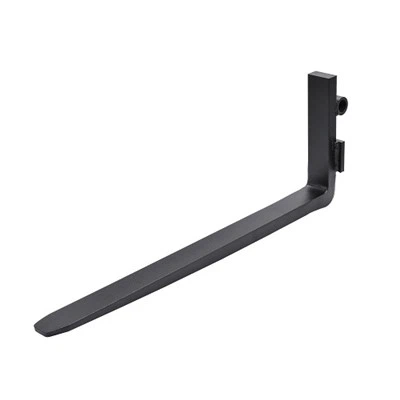
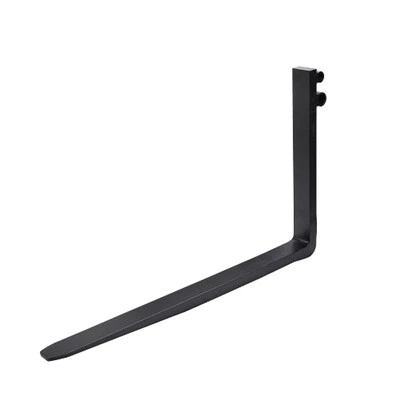
First off, for those who aren't too familiar, Skid Steer Loader Forks are attachments that can be added to skid steer loaders. They're super useful for lifting, moving, and stacking pallets, materials, and other heavy items. We offer a variety of options, like Skid Steers Attachments forks, Skid Mount Pallet Forks, and Heavy Duty Skid Steer Pallet Forks.
Challenges in Low - Ceiling Areas
Low - ceiling areas present a unique set of challenges for any equipment, and Skid Steer Loader Forks are no exception. The most obvious issue is the limited vertical space. You can't just raise the forks as high as you'd like without hitting the ceiling. This restricts the height to which you can lift loads, which can be a real pain when you're trying to stack pallets or move materials to elevated positions.
Another challenge is maneuverability. In tight, low - ceiling spaces, it can be difficult to turn the skid steer loader and position the forks accurately. You've got to be extra careful not to bump into the walls or the ceiling, which could damage both the equipment and the load.
How Skid Steer Loader Forks Can Excel in Low - Ceiling Areas
Despite these challenges, Skid Steer Loader Forks can still perform really well in low - ceiling areas. One of the key advantages is their compact size. Skid steer loaders are already known for their small footprint, and the forks add to this maneuverability. They can easily navigate through narrow aisles and tight spaces, which is crucial in low - ceiling environments.
The design of the forks also plays a big role. Many of our forks are adjustable, which means you can change the width between the forks to fit different pallet sizes. This flexibility allows you to handle a variety of loads in low - ceiling areas without having to worry about the forks being too wide or too narrow.
Moreover, the hydraulics on modern skid steer loaders are quite advanced. You can control the lifting and lowering of the forks with precision, which is essential when working in limited vertical space. You can make small, incremental adjustments to ensure that the load is lifted just enough to clear the ground without hitting the ceiling.
Tips for Using Skid Steer Loader Forks in Low - Ceiling Areas
If you're planning to use Skid Steer Loader Forks in a low - ceiling area, here are some tips to keep in mind.
- Measure the space: Before you start operating, measure the height of the ceiling and the dimensions of the area. This will give you a clear idea of how high you can lift the forks and how much space you have to maneuver.
- Use the right fork length: Choose forks that are the appropriate length for the job. Longer forks may not be suitable in low - ceiling areas as they can increase the overall height of the load.
- Take it slow: Maneuvering in low - ceiling areas requires patience. Drive the skid steer loader slowly and make small, deliberate movements to avoid any collisions.
- Keep the load low: Whenever possible, keep the load as close to the ground as you can. This reduces the risk of hitting the ceiling and also makes the load more stable.
Case Studies
Let me share a couple of real - world examples to illustrate how Skid Steer Loader Forks can perform in low - ceiling areas.
A local warehouse was facing a problem with limited ceiling height in one of its storage areas. They needed to move pallets of inventory in and out of the area efficiently. By using our Skid Mount Pallet Forks, they were able to navigate through the narrow aisles and lift the pallets just enough to clear the ground. The adjustable width of the forks allowed them to handle different pallet sizes, and the precise hydraulic control helped them avoid hitting the ceiling.
Another customer, a construction company, was working on an indoor renovation project with low - ceiling areas. They used our Heavy Duty Skid Steer Pallet Forks to move heavy building materials. The compact design of the skid steer loader and the forks allowed them to work in tight spaces, and they were able to complete the project on time without any issues related to the low ceiling.
Conclusion
In conclusion, Skid Steer Loader Forks can perform quite well in low - ceiling areas, provided you take the necessary precautions and use the right equipment. Their compact size, adjustable design, and precise hydraulic control make them a great choice for these challenging environments.


If you're in the market for Skid Steer Loader Forks and need to work in low - ceiling areas, we've got you covered. Our range of Skid Steers Attachments forks offers the quality and performance you need. Don't hesitate to reach out if you have any questions or want to discuss your specific requirements. We're here to help you find the perfect solution for your job.
References
- Industry reports on skid steer loader attachments
- Customer feedback and case studies from our business operations