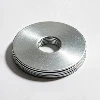

Copper washers are a staple in industries ranging from automotive to electronics, valued for their conductivity, malleability, and corrosion resistance. However, there are times when a copper washer isn't the best fit-whether due to cost constraints, availability issues, or specific performance requirements like extreme temperature tolerance or chemical resistance. If you're asking, "What to use instead of a copper washer?" you're not alone. In this comprehensive guide, we'll explore the top alternatives to copper washers, their key properties, ideal applications, and pros and cons. We'll also highlight how JOYEAR Metalwork-a leading manufacturer of precision metal components with over 15 years of expertise-can provide customized solutions tailored to your needs, backed by ISO certifications and advanced manufacturing capabilities.
Why Look for a Copper Washer Alternative?
Before diving into alternatives, it's important to understand why you might need one. Common reasons include:
- Cost: Copper can be more expensive than other materials, especially for high-volume projects.
- Specific performance gaps: Copper may lack the temperature resistance needed for extreme heat applications or the rigidity required for heavy-load machinery.
- Material compatibility: In some cases, copper can react with other metals (e.g., aluminum) or chemicals, leading to galvanic corrosion.
- Availability: For urgent projects, alternative materials may be more readily available.
- Environmental or regulatory requirements: Certain industries require eco-friendly or RoHS-compliant materials that copper may not meet.
The key to choosing the right alternative is matching the material's properties to your application's needs-whether that's sealing, conductivity, vibration dampening, or corrosion resistance. Below, we break down the best copper washer substitutes by material type, along with insights from JOYEAR's engineering team on how to select and source high-quality alternatives.
Key Factors to Consider When Choosing a Copper Washer Alternative
Before selecting a replacement, evaluate these critical factors to ensure compatibility and performance:
- Temperature range: Will the washer be exposed to extreme heat (e.g., engine components) or cold (e.g., outdoor equipment)?
- Pressure tolerance: Does the application require resistance to high pressure (e.g., hydraulic systems) or low pressure (e.g., electronic devices)?
- Chemical exposure: Will the washer come into contact with fuels, oils, acids, or saltwater?
- Conductivity needs: Does the application require electrical or thermal conductivity (e.g., electronics) or insulation (e.g., wiring)?
- Sealing requirements: Is the primary function to prevent leaks (e.g., plumbing) or distribute pressure (e.g., mechanical joints)?
- Material compatibility: Will the alternative react with adjacent metals or surfaces?
- Cost and volume: Are you working on a budget or need large-scale production?
By answering these questions, you'll narrow down the best alternatives for your specific use case. For custom requirements, JOYEAR's ODM/OEM services can help design precision components that meet your exact specifications-more on that later.
Top Metal Alternatives to Copper Washers
Metal alternatives are ideal for applications requiring durability, conductivity, or resistance to high pressure/temperatures. They're often used in automotive, industrial, and construction settings where materials may fail.
1. Steel Washers (Carbon Steel & Alloy Steel)
Properties: Steel washers are strong, rigid, and cost-effective. Carbon steel offers basic durability, while alloy steel (e.g., chromium-vanadium) provides enhanced strength and corrosion resistance when coated (e.g., zinc-plated, galvanized).
Ideal applications: Heavy machinery, construction equipment, automotive suspension systems, and general industrial use where conductivity is not a priority.
Pros: Low cost, high strength, wide availability, and compatibility with most metals.
Cons: Prone to rust without a protective coating; poor electrical/thermal conductivity compared to copper.
JOYEAR Connection: JOYEAR's sheet metal fabrication capabilities include precision-cut steel components, ideal for large-scale projects requiring cost-effective, durable washers. Their ISO 9001:2015-certified quality control ensures consistent thickness and tolerances, critical for heavy-load applications. Learn more about their sheet metal solutions at https://www.joyearmetalwork.com/.
2. Aluminum Washers
Properties: Aluminum is lightweight, corrosion-resistant (forms a natural oxide layer), and offers moderate thermal conductivity. It's malleable enough to conform to irregular surfaces but less rigid than steel.
Ideal applications: Aerospace components, automotive body parts, electrical enclosures, and outdoor equipment where weight is a concern.
Pros: Lightweight, affordable, corrosion-resistant, and non-magnetic.
Cons: Lower strength than steel; not suitable for high-pressure applications; poor electrical conductivity compared to copper.
JOYEAR Connection: For aluminum washer needs, JOYEAR's precision stamping services can produce custom-shaped aluminum components with tight tolerances. Their 5,000+ square meter facility and advanced equipment ensure consistent quality for aerospace, automotive, and electronics industries.
3. Brass or Bronze Washers
Properties: Brass (copper-zinc alloy) and bronze (copper-tin alloy) retain some of copper's conductivity and malleability while offering improved strength and corrosion resistance. Brass is more cost-effective than pure copper, while bronze excels in high-wear environments.
Ideal applications: Plumbing fittings, electrical terminals, marine equipment, and musical instruments.
Pros: Better strength than copper, corrosion-resistant, good conductivity, and cost-effective.
Cons: Less malleable than pure copper; may not perform as well in extreme temperatures.
JOYEAR Connection: JOYEAR specializes in copper alloy precision stamping parts, including brass and bronze washers. Their fourslide metal stamping technology allows for intricate designs and tight tolerances, making them a trusted supplier for OEMs and attachment manufacturers. These alloys are often used as alternatives in applications where copper's conductivity is needed but added strength is a priority-learn more at https://www.joyearmetalwork.com/.
4. Stainless Steel Washers
Properties: Stainless steel (e.g., 304, 316) is renowned for its exceptional corrosion resistance, strength, and temperature tolerance (up to 1,500°F for 316 stainless steel). It's available in various grades to suit different environments.
Ideal applications: Marine equipment, chemical processing, food industry, medical devices, and outdoor machinery.
Pros: Superior corrosion resistance (especially 316 grade for saltwater), high strength, temperature-resistant, and low maintenance.
Cons: Higher cost than carbon steel; poor electrical conductivity; less malleable than copper.
JOYEAR Connection: JOYEAR's SS304 continuous hinges and stainless steel sheet metal products demonstrate their expertise in working with stainless steel. For washers, their quality management system ensures compliance with ISO 2330 and ANSI/ITSDF B56.11.4 standards, making stainless steel alternatives reliable for harsh industrial and marine environments.
5. Titanium Washers
Properties: Titanium is lightweight, extremely strong, and resistant to corrosion, chemicals, and extreme temperatures (up to 800°F). It's biocompatible, making it suitable for medical applications.
Ideal applications: Aerospace, medical devices, chemical processing, and high-performance automotive parts.
Pros: Exceptional strength-to-weight ratio, corrosion-resistant, temperature-tolerant, and biocompatible.
Cons: High cost; poor electrical conductivity.
JOYEAR Connection: For specialized high-performance applications, JOYEAR's custom stamping services can produce titanium washers tailored to your needs. Their collaborative design process and innovative prototyping ensure that even complex titanium components meet the strictest industry standards-perfect for aerospace or medical clients seeking a premium copper alternative.
Top Non-Metal Alternatives to Copper Washers
Non-metal alternatives are ideal for applications requiring insulation, flexibility, or chemical resistance. They're often used in electronics, plumbing, and consumer goods where metal washers may be too rigid or conductive.
1. Rubber Washers (Nitrile, Silicone, EPDM)
Properties: Rubber washers are flexible, waterproof, and excellent for sealing. Different types offer specific benefits: nitrile resists oil and fuel, silicone handles high temperatures (up to 400°F), and EPDM is ideal for outdoor use.
Ideal applications: Plumbing fixtures, automotive hoses, electrical enclosures, and consumer appliances.
Pros: Excellent sealing, flexible, cost-effective, and insulating.
Cons: Not suitable for high-pressure applications; can degrade over time with UV exposure or chemical contact.
2. Plastic Washers (Nylon, PTFE, Polypropylene)
Properties: Plastic washers are lightweight, insulating, and resistant to chemicals and corrosion. Nylon is affordable and versatile, PTFE (Teflon) offers low friction and high temperature resistance (up to 500°F), and polypropylene is ideal for chemical environments.
Ideal applications: Electronics, food processing, chemical tanks, and low-pressure plumbing.
Pros: Insulating, chemical-resistant, lightweight, and low-cost.
Cons: Low strength; not suitable for high temperatures or pressure.
JOYEAR Connection: While JOYEAR specializes in metal components, their PCB welding terminals and flat male PCB terminals are often paired with plastic washers for insulation. For hybrid solutions (metal + plastic), JOYEAR can collaborate on custom designs that combine the strength of metal with the insulation of plastic-perfect for electronic applications.
3. Graphite Washers
Properties: Graphite washers are self-lubricating, heat-resistant (up to 5,000°F in inert environments), and chemical-resistant. They're ideal for high-temperature sealing.
Ideal applications: Industrial furnaces, steam pipes, and chemical processing equipment.
Pros: Extreme temperature resistance, self-lubricating, chemical-resistant, and excellent for sealing.
Cons: Brittle; not suitable for high-impact applications.
4. Fiber Washers (Asbestos-Free)
Properties: Fiber washers are made from compressed cellulose or synthetic fibers, offering good sealing and chemical resistance. They're asbestos-free for safety.
Ideal applications: Plumbing, automotive gaskets, and general industrial sealing.
Pros: Cost-effective, good sealing, and chemical-resistant.
Cons: Less durable than metal; not suitable for high temperatures.
Best Alternatives by Industry Application
To simplify your decision, here's a quick reference guide to the best copper washer alternatives for common industries:
Automotive Industry
- Sealing fuel lines or oil pans: Nitrile rubber washers (oil-resistant) or brass washers (durable, cost-effective).
- Engine components (high temperature): Stainless steel or titanium washers (heat-resistant).
- Electrical connections: Aluminum washers (lightweight, moderate conductivity) or nylon washers (insulating).
- JOYEAR Tip: JOYEAR's telehandler shaft forks and automotive sheet metal parts are often paired with brass or stainless steel washers as copper alternatives-their precision stamping ensures a perfect fit for automotive OEMs.
Electronics Industry
- Circuit board connections: Nylon or PTFE washers (insulating) or brass washers (conductive, cost-effective).
- Heat sinks: Aluminum washers (thermal conductivity) or graphite washers (high-temperature tolerance).
- JOYEAR Tip: JOYEAR's PCB welding terminals and flat male PCB terminals can be customized with matching brass or aluminum washers, ensuring compatibility and performance in electronic devices.
Plumbing Industry
- Water lines: EPDM rubber washers (outdoor use) or brass washers (corrosion-resistant).
- Chemical pipes: PTFE or polypropylene washers (chemical-resistant) or stainless steel washers (durable).
Industrial Manufacturing
- Heavy machinery: Steel or stainless steel washers (high strength).
- Chemical processing: Titanium or PTFE washers (chemical-resistant).
- JOYEAR Tip: JOYEAR's construction piano hinges and continuous hinges are often used with stainless steel washers in industrial equipment-their fast delivery ensures minimal downtime for manufacturers.
How to Choose the Right Copper Washer Alternative
Follow these steps to select the perfect replacement for your application:
- Define your priorities: Identify the most critical requirements (e.g., sealing, conductivity, temperature resistance, cost).
- Evaluate the environment: Consider temperature, pressure, chemical exposure, and outdoor conditions.
- Check material compatibility: Ensure the alternative won't react with adjacent metals or surfaces.
- Verify standards compliance: Look for ISO, ANSI, or industry-specific certifications (e.g., RoHS for electronics).
- Test prototypes: For critical applications, test a small batch of alternatives to confirm performance.
For custom or high-volume needs, partnering with a trusted manufacturer like JOYEAR Metalwork can streamline the process. Their team of engineers will work with you to identify the best alternative, design custom components, and ensure compliance with global standards.
JOYEAR Metalwork: Your Trusted Partner for Copper Washer Alternatives
When it comes to sourcing high-quality alternatives to copper washers, JOYEAR Metalwork stands out as a reliable supplier with over 15 years of experience in precision metal fabrication. Here's why they're the ideal partner for your alternative washer needs:
Expertise in Precision Manufacturing
JOYEAR specializes in copper alloy precision stamping, fourslide metal stamping, and sheet metal fabrication-skills that translate seamlessly to producing metal alternatives like brass, stainless steel, and aluminum washers. Their advanced equipment and strict quality control ensure that every washer meets tight tolerances and consistent performance standards.
ISO-Certified Quality
JOYEAR is certified to ISO 9001:2015 (quality management) and ISO 14001:2004 (environmental management), guaranteeing defect-free products and sustainable manufacturing practices. Their ISO 9001 registered quality system ensures that even custom alternatives adhere to global standards like ISO 2330 and ANSI/ITSDF B56.11.4.
Customization Capabilities
As an ODM/OEM supplier, JOYEAR works closely with customers to design custom washers tailored to specific applications. Whether you need a brass washer for electrical terminals, a stainless steel washer for marine equipment, or a titanium washer for aerospace use, their collaborative design process and innovative prototyping will bring your vision to life.
Fast Delivery & Competitive Pricing
With a 5,000+ square meter facility, 300+ skilled employees, and 100+ global partners, JOYEAR has the production capacity to fulfill large orders with fast delivery times. Their experienced team also ensures that you get the right product at the right price-without compromising on quality.
Comprehensive Product Range
Beyond washers, JOYEAR offers a wide array of metal components, including forklift forks, PCB terminals, continuous hinges, and sheet metal parts. This makes them a one-stop shop for all your metal fabrication needs, whether you're replacing copper washers or sourcing related components.
To explore JOYEAR's custom alternative washer solutions, visit their website at https://www.joyearmetalwork.com/. Their team is ready to partner with you to identify the perfect copper washer alternative, design custom components, and deliver high-quality products on time and within budget.
Conclusion
Finding the right alternative to a copper washer depends on your application's specific needs-whether that's cost, strength, conductivity, or chemical resistance. Metal alternatives like brass, stainless steel, and aluminum are ideal for durable, high-performance use cases, while non-metal options like rubber and plastic excel in sealing and insulation. For custom or high-volume requirements, partnering with a trusted manufacturer like JOYEAR Metalwork ensures that you get precision-engineered alternatives that meet global standards and your unique specifications.
Whether you're working on an automotive project, electronic device, or industrial machinery, the right copper washer alternative can improve performance, reduce costs, and ensure long-lasting reliability. To learn more about JOYEAR's alternative washer solutions and explore their full range of precision metal components, visit https://www.joyearmetalwork.com/ today. With their expertise, certifications, and commitment to quality, JOYEAR is your reliable partner for all your metal component needs.