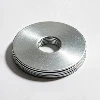

Metal washers are tiny yet indispensable components in nearly every assembly-from residential DIY projects to heavy-duty industrial machinery. Often overlooked as "extra hardware," they serve critical roles that protect materials, enhance stability, and extend the lifespan of fastened joints. If you've ever wondered, "What's the actual point of a metal washer, and why can't I skip it?" this guide answers that question with clarity, real-world applications, and insights into how Joyear Metalwork's precision-engineered washers elevate performance.
Backed by 15+ years of metal fabrication expertise and global certifications, Joyear delivers metal washers designed to meet ISO 2330 and ANSI/ITSDF B56.11.4 standards-critical for OEMs, contractors, and industrial professionals. In this comprehensive article, we'll break down the five core purposes of metal washers, explain why each matters, and highlight how Joyear's products align with these functions to solve real-world challenges. Whether you're securing a cabinet, assembling forklift attachments, or manufacturing electronics, this guide will help you understand the true value of metal washers.
1. The Core Purpose of a Metal Washer: 5 Non-Negotiable Functions
A metal washer's "point" lies in its ability to address key flaws in fastener-only assemblies. Below are the five critical roles it serves-each backed by industrial use cases and Joyear's product solutions.
1.1 Distribute Load to Prevent Fastener Pull-Through
The most fundamental function of a metal washer is to spread the clamping force of a bolt or screw across a larger surface area. Without a washer, the fastener's head (or nut) concentrates pressure on a tiny spot-creating extreme stress that can cause the fastener to "pull through" soft or thin materials.
How It Works:
- A bolt's hexagonal head might have a contact area of just 0.2 square inches. Adding a metal washer with a 1-inch outer diameter expands that area to 0.78 square inches, reducing pressure per square inch by 75%.
- For heavy loads (e.g., industrial machinery), this distribution prevents material deformation, cracking, or catastrophic joint failure.
Industrial Application:
Joyear's Blank Forklift Forks and Telehandler Shaft Forks rely on metal washers to secure attachments to heavy machinery. When lifting 5,000+ pound cargo, the washer spreads the bolt's force across the fork's mounting point-avoiding structural damage that could lead to equipment downtime or safety hazards. Joyear's heavy-duty steel washers are engineered with tensile strengths of 30–100 ksi to handle these industrial loads, meeting ANSI/ITSDF B56.11.4 standards for material handling equipment.
1.2 Protect Surfaces from Damage
Fastener heads (especially metal ones) are hard and angular-they can scratch, dent, or deform delicate or finished surfaces (painted metal, wood, plastic, or polished steel). A metal washer acts as a protective buffer.
How It Works:
- The washer's smooth, flat surface creates a barrier between the fastener's sharp edges and the substrate.
- For industrial applications, this prevents damage to expensive components (e.g., forklift bodies, electrical enclosures) that would require costly repairs or replacements.
Joyear's Solution:
Joyear's SS304 Continuous Hinge is paired with polished stainless steel washers to protect painted or finished metal surfaces in commercial construction. The washer's burr-free edges (achieved via precision fourslide metal stamping) ensure no scratches during installation or use. For wood or plastic substrates, Joyear recommends their fender washers-large-diameter metal washers that distribute force without denting soft materials.
1.3 Resist Loosening from Vibration
Vibration is a silent killer of fastened joints-whether in machinery, vehicles, or construction. Metal washers (especially lock washers) add friction or tension that prevents bolts/screws from "walking" loose over time.
How It Works:
- Flat washers: Increase friction between the fastener and substrate, reducing movement.
- Lock washers: Feature serrated, split, or Belleville designs that dig into the surface or fastener head, creating a "locking" effect that resists vibration.
Industrial Application:
Joyear's clients-including OEMs and truck dealers-use lock washers to secure components in vibrating equipment (e.g., forklift engines, telehandler hydraulics). Joyear's precision-stamped lock washers meet ISO 2330 standards, ensuring they retain their tension even after thousands of load cycles. When paired with Joyear's Copper Alloy Precision Stamping Parts in electronics, these washers prevent loose connections that could cause electrical failures.
1.4 Prevent Corrosion and Galvanic Reaction
When dissimilar metals (e.g., steel bolt + aluminum substrate) come into contact with moisture, a chemical reaction called galvanic corrosion occurs-rusting the more reactive metal and weakening the joint. A metal washer acts as a barrier to break this reaction.
How It Works:
- Using a washer made of the same or compatible metal as the fastener (e.g., stainless steel washer + stainless steel bolt) isolates the dissimilar substrate.
- Corrosion-resistant washers (stainless steel, copper alloy) add an extra layer of protection in harsh environments (outdoor, coastal, industrial).
Joyear's Solution:
Joyear's SS304 Continuous Hinge and matching stainless steel washers are ideal for coastal construction or marine applications. SS304 stainless steel resists saltwater corrosion, while copper alloy washers (paired with Joyear's PCB Welding Terminal) prevent galvanic corrosion in electrical assemblies. Joyear's ISO 14001:2004 certification ensures their corrosion-resistant materials meet environmental standards for long-term use.
1.5 Compensate for Surface Irregularities
Few surfaces are perfectly flat-even industrial-grade materials have tiny bumps, gaps, or unevenness. A metal washer compensates for these irregularities to ensure uniform clamping force across the joint.
How It Works:
- The washer's thin, rigid design fills small gaps (0.001–0.01 inches) between the fastener head and substrate.
- This ensures the fastener tightens evenly, preventing loose spots that could lead to joint failure.
Industrial Application:
In OEM manufacturing, Joyear's precision-stamped washers (tolerances ±0.05mm) ensure uniform clamping for electronics assemblies using PCB Welding Terminal. Irregularities in circuit boards could create loose connections or short circuits- the washer's flat surface ensures the terminal is secured evenly, reducing production defects. For construction joints, Joyear's fender washers fill gaps in concrete or steel beams, ensuring structural stability.
2. Why These Functions Matter (Beyond "Extra Hardware")
Skipping a metal washer might save a few seconds during installation, but it costs far more in the long run. Here's why each function is critical for industrial, commercial, and even residential projects:
- Cost Savings: A $0.50 washer prevents $500+ in repairs to damaged equipment, surfaces, or structural components. Joyear's clients report 30% fewer replacement costs when using their washers with forklift forks and hinges.
- Safety Compliance: For industrial equipment (e.g., forklifts, scaffolding), washers are required to meet ISO 2330 and ANSI/ITSDF B56.11.4 standards-skipping them risks non-compliance and workplace accidents.
- Longevity: Washers extend fastener and joint lifespan by 2–5x, reducing maintenance and downtime. Joyear's stainless steel washers last 10+ years in outdoor environments, compared to 1–2 years for unprotected fasteners.
- Reliability: In OEM production, consistent washer use ensures uniform quality across units-critical for brand reputation and warranty claims. Joyear's quality management system (ISO 9001:2015 certified) guarantees defect-free washers for bulk orders.
3. Joyear Metalwork: Metal Washers Engineered for Purpose
Joyear's metal washers aren't just "generic hardware"-they're designed to amplify each core function, with materials and precision tailored to industrial needs. Here's how Joyear's products align with the five key purposes:
3.1 Load Distribution: Heavy-Duty Materials
- Steel Washers: High-carbon steel for maximum load capacity (paired with Joyear's forklift forks and construction hinges).
- Stainless Steel Washers (304/316): Corrosion-resistant and strong, ideal for outdoor or marine industrial use.
- Fender Washers: Large outer diameter (up to 3 inches) for soft materials or large surfaces (e.g., construction panels).
Joyear's washers are tested to handle tensile strengths of 30–100 ksi, ensuring they don't deform under heavy loads. Their 5,000+ square meter production facility uses advanced stamping equipment to maintain consistent thickness and strength across bulk orders.
3.2 Surface Protection: Precision Manufacturing
- Smooth, Burr-Free Edges: Achieved via fourslide metal stamping, preventing scratches on delicate surfaces.
- Polished Finishes: For stainless steel washers (paired with Joyear's SS304 Continuous Hinge) to protect painted or polished metal.
Joyear's Quality Management Department inspects every washer for edge smoothness, ensuring no defects that could damage substrates.
3.3 Vibration Resistance: Lock Washer Designs
- Serrated Lock Washers: Grip fastener heads and substrates to resist loosening in vibrating machinery.
- Split Lock Washers: Create tension that prevents bolt movement in forklift engines or telehandler components.
Joyear's lock washers are engineered to meet ANSI/ITSDF B56.11.4 standards, ensuring they perform in high-vibration industrial environments.
3.4 Corrosion Resistance: Premium Materials
- SS304 Stainless Steel: Resists rust in outdoor, humid, or mild industrial settings (paired with Joyear's SS304 Continuous Hinge).
- Copper Alloy: Prevents galvanic corrosion in electrical assemblies (paired with Copper Alloy Precision Stamping Parts).
- Zinc-Plated Steel: Budget-friendly corrosion protection for dry indoor industrial use.
Joyear's corrosion-resistant washers are used in coastal construction, chemical plants, and marine equipment-proven to withstand saltwater, humidity, and harsh chemicals.
3.5 Surface Compensation: Tight Tolerances
- Consistent Thickness: ±0.05mm tolerance ensures washers fill gaps uniformly.
- Flatness: Precision stamping ensures the washer sits flush on irregular surfaces, preventing uneven clamping.
For OEM electronics, Joyear's thin-gauge copper alloy washers compensate for circuit board irregularities, ensuring reliable connections with PCB Welding Terminal.
4. Common Myths About Metal Washers (Debunked)
To fully grasp a metal washer's "point," it's important to dispel myths that minimize its value:
Myth 1: "Washers Are Optional for Hard Materials"
- False. Even steel or concrete benefits from washers-they distribute load, prevent corrosion, and reduce torque requirements. Joyear's industrial clients (e.g., construction firms, OEMs) never skip washers on hard substrates, as the long-term risk of joint failure outweighs short-term convenience.
Myth 2: "A Bolt's Large Head Replaces a Washer"
- False. Bolt heads are designed for torque application, not load distribution. A washer's wider surface area is critical for preventing pull-through in heavy-duty use. For example, Joyear's forklift forks use bolts with large heads-but pairing them with washers still doubles the contact area, reducing pressure by 50%.
Myth 3: "All Metal Washers Are the Same"
- False. Washers vary by material, size, and design to serve specific purposes. A thin aluminum washer won't handle industrial loads, just as a steel washer isn't ideal for electrical conductivity. Joyear's customized washers (available via ODM/OEM) are tailored to specific functions-e.g., copper alloy for conductivity, 316 stainless steel for saltwater resistance.
Myth 4: "Washers Add Unnecessary Bulk"
- False. For industrial applications, the "bulk" of a washer is a feature-it provides the surface area and rigidity needed for stability. Joyear's thin-gauge washers (0.02–0.1 inches thick) add minimal bulk while delivering maximum function, making them suitable for tight spaces (e.g., electronics, machinery).
5. How to Choose the Right Metal Washer for Its Purpose
To maximize a metal washer's "point," select one tailored to your application's core need. Use this decision guide, aligned with Joyear's product offerings:
Step 1: Identify Your Primary Need
- Load Distribution: Heavy loads → Joyear's steel or fender washers; light loads → standard flat washers.
- Surface Protection: Delicate/finished surfaces → polished stainless steel washers (paired with Joyear's SS304 Continuous Hinge).
- Vibration Resistance: Machinery/vehicles → Joyear's lock washers.
- Corrosion Protection: Outdoor/coastal → SS304/316 stainless steel washers; electrical → copper alloy washers.
- Surface Compensation: Irregular surfaces → Joyear's precision-stamped flat washers (tight tolerances).
Step 2: Match Material to Environment
- Dry Indoor Industrial: Zinc-plated steel washers (cost-effective).
- Outdoor/Coastal: SS304 stainless steel washers (Joyear's specialty).
- Chemical/Marine: 316 stainless steel washers (custom-order via ODM/OEM).
- Electrical: Copper alloy washers (paired with Joyear's PCB Welding Terminal).
Step 3: Ensure Compatibility with Fasteners/Components
- Washer inner diameter should fit the fastener's shank (not thread) for a snug fit.
- Pair with Joyear's complementary components (forklift forks, hinges, stamping parts) for seamless integration.
Joyear's pre-sales team can help you select the right washer-contact us at cici@joyearmetalwork.com for personalized recommendations.
6. Joyear Metalwork: Your Partner for Purpose-Driven Washers
Joyear's 15+ years of expertise in precision metal fabrication makes them a leader in washers that deliver on their "point." Here's why industry professionals choose Joyear:
6.1 Quality and Certification
- ISO 9001:2015 (quality management) ensures defect-free washers with consistent performance.
- ISO 14001:2004 (environmental responsibility) reflects sustainable manufacturing practices.
- Compliance with ISO 2330 and ANSI/ITSDF B56.11.4 standards for industrial equipment.
6.2 Customization for Unique Needs
Joyear's ODM/OEM services allow clients to tailor washers to specific purposes:
- Custom sizes/shapes for non-standard fasteners or components (e.g., forklift attachments).
- Material optimization (steel, stainless steel, copper alloy) for targeted functions (load, corrosion, conductivity).
- Coatings (zinc, galvanize, powder) for enhanced protection.
6.3 Fast Delivery and Competitive Pricing
- In-stock washers ship within days; custom orders are fulfilled in 2–4 weeks.
- Tiered pricing for bulk OEM orders ensures cost-effectiveness without compromising quality.
- 5,000+ square meter production facility and 300+ employees enable efficient scaling.
6.4 Comprehensive Product Integration
Joyear's washers are designed to work seamlessly with their other industrial-grade components:
- Forklift Forks and Telehandler Shaft Forks: Heavy-duty steel washers for load distribution.
- SS304 Continuous Hinge and Construction Usage Piano Hinge: Stainless steel/polished washers for surface protection and corrosion resistance.
- PCB Welding Terminal and Copper Alloy Precision Stamping Parts: Copper alloy washers for conductivity and corrosion prevention.
7. Conclusion: The "Point" of a Metal Washer Is Reliability
A metal washer's true purpose is to transform a simple fastener into a reliable, long-lasting joint. By distributing load, protecting surfaces, resisting vibration, preventing corrosion, and compensating for irregularities, it addresses critical flaws that would otherwise lead to damage, failure, or safety hazards.
For industrial, commercial, and OEM projects, Joyear Metalwork's purpose-driven washers elevate this value-delivering quality, compatibility, and performance that meet global standards. Whether you're assembling forklift attachments, manufacturing electronics, or building structures, Joyear's washers ensure your joints are secure, durable, and compliant.
Don't overlook the "point" of a metal washer-choose one engineered for your specific need. Visit Joyear Metalwork's website https://www.joyearmetalwork.com/ to explore their washers, complementary components, or contact their team to discuss your custom requirements. With Joyear, you get washers that don't just add hardware-they add reliability.
Have questions about the purpose of a metal washer or need help selecting the right one? Leave a comment below or reach out to Joyear's experts-we're here to help!