When you hear "output devices," your first thought might jump to consumer tech-like a laptop's monitor, a home printer, or a smartphone's speaker. These devices take digital data and turn it into tangible or audible outputs we use daily. But in industrial settings-from automotive factories to aerospace facilities-industrial output devices play a far more vital role. They're the workhorses that translate digital commands into physical action: think automated (machine tools) that shape metal parts, industrial printers that label components, or sensor terminals that display real-time production data.
Unlike consumer output devices (which prioritize portability or cost), industrial output devices must withstand extreme conditions-high temperatures, dust, vibration, and constant use. What keeps these rugged tools running? High-quality metal hardware components-the brackets, precision parts, and structural supports that ensure stability, precision, and durability.
In this guide, we'll answer "What are output devices?" with a focus on industrial applications, break down key device types, explain their reliance on specialized metal parts, and highlight how JOYEAR Metalwork -a leading industrial metal component manufacturer-provides the hardware that powers these critical tools. By the end, you'll understand why choosing the right metal parts is as important as choosing the output device itself.
1. First: What Are Output Devices, Exactly?
At its core, an output device is any hardware that converts digital or electronic signals into a physical, usable form-whether that's text, images, motion, or data visualization. The definition varies by context:
Consumer output devices: Designed for personal use (e.g., a wireless speaker, a desktop printer, a TV). They're often lightweight, low-cost, and optimized for comfort.
Industrial output devices: Built for commercial or manufacturing use.
They prioritize:
- Durability: Resistance to dust, moisture, and temperature fluctuations (e.g., a factory floor printer that operates in 40°C heat).
- Precision: Consistent performance to avoid production errors (e.g., an automated laser cutter that outputs precise metal shapes).
- Integration: Compatibility with other industrial systems (e.g., a sensor output terminal that connects to a factory's IoT network).
The key difference? Industrial output devices can't function without custom metal hardware. A laser cutter needs precision stamping parts to align its lens; an industrial printer relies on sheet metal brackets to stay stable; a sensor terminal uses mounting plates to secure it to a control panel. These parts-many of which come from JOYEAR Metalwork-are the unsung heroes of industrial output.
2. Key Types of Industrial Output Devices (And the Metal Parts They Need)
To answer "What are output devices?" thoroughly, we'll focus on four industrial categories that are essential for manufacturing, construction, and engineering. For each, we'll explain how the device works and which JOYEAR metal components keep it operational.
2.1 Automated Manufacturing Output Devices: Shaping & Assembling Parts
These devices turn digital designs into physical products-think CNC machines, laser cutters, or robotic assembly arms. They're the backbone of automotive, aerospace, and electronics production.
How they work: A digital design (from Auto CAD or SolidWorks) is sent to the device, which uses mechanical parts to cut, shape, or assemble materials (metal, plastic, etc.). For example, a CNC lathe might receive a design for a brass rivet and output the finished part by spinning and cutting a metal rod.
Critical metal components from JOYEAR:
Copper Alloy Precision Stamping Parts: Used in the control systems of CNC machines to transmit electrical signals reliably. Copper's conductivity ensures the device receives accurate digital commands, preventing output errors.
Brass Tubular Rivets: These small but strong parts fasten the moving components of robotic arms. Brass resists corrosion and wear, ensuring the arm's output (e.g., placing a car part on an assembly line) stays precise over time.
Sheet Metal Welding Brackets: Secure the frame of laser cutters or CNC machines. JOYEAR's brackets are made from SS304 stainless steel or carbon steel-materials that absorb vibration and keep the device stable, even during high-speed operation.
JOYEAR's metal parts for these devices meet IATF16949:2016 (automotive quality standards) and ISO9001:2015, ensuring they align with the strict requirements of automated manufacturing.
2.2 Industrial Data Output Devices: Displaying & Recording Information
These devices take digital data from sensors, machines, or IoT networks and output it in usable formats-like industrial monitors, data loggers, or label printers. They're critical for tracking production, maintaining safety, and complying with regulations.
How they work: A sensor (e.g., a temperature sensor in a factory oven) sends data to the device, which displays it on a screen (for real-time monitoring) or prints it on a label (for part tracking). For example, a data logger might output a report showing oven temperatures over 24 hours to ensure product quality.
Critical metal components from JOYEAR:
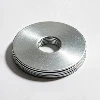
- Round Mounting Plates & Upper Mounting Plates: Secure industrial monitors or data loggers to factory walls or control panels. JOYEAR's plates are customizable-drilled with precise hole patterns to fit different device sizes-and made from aluminum (AL6061) for lightweight durability.
- Shims And Spacers: These thin metal pieces align the internal components of label printers (e.g., the print head and roller). Even a 0.1mm misalignment can cause blurry labels-JOYEAR's shims (available in brass or stainless steel) ensure perfect spacing.
- Small Brass Brackets: Hold the circuit boards of data loggers in place. Brass is non-magnetic and conductive, protecting the board from interference and ensuring accurate data output.
JOYEAR's parts for data output devices meet RoHS standards, making them safe for use in electronics and medical manufacturing facilities.
2.3 Industrial Actuator Output Devices: Controlling Motion
Actuators are output devices that convert electrical signals into physical motion-like opening a valve, moving a conveyor belt, or adjusting a machine's position. They're used in construction, marine, and energy industries.
How they work: A digital signal (e.g., "open valve 50%") triggers the actuator's motor, which moves a mechanical arm or piston. For example, an actuator in a water treatment plant might output motion to open a valve and regulate water flow.
Critical metal components from JOYEAR:
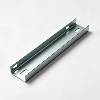
- Long Flat Metal Brackets: Support the body of linear actuators (which move in a straight line). JOYEAR's brackets are made from high-tensile steel (Q235) to withstand the force of the actuator's motion.
- Metal Drawer Slide Brackets: Used in actuators that slide parts into place (e.g., in automotive assembly). These brackets ensure smooth, consistent motion-critical for avoiding jams that halt production.
- Gate Latch Lock Both Sides: Secures actuator enclosures in outdoor or harsh environments (e.g., construction sites). Made from stainless steel, this latch resists rust and keeps the actuator's internal parts protected.
JOYEAR's actuator components undergo 100% quality testing (using calipers and image measurement instruments) to ensure they can handle repeated motion without failure.
2.4 Industrial 3D Printer Output Devices: Building Complex Parts
Industrial 3D printers are advanced output devices that create 3D objects from digital models-used in aerospace, medical, and custom manufacturing. Unlike consumer 3D printers, they print with metal, carbon fiber, or high-performance plastics.
How they work: The printer reads a 3D model (e.g., a custom aerospace bracket) and deposits layers of material (e.g., aluminum powder) to build the part. The output is a fully functional, high-precision component.
Critical metal components from JOYEAR:
- Sheet Metal Fabrication Frames: Form the outer shell of industrial 3D printers. JOYEAR's frames are made from laser-cut stainless steel (SS316) to resist heat from the printer's nozzle and keep the printing area stable.
- Aluminum Precision Parts: Used in the printer's extruder (which feeds material to the nozzle). Aluminum is lightweight and heat-resistant, ensuring the extruder moves smoothly and doesn't warp.
- Fourslide Metal Stamping Parts: Small, complex parts that connect the printer's motor to its belt. Fourslide stamping allows for intricate shapes-critical for the printer's precise motion control.
JOYEAR offers OEM/ODM services for 3D printer components, meaning they can create custom parts to fit unique printer models.
3. Why Industrial Output Devices Depend on High-Quality Metal Parts
A high-performance industrial output device is only as good as the metal parts that power it. Cheap or ill-fitting hardware can lead to:
- Output errors: A misaligned bracket might cause a laser cutter to produce uneven parts, leading to scrap and rework.
- Downtime: A corroded rivet in an actuator could fail, halting a conveyor belt and costing $22,000 per minute (per IndustryWeek).
- Safety risks: A faulty mounting plate might cause an industrial monitor to fall, endangering workers.
JOYEAR Metalwork avoids these issues by focusing on three core priorities for their metal parts:
3.1 Durable Materials
JOYEAR uses industry-leading materials tailored to output device needs:
- Stainless steel (SS304/SS316): For parts exposed to moisture or chemicals (e.g., actuator brackets in marine settings).
- Aluminum (AL6061/AL7075): For lightweight, heat-resistant parts (e.g., 3D printer extruders).
- Brass/copper alloys: For conductive, non-magnetic parts (e.g., data logger circuit brackets).
All materials are sourced from reliable suppliers and tested for defects before production.
3.2 Micron-Level Precision
Industrial output devices require parts with tight tolerances-often as small as ±0.01mm. JOYEAR achieves this with:
- Advanced manufacturing: Automated stamping machines, laser cutting, and CNC bending.
- Rigorous inspection: Every part is checked with image measurement instruments, calipers, and angle gages to ensure it meets specifications.
For example, their Shims And Spacers have a tolerance of ±0.02mm-critical for aligning the print heads of industrial label printers.
3.3 Customization
No two industrial output devices are the same. JOYEAR offers OEM/ODM services to create parts that fit your exact device:
- Design support: Their engineers work with your team to turn drawings (Auto CAD, SolidWorks, PDF) into functional parts.
- Free samples: For orders under $30 USD, JOYEAR provides free samples to test fit and performance before mass production.
- Fast turnaround: Samples are delivered in 5-7 days; bulk orders in 15-20 days-minimizing downtime for your output devices.
4. How to Choose Metal Parts for Your Industrial Output Devices
When selecting metal components for your output devices, follow these steps-all of which JOYEAR simplifies:
- Match the material to the environment: If your device is outdoors (e.g., a construction actuator), choose stainless steel. If it's in an electronics factory (e.g., a 3D printer), choose aluminum or brass.
- Verify precision: Ensure the parts meet your device's tolerance requirements (e.g., ±0.01mm for 3D printers). Ask for inspection reports-JOYEAR provides these for every order.
- Prioritize customization: If your device has unique dimensions, work with a supplier that offers OEM services. JOYEAR accepts samples or drawings to create custom parts.
- Check certifications: Look for ISO9001 (quality), IATF16949 (automotive), and RoHS (environmental) certifications-JOYEAR holds all three.
Final Thoughts: JOYEAR-Your Partner for Industrial Output Device Hardware
Industrial output devices are the backbone of modern manufacturing, but they can't perform without reliable metal parts. Whether you need precision stamping parts for a CNC machine, sheet metal brackets for an industrial printer, or custom mounting plates for a sensor terminal, JOYEAR Metalwork has the expertise and quality to deliver.
With over 10 years of factory experience, 100+ global clients, and a commitment to 100% defect-free parts, JOYEAR is more than a supplier-they're a partner in keeping your output devices running efficiently. Their reasonable pricing, fast delivery, and pre-sale/post-sale support make them the top choice for industrial businesses.
Your industrial output devices deserve hardware that's as reliable as they are-and JOYEAR delivers exactly that.