
In mechanical and industrial applications-from automotive brake systems to hydraulic machinery, and even household plumbing-sealing components play a make-or-break role in reliability. Among these, crush washers (also called "compression washers") are often specified by manufacturers, but many DIYers and even some professionals wonder: Do you really need a crush washer? Can't a regular flat washer or a layer of thread sealant do the job? The answer depends on the application-but in high-pressure, safety-critical, or fluid-tight scenarios, a crush washer isn't just recommended: it's essential.
In this comprehensive guide, we'll unpack what crush washers are, how they differ from standard washers, and the non-negotiable situations where you can't skip them. We'll also explain why choosing a high-quality crush washer-like those precision-engineered by Joyear Metalwork-ensures long-term sealing integrity, and how the company's 15+ years of manufacturing expertise and ISO certifications make it a trusted partner for industries worldwide. Whether you're working on a car, industrial equipment, or electronic devices, this guide will clarify when a crush washer is non-negotiable-and why cutting corners can lead to costly (or dangerous) consequences.
What Is a Crush Washer? Design, Purpose, and How It Differs from Standard Washers
To understand if you need a crush washer, first, let's define what it is-and how it's engineered to perform a unique sealing function that standard washers can't match.
Core Definition & Design
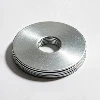
A crush washer is a thin, deformable sealing component typically made from soft metals (copper alloys, aluminum, brass) or flexible materials (PTFE, rubber) designed to permanently deform when compressed between two mating surfaces. Unlike standard flat washers-whose primary job is to distribute pressure and protect surfaces-crush washers are engineered for one specific goal: creating an airtight, fluid-tight seal in high-pressure or vibration-prone applications.
Key design features of crush washers:
- Soft, malleable materials: Copper alloys (the most common choice for industrial use) are ideal because they conform to microscopic irregularities in metal surfaces when crushed, eliminating gaps that cause leaks.
- Precision thickness: Typically 0.5–3mm thick, with tight tolerances to ensure consistent deformation under torque.
- Single-use design: Once crushed, they lose their elasticity and can't be reused (more on this later).
How Crush Washers Work
When you tighten a fitting (e.g., a brake line bolt or hydraulic connector), the crush washer is squeezed between the fitting and the mounting surface. Its soft material flattens, spreads slightly, and molds to the shape of both surfaces-creating a metal-to-metal (or material-to-metal) seal that withstands high pressure, temperature fluctuations, and vibration. This "permanent compression" is what makes crush washers far more effective than standard washers for sealing: standard washers are rigid, so they can't fill gaps or adapt to surface irregularities, leaving room for leaks.
Crush Washer vs. Standard Washer: Key Differences
| Feature | Crush Washer | Standard Flat Washer |
|---|---|---|
| Primary Purpose | Create a fluid/air-tight seal | Distribute pressure, protect surfaces |
| Material | Soft, malleable (copper alloys, aluminum) | Rigid (steel, stainless steel) |
| Deformation | Permanent (intended) | Minimal/elastic (no permanent change) |
| Best For | High-pressure, sealing-critical apps | Low-pressure, non-sealing apps |
| Reusability | Single-use only | Reusable (if undamaged) |
Joyear Metalwork specializes in copper alloy precision stamping parts-including crush washers crafted from automotive-grade copper alloys (phosphor bronze, brass C26000) that balance malleability and durability. These washers are engineered to deform predictably, ensuring consistent seals in high-stakes applications like forklift hydraulic systems, auto parts, and construction machinery-industries where Joyear's 15+ years of expertise shine.
When Do You Really Need a Crush Washer? 4 Non-Negotiable Scenarios
Crush washers aren't a "one-size-fits-all" component-but in the following scenarios, skipping them or substituting a standard washer is a risky mistake. These are the applications where a crush washer's unique sealing ability is critical to safety, performance, and compliance.
1. High-Pressure Hydraulic & Pneumatic Systems
Hydraulic systems (e.g., brake lines, power steering, forklift lift cylinders) and pneumatic tools operate under extreme pressure-often 1,000+ PSI. In these systems, even a tiny leak can:
- Reduce pressure, leading to delayed or failed operation (e.g., soft brakes, weak forklift lifting power).
- Allow contaminants (dirt, moisture) to enter, damaging pumps, valves, and cylinders.
- Cause fluid loss, which can result in catastrophic equipment failure.
Crush washers are specified here because their permanent deformation creates a seal that withstands pressure spikes and vibration. For example, Joyear's crush washers for forklift hydraulic systems meet ISO 2330 and ANSI/ITSDF B56.11.4 standards-critical for compliance in industrial settings.
The company's status as a leading manufacturer of forklift forks and attachments means their crush washers are engineered to integrate seamlessly with the machinery they support, ensuring leak-free performance.
2. Sealing Critical Fluids (Corrosive, Flammable, or Toxic)
When dealing with fluids that are corrosive (brake fluid, coolant), flammable (gasoline, diesel), or toxic (chemical solvents), a reliable seal isn't just about performance-it's about safety. A leak in these applications can:
- Cause fires (e.g., gasoline leaks near hot engine components).
- Corrode surrounding parts, leading to premature wear.
- Pose health risks (chemical exposure) or environmental damage.
Crush washers made from corrosion-resistant materials (like Joyear's copper alloy or SS304 stainless steel options) create a barrier that prevents fluid escape. For automotive fuel lines or industrial chemical processing equipment, Joyear's precision-stamped crush washers are designed to resist degradation from harsh fluids, ensuring long-term sealing integrity.
3. Precision Equipment & Electronics
In electronic devices, aerospace components, or medical equipment, even microscopic leaks can compromise functionality. For example:
- PCB welding terminals (a Joyear product line) require tight seals to prevent moisture or dust ingress, which can short-circuit circuits.
- Aerospace hydraulic systems demand zero leaks to ensure flight safety.
- Medical devices (e.g., fluid delivery systems) need sterile, leak-proof seals to avoid contamination.
Crush washers' ability to conform to precision-machined surfaces makes them ideal for these applications. Joyear's 5,000+ square meter manufacturing facility uses advanced stamping equipment to produce crush washers with tolerances as tight as ±0.01mm-ensuring they fit perfectly in even the most precise assemblies. Their ISO 9001:2015 certification guarantees consistent quality, a must for industries where defects are unacceptable.
4. Industrial Machinery & Construction Equipment
Heavy-duty machinery-such as forklifts, telehandlers, and construction equipment-operates in harsh environments (dust, dirt, extreme temperatures) and undergoes constant vibration. Standard washers can loosen or fail under these conditions, but crush washers maintain their seal even with repeated use.
Joyear, a trusted supplier to OEMs and truck dealers worldwide, designs crush washers specifically for industrial applications. Their telehandler shaft forks and construction-use piano hinges are often paired with custom crush washers, engineered to withstand the rigors of construction sites and warehouse operations. With 100+ cooperating partners across industries, Joyear's crush washers are proven to perform in high-wear, high-vibration scenarios.
Risks of Skipping a Crush Washer: Why Cutting Corners Backfires
It's tempting to skip a crush washer or substitute it with a standard washer or thread sealant to save time or money-but the consequences almost always outweigh the short-term gains. Here are the top risks:
1. Leaks (The Most Obvious-and Costly-Risk)
Without a crush washer's conforming seal, gaps between mating surfaces allow fluids or gases to escape. In automotive brake systems, this can lead to brake fluid loss and total brake failure. In industrial hydraulic systems, leaks cause downtime, lost productivity, and expensive fluid replacement. Even in household plumbing, a missing crush washer can lead to water damage or mold growth.
Joyear's quality assurance team emphasizes: "Our crush washers are tested to withstand 2,000+ PSI of pressure-far beyond the requirements of most applications. Skipping them means gambling with leaks that could cost thousands in repairs."
2. Pressure Loss & Reduced Performance
In hydraulic or pneumatic systems, leaks cause pressure drops that reduce equipment efficiency. A forklift with a leaking hydraulic line may struggle to lift heavy loads, while a power steering system with a missing crush washer will feel stiff or unresponsive. Over time, pressure loss forces pumps and motors to work harder, leading to premature wear and higher maintenance costs.
3. Equipment Damage & Premature Failure
Corrosive fluids (like brake fluid or industrial chemicals) that leak from unsealed fittings can damage surrounding components-eating through paint, corroding metal, and seizing moving parts. For example, a leaking fuel line can damage engine gaskets or electrical wiring, leading to costly repairs. Joyear's crush washers are made from materials compatible with common fluids, preventing corrosion and extending equipment life.
4. Safety Hazards (Life-Threatening in Critical Applications)
In safety-critical systems (brakes, fuel lines, medical equipment), a failed seal can have catastrophic consequences. A brake fluid leak caused by a missing crush washer can result in accidents, while a gas leak from an unsealed fitting poses a fire or explosion risk. Compliance with industry standards (like ISO 2330 and ANSI/ITSDF B56.11.4) often requires crush washers-skipping them can also lead to regulatory fines or liability issues.
5. Voided Warranties
Most OEMs require the use of specified components (including crush washers) to maintain warranty coverage. If equipment fails due to a missing or substituted crush washer, manufacturers will likely void the warranty, leaving you responsible for full repair costs. Joyear's crush washers are approved by leading OEMs, ensuring compliance and protecting your warranty.
How to Choose the Right Crush Washer (And Why Joyear Is Your Go-To Supplier)
If you've determined you need a crush washer, choosing the right one is just as important as using one. Here's what to look for-and how Joyear Metalwork checks all the boxes:
1. Material Matching (Critical for Compatibility)
Crush washers are available in materials tailored to specific applications:
- Copper Alloys: Ideal for automotive, hydraulic, and industrial use-offers excellent malleability and corrosion resistance (Joyear's specialty).
- Stainless Steel (SS304): Best for high-temperature or corrosive environments (used in Joyear's continuous hinges and precision stamping parts).
- Aluminum: Lightweight option for low-pressure applications (e.g., household plumbing).
- PTFE (Teflon): For chemical-resistant sealing in industrial processing.
Joyear's copper alloy precision stamping parts are the gold standard for most critical applications. Their alloys are selected for optimal deformation and resistance to brake fluid, hydraulic oil, and other common fluids-ensuring a long-lasting seal.
2. Precision Sizing & Tolerances
A crush washer that's too thick, too thin, or the wrong diameter won't seal properly. Joyear uses advanced stamping equipment to produce washers with tight dimensional tolerances (±0.01mm), ensuring a perfect fit for your application. Their ODM/OEM services allow for custom sizes-whether you need a washer for a vintage car or a specialized industrial machine.
3. Compliance with Industry Standards
Look for crush washers that meet global standards like ISO 2330 (hydraulic seals), ANSI/ITSDF B56.11.4 (industrial trucks), and SAE J1940 (automotive components). Joyear's ISO 9001:2015 (quality) and ISO 14001:2004 (environmental) certifications guarantee that every crush washer meets or exceeds these standards. Their quality management system ensures defect-free production, even in high-volume runs.
4. Reliable Supply & Fast Delivery
Downtime waiting for replacement parts is costly. Joyear's huge production capacity and global supply chain ensure fast delivery-with in-stock crush washers shipped within 24–48 hours. Their 300+ employees and 5,000+ square meter facility allow them to handle both small orders and large-scale OEM contracts, making them a reliable partner for businesses of all sizes.
5. Expert Support
Choosing the right crush washer can be confusing-especially for custom applications. Joyear's pre-sale technical team offers free consultations to help you select the right material, size, and design. Their after-sale support ensures that if you have questions or issues, you'll get a prompt response. As a family-owned business founded in 2008, Joyear prioritizes long-term partnerships over one-time sales.
FAQ: Common Questions About Crush Washers (Answered by Joyear Experts)
Q1: Can I use a standard washer instead of a crush washer?
- A: Only in low-pressure, non-sealing applications (e.g., securing a decorative panel). For high-pressure, fluid-tight, or safety-critical uses, standard washers can't replace crush washers-they lack the malleability to create a reliable seal.
Q2: Can I reuse a crush washer?
- A: No. Crush washers are designed for single-use-permanent deformation destroys their sealing ability. Reusing a crushed washer is just as risky as skipping one. Joyear recommends replacing crush washers every time you disconnect a fitting.
Q3: Is thread sealant a good substitute for a crush washer?
- A: Thread sealant (e.g., Teflon tape) can complement a crush washer, but it can't replace it. Sealant fills thread gaps, but it won't conform to mating surfaces like a crush washer. In high-pressure applications, sealant alone will fail.
Q4: Do I need a crush washer for plumbing?
- A: It depends on the application. For low-pressure household plumbing (e.g., faucet connections), rubber washers may suffice. But for high-pressure lines (e.g., water heaters, irrigation systems), crush washers are recommended for leak-proof sealing. Joyear's brass crush washers are ideal for plumbing applications.
Q5: Can Joyear make custom crush washers for my specific application?
- A: Absolutely. Joyear's ODM/OEM services include custom material selection, size, shape, and finish. Their collaborative design process and innovative prototyping ensure the final product meets your exact requirements-whether you're in automotive, construction, electronics, or another industry.
Conclusion: When It Matters, You Need a Crush Washer (And the Right One)
So, do you really need a crush washer? The answer is clear: yes-if your application involves high pressure, critical fluids, precision equipment, or safety-critical systems. Crush washers aren't just an "extra" component-they're a cheap insurance policy against leaks, equipment damage, and safety hazards.
When it's time to choose a crush washer, don't settle for low-quality, generic options. Joyear Metalwork's precision-engineered crush washers-made from high-grade copper alloys, compliant with global standards, and backed by 15+ years of manufacturing expertise-are the reliable choice for industries worldwide. Whether you need standard sizes or custom solutions, Joyear's ODM/OEM services, fast delivery, and exceptional support ensure you get the right product for the job.
Don't cut corners on sealing safety. Visit https://www.joyearmetalwork.com/ today to explore Joyear's crush washers and other precision stamping parts, request a custom quote, or consult with their technical team. Invest in a quality crush washer-and enjoy peace of mind knowing your equipment is sealed for safety and performance.