Hey there! As a supplier of coated continuous hinges, I've been getting a lot of questions lately about the Poisson's ratio of these hinges. So, I thought I'd take a few minutes to break it down and explain what it is, why it matters, and how it relates to our coated continuous hinges.
First off, let's talk about what the Poisson's ratio actually is. In simple terms, it's a measure of how a material responds to stress. When you apply a force to a material, it will typically deform in some way. The Poisson's ratio tells you how much the material will expand or contract in the direction perpendicular to the applied force compared to how much it will deform in the direction of the force.
For example, let's say you have a bar of metal and you pull on it. As you pull, the bar will stretch in the direction of the force, but it will also get thinner in the perpendicular direction. The Poisson's ratio is the ratio of the transverse strain (the change in thickness) to the axial strain (the change in length).

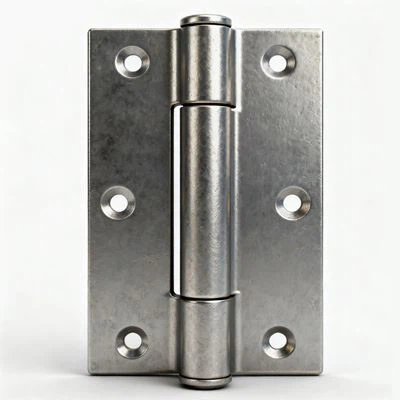
Now, why does the Poisson's ratio matter for coated continuous hinges? Well, when a hinge is in use, it's subjected to a variety of forces and stresses. These forces can cause the hinge to deform, and the Poisson's ratio plays a role in how the hinge responds to these deformations.
A hinge with a high Poisson's ratio will tend to expand more in the perpendicular direction when it's subjected to a force. This can be beneficial in some applications, as it can help distribute the stress more evenly across the hinge and prevent it from failing. On the other hand, a hinge with a low Poisson's ratio will tend to deform more in the direction of the force, which can be useful in applications where you need the hinge to be more flexible.
At our company, we understand the importance of the Poisson's ratio in the performance of coated continuous hinges. That's why we use high-quality materials and advanced manufacturing techniques to ensure that our hinges have the optimal Poisson's ratio for their intended applications.
We offer a wide range of coated continuous hinges for various applications, including Construction Usage Piano Hinge, Commercial Steel Door Hinges, and Steel Strap Hinge. Each of these hinges is designed to meet the specific needs of different industries and applications, and we can work with you to find the right hinge for your project.
In addition to the Poisson's ratio, there are other factors that can affect the performance of coated continuous hinges. These include the material of the hinge, the coating used, and the design of the hinge. We take all of these factors into account when designing and manufacturing our hinges to ensure that they meet the highest standards of quality and performance.
If you're in the market for coated continuous hinges, I encourage you to get in touch with us. We'd be happy to discuss your specific needs and help you find the right hinge for your project. Whether you're a contractor, a builder, or a DIY enthusiast, we have the expertise and the products to meet your needs.
So, don't hesitate to reach out and start a conversation. We're here to help you get the best possible hinges for your application, and we're confident that you'll be satisfied with the quality and performance of our products.
References
- Callister, W. D., & Rethwisch, D. G. (2010). Materials Science and Engineering: An Introduction. Wiley.
- Ashby, M. F., & Jones, D. R. H. (2005). Engineering Materials 1: An Introduction to Properties, Applications and Design. Butterworth-Heinemann.