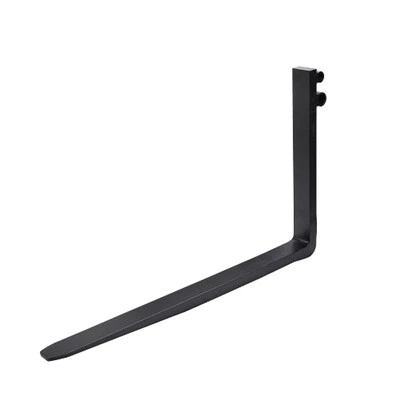
When it comes to the world of material handling, telehandler forks play a crucial role. As a leading supplier of Telehandler Shaft Forks, Telehandler Forklift Forks, and Telehandler Shaft Mounted Forks, I often get asked about the maximum height at which these forks can lift a load. This is a question that involves a variety of factors, from the design of the telehandler itself to the nature of the load being lifted.
Understanding Telehandler Basics
Before delving into the maximum lifting height, it's essential to understand what a telehandler is. A telehandler, also known as a telescopic handler, is a versatile piece of equipment that combines the functions of a forklift and a crane. It consists of a boom that can extend telescopically, allowing it to reach greater heights and distances compared to traditional forklifts. Telehandler forks are the attachments at the end of the boom that are used to pick up and carry loads.
Factors Affecting Maximum Lifting Height
1. Telehandler Model and Design
Different telehandler models have varying maximum lifting heights. Manufacturers design telehandlers with different boom lengths and lifting capacities to meet the diverse needs of various industries. For example, smaller telehandlers used in warehouses may have a maximum lifting height of around 4 to 6 meters, while larger, more heavy - duty models used in construction sites can reach heights of up to 20 meters or more. The design of the boom, including its material, structure, and the number of telescopic sections, significantly impacts the maximum height. A boom made of high - strength steel with well - engineered telescopic sections can extend further and support heavier loads at greater heights.
2. Load Capacity
The maximum lifting height is inversely related to the load capacity. As the weight of the load increases, the telehandler's ability to lift it to a greater height decreases. This is because the boom has a limited amount of strength and stability. When carrying a heavy load, the telehandler needs to distribute the weight evenly and maintain its balance. If the load is too heavy, the telehandler may not be able to extend the boom fully without risking instability or structural damage. For instance, a telehandler that can lift a 5 - ton load to a height of 10 meters may only be able to lift a 2 - ton load to a height of 15 meters.
3. Load Characteristics
The shape, size, and center of gravity of the load also affect the maximum lifting height. An irregularly shaped load or a load with an off - center center of gravity can make the telehandler more difficult to balance. This can limit the height to which the load can be safely lifted. For example, a long, thin load like a steel beam may require special handling and may not be able to be lifted as high as a more compact, evenly distributed load of the same weight.
4. Ground Conditions
The stability of the telehandler is also influenced by the ground conditions. If the ground is uneven, soft, or slippery, the telehandler may not be able to operate safely at its maximum lifting height. On an uneven surface, the telehandler may tilt, which can affect the balance of the boom and the load. Soft ground may cause the telehandler's wheels or outriggers to sink, reducing its stability. In such cases, the operator may need to take precautions or limit the lifting height to ensure safety.


Safety Considerations at Maximum Lifting Height
When operating a telehandler at or near its maximum lifting height, safety is of utmost importance. Here are some key safety considerations:
1. Operator Training
Operators must be properly trained to understand the capabilities and limitations of the telehandler. They should know how to operate the equipment safely, including how to extend and retract the boom, how to handle different types of loads, and how to respond to emergency situations. Training should also cover safety procedures for working at height, such as using appropriate personal protective equipment.
2. Load Securement
The load must be securely attached to the telehandler forks. Loose or unsecured loads can shift during lifting, causing the telehandler to become unstable. Operators should use appropriate straps, chains, or other securing devices to ensure that the load remains in place throughout the lifting process.
3. Stability Checks
Before lifting a load to a significant height, operators should perform stability checks. This includes ensuring that the telehandler is on a level surface, that the outriggers (if applicable) are properly extended and set, and that the load is centered on the forks. Regular inspections of the telehandler's components, such as the boom, hydraulic system, and tires, are also necessary to ensure safe operation.
Industry Standards and Regulations
There are industry standards and regulations in place to ensure the safe operation of telehandlers. These standards specify the maximum lifting heights, load capacities, and safety requirements for different types of telehandlers. For example, in the United States, the Occupational Safety and Health Administration (OSHA) has regulations regarding the use of telehandlers in the workplace. These regulations aim to protect workers from accidents and ensure that telehandlers are used in a safe and responsible manner.
Importance of Choosing the Right Telehandler Forks
As a supplier of telehandler forks, I understand the importance of choosing the right forks for the job. Different types of forks are designed for different applications and load requirements. For example, Telehandler Shaft Forks are suitable for certain types of loads that require a specific mounting method. Telehandler Forklift Forks are more commonly used for general material handling tasks. Telehandler Shaft Mounted Forks offer a secure and reliable connection between the forks and the telehandler boom.
Using the right forks can enhance the telehandler's performance and safety. Forks that are properly sized and designed for the load can distribute the weight evenly, reducing the stress on the boom and improving the telehandler's stability. This, in turn, can allow the telehandler to reach its maximum lifting height more safely.
Conclusion
In conclusion, the maximum height at which telehandler forks can lift a load is determined by a combination of factors, including the telehandler model, load capacity, load characteristics, and ground conditions. It is crucial for operators to understand these factors and follow safety procedures to ensure the safe operation of the telehandler. As a supplier of high - quality telehandler forks, we are committed to providing our customers with the right attachments to meet their specific needs. Whether you are working in a warehouse, a construction site, or any other industry where material handling is required, choosing the appropriate telehandler forks can make a significant difference in the efficiency and safety of your operations.
If you are in the market for telehandler forks or have any questions about the maximum lifting height of telehandlers, we invite you to contact us for a detailed discussion. Our team of experts is ready to assist you in selecting the best products for your requirements.
References
- "Telehandler Operator's Manuals" from various manufacturers.
- Industry safety standards and regulations, such as those issued by OSHA.
- Technical papers on material handling equipment design and performance.