Hey there! I'm an industry insider from a stamping hardware supply business. Today, I'm gonna take you on a journey through the process of how stamping hardware is made.
1. Material Selection
The first step in making stamping hardware is choosing the right material. There are tons of options out there, like steel, aluminum, copper, and brass. Each material has its own unique properties. For example, steel is super strong and durable, making it great for heavy - duty applications. Aluminum, on the other hand, is lightweight and corrosion - resistant, which is perfect for products that need to be portable or used in outdoor environments.
We usually source our materials from reliable suppliers. Quality control is key here. We check the material's composition, hardness, and surface finish to make sure it meets our standards. After all, the quality of the raw material directly impacts the final product.
2. Design and Tooling
Once we've got the material sorted, it's time to design the stamping hardware. This is where creativity and technical know - how come together. Our designers use advanced software to create detailed 2D and 3D models of the parts. They consider factors like functionality, manufacturability, and cost - effectiveness.
After the design is finalized, we move on to tooling. Tooling is like the mold for the stamping process. We work with skilled toolmakers to create precision tools. These tools are made from high - quality steel and are designed to withstand the high pressures of the stamping process. The tooling process can be time - consuming and expensive, but it's crucial for producing consistent and high - quality parts.
3. Stamping Process
Now, let's talk about the actual stamping process. There are two main types of stamping: progressive stamping and transfer stamping.
Progressive Stamping
In progressive stamping, a long strip of metal is fed through a series of stations in a stamping press. At each station, a different operation is performed, like cutting, bending, or punching. The strip moves forward step by step until the final part is formed. This method is great for high - volume production because it's fast and efficient. You can check out High Volume Metal Stamping for more details on this process.
Transfer Stamping
Transfer stamping is a bit different. Instead of a continuous strip, individual blanks of metal are transferred from one station to another. This method is more suitable for larger or more complex parts. It allows for more flexibility in the stamping process and can produce parts with higher precision.
During the stamping process, the stamping press applies a large amount of force to the metal. This force causes the metal to deform and take the shape of the tool. The press needs to be carefully calibrated to ensure the right amount of force is applied. Too much force can cause the metal to crack or break, while too little force won't form the part properly.
4. Secondary Operations
After the stamping is done, the parts often need some secondary operations. These can include deburring, welding, plating, or painting.


Deburring is the process of removing the rough edges and burrs from the stamped parts. This makes the parts safer to handle and gives them a smoother finish. Welding is used to join different parts together. It can be done using various methods, like spot welding or arc welding.
Plating and painting are used to protect the parts from corrosion and improve their appearance. For example, zinc plating can provide a protective layer on steel parts, while painting can add a decorative touch.
5. Quality Control
Quality control is an essential part of the stamping hardware manufacturing process. We have a team of quality control experts who inspect the parts at every stage of production. They use a variety of tools and techniques, like measuring instruments, visual inspections, and non - destructive testing.
We check the dimensions, surface finish, and mechanical properties of the parts to make sure they meet the customer's specifications. If any defects are found, the parts are either reworked or scrapped. This ensures that only high - quality parts are shipped to our customers.
6. Applications of Stamping Hardware
Stamping hardware has a wide range of applications. It's used in industries like automotive, electronics, construction, and furniture.
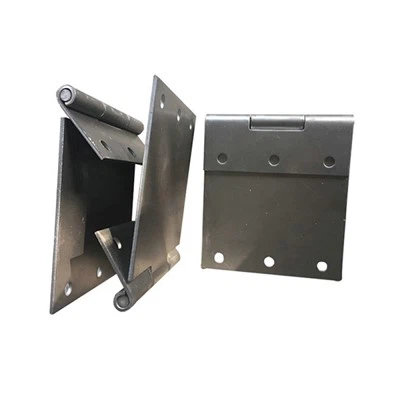
In the automotive industry, stamping hardware is used to make parts like body panels, brackets, and engine components. In electronics, it's used for making connectors, terminals, and shielding. Construction uses stamping hardware for items like fasteners and brackets, while the furniture industry uses it for hinges, handles, and other decorative elements. For example, Miniature Metal Stamping is often used in the electronics industry for making small, precise parts. And Pole Fastening Clamp is a great example of stamping hardware used in construction.
7. Why Choose Our Stamping Hardware
We take pride in our stamping hardware products. We have a team of experienced engineers and technicians who are dedicated to producing high - quality parts. Our state - of - the - art manufacturing facilities allow us to offer a wide range of stamping services, from small - scale prototypes to high - volume production.
We also offer custom stamping solutions. Whether you have a unique design or specific requirements, we can work with you to develop the perfect stamping hardware. Our commitment to quality, cost - effectiveness, and on - time delivery makes us a reliable partner for your stamping needs.
If you're in the market for stamping hardware, we'd love to hear from you. We're ready to discuss your project, answer your questions, and provide you with a competitive quote. Contact us to start a conversation about your stamping hardware requirements.
References
- Smith, J. (2020). Metal Stamping: Principles and Practices. Industrial Press.
- Jones, A. (2019). Advanced Stamping Techniques. Wiley.