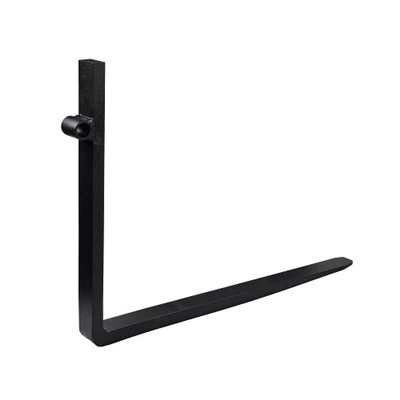
Hey there! As a supplier of telehandler forks, I've seen firsthand how these nifty tools perform in all sorts of weather conditions. Whether it's scorching heat, freezing cold, or pouring rain, telehandler forks need to hold up and get the job done. So, let's dive into how they perform in different weather scenarios.
Hot Weather
When the mercury rises, telehandler forks face a few challenges. High temperatures can cause the metal to expand, which might affect the fork's dimensions and fit. If the forks expand too much, they could become loose in the telehandler's mounting system, leading to instability during operation.
Another issue in hot weather is the potential for the hydraulic fluid in the telehandler to overheat. This can reduce the efficiency of the lifting mechanism, making it harder to handle heavy loads. The heat can also cause the rubber components in the forks, like seals and gaskets, to degrade faster.
But don't worry! Our Super Strong Pallet Forks are designed to withstand high temperatures. They're made from high - quality steel that has a low coefficient of thermal expansion, so they won't expand too much in the heat. And we use heat - resistant seals and gaskets to ensure that the hydraulic system works smoothly even on the hottest days.
Cold Weather
Cold weather is a whole different ballgame. When it's freezing outside, the metal in the telehandler forks becomes more brittle. This means that they're more likely to crack or break under stress. The hydraulic fluid also thickens in cold temperatures, which can slow down the lifting and lowering of the forks.
Snow and ice can also be a major problem. They can build up on the forks, adding extra weight and making it difficult to handle loads accurately. And if the forks are coated in ice, they might not grip the pallets properly, increasing the risk of the load slipping.
Our Telehandler Forklift Forks are built to handle the cold. We use a special type of steel that remains tough even in sub - zero temperatures. We also recommend using a hydraulic fluid with a low - temperature rating to keep the system running smoothly. And for those snowy days, we offer anti - ice coatings that help prevent snow and ice from sticking to the forks.
Rainy and Humid Weather
Rain and humidity can cause corrosion on the telehandler forks. The moisture in the air can react with the metal, forming rust. Rust weakens the forks over time and can lead to structural failure.
In addition, wet conditions can make the surfaces of the forks slippery. This can make it difficult to pick up and hold onto pallets, especially if the load is heavy.


To combat these issues, our Telehandler Shaft Forks are coated with a corrosion - resistant finish. This finish acts as a barrier between the metal and the moisture in the air, preventing rust from forming. We also design the forks with a non - slip surface to ensure a better grip on pallets, even in wet conditions.
Windy Weather
Windy conditions can pose a challenge for telehandler forks, especially when lifting large or lightweight loads. The wind can push the load around, making it difficult to control the forks and keep the load stable.
If the wind is strong enough, it can even cause the telehandler to tip over. That's why it's important to assess the wind speed and direction before starting any lifting operations.
Our telehandler forks are designed with stability in mind. They have a wide base and a low center of gravity, which helps to keep the telehandler and the load stable in windy conditions. We also recommend using additional safety measures, such as tie - downs, to secure the load and prevent it from being blown around.
Dust and Sand
In dusty or sandy environments, the telehandler forks can get clogged with debris. This can affect the movement of the forks and the hydraulic system. The dust and sand can also cause wear and tear on the moving parts of the forks, reducing their lifespan.
To prevent this, our forks are designed with sealed bearings and moving parts. This helps to keep the dust and sand out and ensures smooth operation. We also recommend regular maintenance, such as cleaning the forks and lubricating the moving parts, to keep them in top condition.
Conclusion
As you can see, telehandler forks face a variety of challenges in different weather conditions. But with the right design and maintenance, they can perform reliably in all sorts of environments. At our company, we're committed to providing high - quality telehandler forks that can handle whatever Mother Nature throws at them.
If you're in the market for telehandler forks, we'd love to have a chat with you. Whether you need forks for a hot, cold, wet, or windy environment, we've got the perfect solution for you. Contact us to discuss your requirements and get a quote. Let's work together to find the best telehandler forks for your needs!
References
- Engineering textbooks on material properties and mechanics of machinery.
- Industry standards and guidelines for telehandler operation and equipment design.