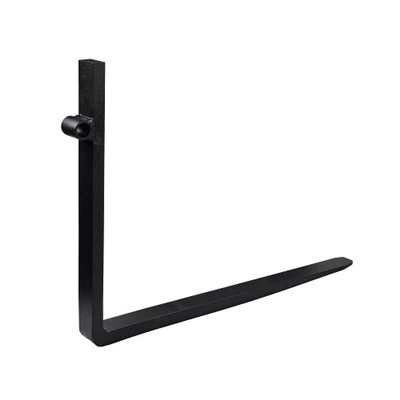
As a supplier of Loader Fork Tines, I understand the importance of ensuring that these equipment components are compatible with your loader. Whether you are in the construction, agriculture, or warehousing industry, using the right loader fork tines can significantly enhance your operational efficiency and safety. In this blog, I will share some key factors to consider when determining the compatibility of loader fork tines with your loader.


Understanding Your Loader's Specifications
The first step in assessing compatibility is to thoroughly understand your loader's specifications. This includes the make and model of your loader, as well as its lifting capacity, hydraulic system capabilities, and attachment interface. Different loaders have different requirements, and using incompatible fork tines can lead to poor performance, damage to the loader, and even safety hazards.
- Lifting Capacity: The lifting capacity of your loader is a crucial factor to consider. Fork tines should be able to handle the weight of the loads you intend to lift. Exceeding the lifting capacity can cause the loader to become unstable and increase the risk of accidents. Make sure to check the loader's manual or consult the manufacturer to determine its maximum lifting capacity.
- Hydraulic System: The hydraulic system of your loader is responsible for powering the fork tines. It is important to ensure that the hydraulic flow and pressure of your loader are compatible with the fork tines. Incompatible hydraulic systems can result in slow or inefficient operation of the fork tines.
- Attachment Interface: The attachment interface of your loader is the connection point between the loader and the fork tines. There are different types of attachment interfaces, such as quick couplers and pin-on systems. Make sure that the fork tines you choose are designed to fit your loader's attachment interface.
Measuring the Fork Tines
Once you have a clear understanding of your loader's specifications, the next step is to measure the fork tines. This will help you determine if they are the right size and shape for your loader.
- Length: The length of the fork tines is an important consideration. It should be long enough to reach the loads you need to lift, but not so long that it causes the loader to become unstable. Measure the length of the fork tines from the tip to the back of the shank.
- Width: The width of the fork tines should be appropriate for the loads you are lifting. If the fork tines are too narrow, they may not be able to support the load properly. If they are too wide, they may not fit into the spaces where you need to lift the loads. Measure the width of the fork tines at the widest point.
- Thickness: The thickness of the fork tines is also important. It should be thick enough to withstand the weight of the loads you are lifting. Measure the thickness of the fork tines at the base.
Considering the Application
In addition to the loader's specifications and the fork tines' measurements, it is also important to consider the application for which you will be using the fork tines. Different applications may require different types of fork tines.
- General Purpose Fork Tines: These are the most common type of fork tines and are suitable for a wide range of applications. They are typically made of high-strength steel and have a standard shape and size.
- Specialty Fork Tines: These fork tines are designed for specific applications, such as handling pallets, bales, or logs. They may have a different shape, size, or material than general purpose fork tines.
- Heavy-Duty Fork Tines: These fork tines are designed for heavy-duty applications, such as lifting large or heavy loads. They are typically made of thicker and stronger steel than general purpose fork tines.
Checking for Compatibility with Other Attachments
If you plan to use other attachments with your loader, such as buckets or grapples, it is important to ensure that the fork tines are compatible with these attachments. Some loaders have a quick coupler system that allows you to easily switch between different attachments. Make sure that the fork tines are designed to work with your loader's quick coupler system.
Seeking Professional Advice
If you are still unsure about the compatibility of your loader fork tines, it is always a good idea to seek professional advice. You can consult with a loader dealer, a forklift technician, or a manufacturer of loader fork tines. They can provide you with expert advice and help you choose the right fork tines for your loader.
Conclusion
Determining the compatibility of loader fork tines with your loader is an important step in ensuring the safe and efficient operation of your equipment. By understanding your loader's specifications, measuring the fork tines, considering the application, checking for compatibility with other attachments, and seeking professional advice, you can choose the right fork tines for your loader.
If you are in the market for high-quality loader fork tines, we are here to help. Our Loader Fork Tines are designed to meet the highest standards of quality and performance. We offer a wide range of fork tines to suit different applications and loader models. Whether you need Forks Attach To Wheel Loader Frames or Track Loader Forks, we have the right solution for you.
Contact us today to discuss your requirements and find the perfect loader fork tines for your loader. We look forward to working with you!
References
- Manufacturer's manuals for loaders and fork tines.
- Industry standards and guidelines for loader attachments.
- Professional advice from loader dealers, forklift technicians, and manufacturers of loader fork tines.