




Fiber Laser Cutting
Fiber laser cutting employs high-energy laser beams for precision material processing, with its core mechanism revolving around fiber laser technology. The production sequence comprises three critical phases: laser generation, beam transmission, and material sectioning.
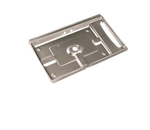
Typically applied in metallic component fabrication, this technique follows an operational workflow: metal sheets are secured on cutting platforms, after which technicians configure fiber laser parameters according to design specifications. Subsequent programming of cutting trajectories occurs through CNC control systems prior to initiating the laser cutting process. Post-cutting procedures involve waste removal to isolate finished metal parts.
This advanced methodology finds extensive application in high-precision, large-scale metal manufacturing. Compared with conventional CO₂ laser alternatives, fiber laser cutting demonstrates superior processing speeds that significantly enhance production throughput.
Its operational advantages extend to simplified maintenance protocols - the fiber-optic transmission system eliminates conventional mirror requirements, ensuring exceptional stability with negligible upkeep demands. Nevertheless, this technology primarily yields flat-profile miniature metal components due to inherent process characteristics.


Drawing Design & Confirm
Get drawings from customers, or design drawings according to customers' detail requests or sample.
The two parties confirm the details of the drawings and product raw materials, surface treatment, etc.

Price & Order
Quote and confirm order quantity, specify all the details including trade terms, payment terms, type of package, etc.

Tooling Design & Manufacturing
Design and Make tooling according to the confirmed drawing, do the modification if needed while testing.

Production Process Design
Carry out technical assessment and analysis on product structure, design production process, and ensure the feasibility of the process.

Sample Approval
Make first samples and inspect them according to the drawing strictly.
Send to the customer for approval after internal approval.

Production & Shipping
Strictly produce the goods as per the drawings and first samples.
Packed well after final inspection and ship to customers.

Benefits
Fiber Laser Cutting technology powers this advanced system, integrating a 12kW IPG Photonics laser source with Beam Dynamic Control™. Designed for high-performance industrial applications, it achieves cutting speeds of up to 40m/min, handling stainless steel (up to 30mm), carbon steel (up to 35mm), and aluminum alloys (up to 25mm) with precision. The 9-axis CNC motion system, compliant with ISO 10791-1, delivers positional accuracy of ±0.05mm/m and repeatability of ±0.03mm, making it ideal for complex geometries in aerospace brackets and automotive subframes.
With Fiber Laser Cutting, material versatility is unmatched. The system processes 0.5-35mm carbon steel (SAE 1008-1095) with kerf widths as narrow as 0.15mm, while oxygen-free nitrogen assist gas enables clean cuts on copper (C11000) and brass (CZ121) up to 8mm thick. For wind turbine flange preparation, it maintains ±0.1° angular accuracy on 45° bevel cuts. Additionally, the AI-powered Collision Avoidance System (CAS) reduces scrap rates by 18% in nested cutting, and real-time focal length adjustment (200-300mm range) compensates for material surface irregularities.
Applications
Fiber Laser Cutting has proven its value across industries. In automotive manufacturing, it enables high-speed cutting of boron steel door beams (22MnB5) for crash-resistant structures, achieving 0.2mm positional tolerance in 3D laser-formed parts. For semiconductor equipment, the system delivers ultra-clean cutting of 316L vacuum chambers (Ra ≤1.6μm surface), eliminating post-process electropolishing. In agricultural machinery, it ensures 24/7 processing of HARDOX® 450 wear plates, extending nozzle lifespan by 400% through proprietary gas mixing technology.
Looking ahead, Fiber Laser Cutting continues to evolve. The system's hybrid additive option allows laser cladding of Stellite 6 coatings (HRC 58) on cutting edges during repair cycles. With 5G smart factory integration, the OPC UA interface provides predictive maintenance alerts for optics degradation. The dual-laser configuration, combining 6kW CW and 2kW pulsed lasers, supports micromachining of ±5μm features on medical implants. Certified to CE, UL 508A, and ASME B5.57 standards, this system redefines precision manufacturing for Industry 4.0 environments.
FAQ
Q: How Can L Get A Sample?
A: We Can Provide Free Samples To Start The Project If Final Mass Order Qty Is More Than 200 Sets.
Q: What's The Lead Time For A Sample And For Mass Production?
A: 5 Days Lead Time For Samples, If A Tooling Needed, May Be 10-15 Days At Most. For Mass Production, Lead Time 15-30days According To Demand Qty.
Q: What Trade Terms You Can Offer?
A: We Can Offer You Whatever Terms Convenient For You Such As EXW, FOB. CIF. CFR Etc.
Q: Can You Produce Part According To My Sample On Hand? I Don't Have Part Drawing
A: Yes, We Are OEM/ODM Manufacturer, We Can Design The Part According To Your Sample, No Extra Design Cost Needed.
Q: Can You Assemble Some Electronic Parts We Provide To You On The Metal Enclosure We Buy From You?
A: Yes, We Can Do Assembly Work On The Metal Products We Supply To You.
Hot Tags: fiber laser cutting, China fiber laser cutting manufacturers, suppliers, factory, Sheet Metal Welding Bracket, Sheet Metal Fabrication Frame, Sheet Metal Fabrication Box, Stainless Steel Bracket Fabrication
You Might Also Like




Send Inquiry