
The pallet truck's powerful capabilities stem from its clever basic design. It's not just a simple pair of metal arms, but a sophisticated integrated system. The fork is a direct load-bearing component. Steel grade, arm thickness, and fork tip shape all contribute to its fundamental performance. A powerful hydraulic system provides smooth lifting force. Flexible steering and drive mechanisms give the machine excellent maneuverability, even in confined spaces. These core components work together to enable a single device to handle a wide range of tasks. It can handle cartons weighing as little as a few kilograms, or industrial molds weighing over two tons.
Its versatility is directly reflected in its carrying capacity. Common electric pallet trucks usually have a rated load between 1.6 tons and 3 tons. This range can meet the daily needs of most warehouses. The standard width and length of the forks are optimized to fit seamlessly with international standard pallets ranging from 800 mm to 1200 mm. High-quality forks also offer excellent impact and fatigue resistance. It can withstand more than 100,000 take-off and landing cycles during its design life, ensuring stability for long-term high-frequency use.
Diverse operating environments further test their adaptability. Compact models can maneuver flexibly in traditional warehouses with narrow aisles. For industries with high hygiene requirements, such as the food and pharmaceutical industries, stainless steel forklifts with special surface treatments are suitable. These forklifts are corrosion-resistant and easy to clean thoroughly. Even in outdoor yards or docks, models equipped with solid tires and reinforced protective structures can handle rough surfaces and humid climates. This customization capability greatly expands their application range.
Reliability and safety are the cornerstones of its multifunctional value. High-quality forks undergo rigorous testing before leaving the factory. For example, they undergo static load tests at 1.5 times the rated load and fatigue life tests exceeding hundreds of thousands of cycles. These tests ensure safety during use. Advanced equipment also incorporates multiple safety mechanisms. An overload protection system automatically cuts off the lift function if overloaded. A descent control system smoothly controls the fork's return, effectively preventing cargo from tipping over and equipment damage.
JOYEAR has been manufacturing forks for 20 years. We understand the importance of reliability and adhere to rigorous German production standards. We exercise precise control from material selection to every finishing process. We ensure that the dimensional tolerance of each fork is stable within ±1 mm. The hardness of key parts meets the industry's high standard of over HRC55. We sincerely invite you to experience the superior performance of JOYEAR forks. Feel free to purchase our products!

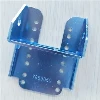
ITA forklift forks, also known as clip or hook type forks, are the most common type of forklift fork and the industry standard.
They are designed to hang from the forklift carriage using opposing hooks at the top and bottom that engage the carriage fork bars.
Blank forks are made of high-quality materials like chromium-manganese steel or boron-carbon steel, and are known for their mechanical strength and smooth finish.
They also have identical fork tip heights, which means they can be combined with each other without the need to align them in pairs.