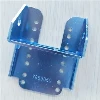

When asking, "What is a brass section?", the answer centers on a foundational industrial material: a prefabricated brass component with a standardized cross-sectional shape, engineered for specific mechanical, conductive, or corrosive-resistant needs. Brass sections-also called brass profiles-are crafted from copper-zinc alloy and formed into shapes like rods, tubes, angles, or flats. They're the building blocks of countless industrial products, valued for their unique blend of conductivity, malleability, and durability. For businesses in electronics, automotive, and material handling, understanding brass sections is key to sourcing reliable components-like those manufactured by JOYEAR Metalwork.
For over 15 years, JOYEAR has specialized in transforming brass sections into high-performance industrial parts. As a family-owned business founded in 2008, JOYEAR operates a 5,000+ square meter factory with 300+ skilled employees, holding ISO 9001:2015 (quality) and ISO 14001:2004 (sustainability) certifications. Their product lineup-from copper alloy precision stamping parts to PCB welding terminals-relies on premium brass sections, meeting global standards like ISO 2330 and ANSI/ITSDF B56.11.4 for 100+ global clients.
In this guide, we'll define brass sections, break down their types, properties, and industrial applications, and show how JOYEAR's expertise turns these profiles into mission-critical components. By the end, you'll understand exactly what a brass section is, why it matters, and why JOYEAR is a trusted partner for brass-based solutions.
1. What Is a Brass Section? Core Definition & Manufacturing
At its essence, a brass section is a length of brass alloy (copper + zinc) formed into a consistent cross-sectional shape through hot rolling, cold drawing, extrusion, or machining. Unlike raw brass ingots, brass sections are ready for direct fabrication, designed to optimize:
- Formability: Shapes that ease welding, stamping, or threading.
- Functionality: Profiles tailored to conduct electricity, resist corrosion, or bear light loads.
- Efficiency: Standardized dimensions that reduce waste and speed up production.
1.1 Key Properties of Brass Sections
Brass sections inherit the alloy's signature traits, making them indispensable for industrial use:
- Electrical/thermal conductivity: 28–40% that of copper, ideal for wiring and heat transfer components.
- Corrosion resistance: Resists rust, saltwater, and mild chemicals (superior to steel in humid environments).
- Malleability: Easy to bend, stamp, or machine without cracking.
- Aesthetic appeal: Golden finish that retains luster, suitable for decorative or exposed parts.
JOYEAR sources brass sections with strict quality controls-using high-purity copper (99.9%+) and zinc to create alloys like C2600 (70% Cu, 30% Zn) and C2700 (65% Cu, 35% Zn)-balanced for strength and workability.
1.2 How Brass Sections Are Manufactured
JOYEAR's brass sections undergo precision production processes to ensure consistency:
- Alloy Melting: Copper and zinc are melted at 900–940°C to form uniform brass.
- Forming: The molten brass is extruded, rolled, or drawn into shapes (rods, tubes, flats).
- Finishing: Sections are annealed (heat-treated) to enhance ductility, then cut to standard lengths (1–6 meters) or custom sizes.
- Quality Testing: Each batch is inspected for dimensional accuracy (±0.05mm tolerance) and alloy purity via spectrometer analysis.
2. Common Types of Brass Sections: Shapes & Industrial Uses
Brass sections are categorized by their cross-sectional shape, each designed for specific applications. Below are the most widely used types, with JOYEAR's real-world implementations:
2.1 Brass Rods (Round Sections)
- Shape: Cylindrical cross-section (diameters: 1–50mm).
- Key Traits: High conductivity, easy to machine and thread.
- JOYEAR's Applications:
- PCB welding terminals: Brass rods are cut and machined into terminal pins, ensuring reliable electrical connections for electronics. A robotics client uses these terminals to link sensors, reporting zero signal loss in 3 years.
- Fasteners (nuts, bolts): Threaded brass rods for low-load, corrosion-prone environments (e.g., marine equipment).
2.2 Brass Tubes (Hollow Sections)
- Shape: Circular or rectangular hollow cross-section (wall thickness: 0.5–5mm).
- Key Traits: Lightweight, corrosion-resistant, and suitable for fluid transfer or structural support.
- JOYEAR's Applications:
- Hydraulic lines for forklifts: Brass tubes carry hydraulic fluid in JOYEAR's telehandler shaft forks, resisting pressure and warehouse humidity.
- Cooling systems: Rectangular brass tubes for industrial machinery, leveraging thermal conductivity to dissipate heat.
2.3 Brass Angles (L-Shaped Sections)
- Shape: Right-angle "L" profile (leg lengths: 10–50mm).
- Key Traits: Rigid, easy to weld, and ideal for bracing or framing.
- JOYEAR's Applications:
- Continuous hinges: Brass angles form the hinge's structural frame, providing stability for warehouse doors and marine hatches. The L-shape distributes load evenly, while brass's corrosion resistance ensures smooth operation in coastal environments.
2.4 Brass Flats (Plate Sections)
- Shape: Thin, rectangular cross-section (thickness: 0.3–10mm, width: 10–200mm).
- Key Traits: Highly malleable, perfect for stamping and bending.
- JOYEAR's Applications:
- Copper alloy precision stamping parts: Brass flats are cold-stamped into custom brackets and clips for automotive electronics. JOYEAR's stamping process achieves ±0.05mm tolerance, ensuring compatibility with tight-fit assemblies.
- Electrical contacts: Polished brass flats for switches and connectors, maximizing conductivity.
2.5 Brass Channels (C-Shaped Sections)
- Shape: "C" profile with a flat web and parallel flanges.
- Key Traits: Structural rigidity for light-load framing.
- JOYEAR's Applications:
- Machinery enclosures: Brass channels form the edge frames of industrial control panels, protecting internal components while allowing easy access for maintenance.
3. Industrial Advantages of Brass Sections
Brass sections offer unique benefits that make them irreplaceable in key industries-advantages JOYEAR leverages to deliver value to clients:
3.1 Superior Corrosion Resistance
Brass resists rust, saltwater, and mild acids, outlasting steel in humid or coastal environments. JOYEAR's brass sections for marine hinges (SS304 continuous hinges paired with brass angles) withstand salt spray for 10+ years, reducing replacement costs.
3.2 Excellent Conductivity
Brass's electrical conductivity (28–40% of copper) makes it ideal for electronics. JOYEAR's PCB welding terminals use brass rods to ensure consistent signal transmission, critical for sensitive equipment like medical devices.
3.3 Easy Machinability & Formability
Brass sections can be stamped, welded, threaded, or bent without cracking. JOYEAR's fourslide metal stamping process transforms brass flats into complex shapes for automotive wiring harnesses, reducing production time by 25%.
3.4 Eco-Friendliness
Brass is 100% recyclable, aligning with JOYEAR's ISO 14001 sustainability certification. Recycled brass sections retain 90% of their original properties, reducing environmental impact without compromising quality.
4. Key Industries for Brass Sections (JOYEAR's Client Examples)
Brass sections are foundational across industries, with JOYEAR's components powering critical operations:
4.1 Electronics & Robotics
- Use Case: PCB terminals, sensors, and wiring connectors.
- JOYEAR's Solution: Brass rods and flats for precision-stamped terminals, meeting RoHS standards for lead-free electronics. A consumer electronics client reduced component failure rates by 40% after switching to JOYEAR's brass-based terminals.
4.2 Material Handling & Logistics
- Use Case: Forklift hydraulic lines, hinge frames, and electrical contacts.
- JOYEAR's Solution: Brass tubes for hydraulic systems and brass angles for continuous hinges, ensuring durability in 24/7 warehouse operations. A logistics firm in Germany uses these components to keep forklifts running without downtime.
4.3 Automotive & EVs
- Use Case: Wiring harnesses, battery connectors, and fuel system parts.
- JOYEAR's Solution: Brass stamping parts for EV battery terminals, leveraging conductivity and corrosion resistance to enhance safety. A Chinese EV manufacturer reports zero connector failures in 2 years of road testing.
4.4 Marine & Coastal Construction
- Use Case: Hinges, fasteners, and navigation equipment parts.
- JOYEAR's Solution: Naval brass sections (copper + zinc + tin) for marine hinges, resisting saltwater corrosion better than standard brass. A shipyard client in Southeast Asia uses these hinges for storage hatches, withstanding monsoon rains and salt spray.
5. JOYEAR's Brass Section Expertise: From Profile to Finished Product
JOYEAR doesn't just source brass sections-they optimize every step of the process to deliver tailored, high-quality components:
5.1 Customization (ODM/OEM Services)
JOYEAR's clients often require non-standard brass sections. Their team collaborates to design:
- Custom cross-sections (e.g., specialized angles for unique hinges).
- Tailored alloy compositions (e.g., lead-free brass for electronics, tin-added brass for marine use).
- Precision cutting to length (±0.5mm tolerance) for seamless integration into client products.
A medical device firm needed custom brass flats for diagnostic equipment. JOYEAR engineered a 0.8mm-thick, lead-free brass section and stamped it into intricate shapes, meeting ISO 13485 medical standards.
5.2 Strict Quality Control
Every brass section undergoes multi-stage testing:
- Alloy Purity: Spectrometer analysis to verify copper-zinc ratios and detect impurities (e.g., iron, sulfur).
- Dimensional Accuracy: CNC measuring tools to ensure cross-sectional consistency.
- Corrosion Testing: Salt spray testing (500+ hours) for marine and outdoor applications.
This rigor results in a 0.01% defect rate-far below the industry average of 0.5%.
5.3 Fast Delivery & Scalability
Industrial downtime costs $22,000 per minute (per IndustryWeek). JOYEAR's factory ensures:
- Standard brass sections: 3–5 day delivery.
- Custom profiles: 15–20 day delivery.
- Emergency orders: 24–48 hour rush production for critical replacements.
5.4 Compliance with Global Standards
JOYEAR's brass sections meet ISO 9001:2015 (quality), RoHS (electronics), IATF 16949 (automotive), and FDA (food/medical) standards. Their certifications ensure compatibility with international equipment and regulations.
6. How to Choose the Right Brass Section (JOYEAR's Expert Guide)
Selecting the right brass section depends on three core factors-JOYEAR's engineering team uses this framework to advise clients:
6.1 Define Function & Environment
- Conductivity needs: Electronics → high-copper brass (C2600).
- Corrosion resistance: Marine/coastal → naval brass (tin-added).
- Structural load: Light framing → brass angles; fluid transfer → brass tubes.
6.2 Match Shape to Fabrication
- Stamping: Brass flats (easy to bend and cut).
- Threading: Brass rods (uniform diameter for consistent threading).
- Welding: Brass angles or channels (stable for joint formation).
6.3 Verify Alloy Compatibility
- Lead-free requirements: Electronics/medical → C2700 (low-lead brass).
- High strength: Industrial machinery → C3600 (free-cutting brass with lead for machinability).
JOYEAR's pre-sale team provides free consultations to match brass sections to client needs-avoiding over-engineering or material waste.
7. Why Choose JOYEAR for Brass Sections?
JOYEAR Metalwork stands out as a leader in brass section-based components for four key reasons:
7.1 15+ Years of Brass Expertise
Since 2008, JOYEAR has focused on copper and brass components, understanding how alloy composition and profile shape impact performance. Their engineers translate client needs into optimized brass section solutions.
7.2 End-to-End Control
JOYEAR manages every step-from sourcing raw brass to fabrication and finishing-ensuring quality at every stage. This vertical integration eliminates supply chain delays and inconsistencies.
7.3 Client-Centric Customization
JOYEAR's OEM/ODM services prioritize flexibility, adapting brass sections to unique equipment, load requirements, and industry standards.
7.4 Transparent Support
- Pre-sale: Free material and shape recommendations (e.g., "Brass rods are ideal for your PCB terminals").
- In-sale: Production photos and test reports to verify progress.
- After-sale: 1-year quality guarantee and 24/7 support (phone: +86 15957487288; email: cici@joyearmetalwork.com).
8. Final Thoughts: Brass Sections = Industrial Versatility
A brass section is more than a shaped piece of alloy-it's a precision-engineered component that powers electronics, machinery, and infrastructure. Its unique blend of conductivity, corrosion resistance, and formability makes it irreplaceable in key industries, and partnering with a supplier like JOYEAR ensures you leverage these properties to the fullest.
JOYEAR Metalwork transforms brass sections into reliable, high-performance parts that meet the demands of industrial operations. Whether you need custom-stamped brass flats, conductive rods, or corrosion-resistant tubes, their expertise and quality control deliver solutions you can trust.
Ready to source brass sections tailored to your needs? Contact JOYEAR today:
- Website: https://www.joyearmetalwork.com/
- Phone: +86 15957487288
- Email: cici@joyearmetalwork.com
Your operations deserve brass sections that perform under pressure-and JOYEAR delivers exactly that.