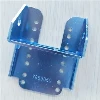

Fittings are essential mechanical components that serve as the "connectors" in countless systems-from industrial machinery and construction structures to plumbing and automotive assemblies. These components join, adapt, or secure other parts, ensuring structural integrity, leak-proof performance, and smooth operation.
With a wide variety of fittings available, understanding the most common types and their applications is critical for engineers, manufacturers, and buyers seeking the right solutions for their projects. As a leading precision metal fabrication company with over 15 years of experience, Joyear Metalwork specializes in producing high-quality fittings-including stainless steel hinges, couplings, and custom components-for global clients in automotive, construction, electronics, and marine industries.
In this guide, we will break down the 5 key examples of fittings: hinges, couplings, flanges, tees, and clamps. We'll explore their core functions, materials, applications, and how Joyear Metalwork's ISO-certified products meet the rigorous demands of modern industries.
1. Hinges: The Rotational Connection Fitting
Hinges are one of the most recognizable and widely used fittings, designed to enable rotational movement between two components while maintaining a secure connection. Unlike fixed fittings, hinges allow controlled motion-making them indispensable for doors, lids, enclosures, and mechanical linkages. They consist of two plates (leaves) connected by a pin or rod, which serves as the axis of rotation. The durability, smooth operation, and corrosion resistance of hinges depend heavily on their material and manufacturing precision.
Key Characteristics & Materials
High-quality hinges are typically made from stainless steel (304 or 316 grades), carbon steel, or aluminum. Stainless steel hinges are the gold standard for industrial and outdoor applications due to their corrosion resistance and longevity. For example, Joyear Metalwork's signature SS304 Continuous Hinge (also known as a piano hinge) is crafted from 304 stainless steel-containing 18-20% chromium and 8-10.5% nickel-which forms a protective oxide layer against rust and moisture.
This hinge features a long, continuous design that distributes weight evenly, making it more durable than traditional butt hinges for heavy-duty use. Hinges may also include additional features like bearings for smooth rotation, locks for security, or corrosion-resistant coatings for extreme environments.
Applications
Hinges are used across almost every industry, with specific use cases tailored to their design:
- Construction: Commercial building doors, industrial enclosures, and architectural panels (Joyear's SS304 Continuous Hinge is widely used in hospitals, factories, and warehouses for its ability to withstand heavy use and outdoor exposure).
- Automotive & Transportation: Vehicle doors, hoods, truck toolboxes, and trailer gates-requiring hinges that can handle vibration and temperature fluctuations.
- Electronics: Enclosures for servers, control panels, and medical devices-where precision and corrosion resistance are critical.
- Marine: Boat hatches, deck doors, and offshore equipment-often using 316 stainless steel hinges (available via Joyear's custom services) to resist saltwater corrosion.
Joyear Metalwork's hinges are engineered to meet ISO 2330 and ANSI/ITSDF B56.11.4 standards, ensuring consistent performance across high-volume production runs. Clients can explore our full range of hinge products, including custom sizes and configurations, at https://www.joyearmetalwork.com/.
2. Couplings: The Pipe & Shaft Connection Fitting
Couplings are fittings designed to join two separate components-most commonly pipes, tubes, or rotating shafts-creating a secure, leak-tight connection. They are critical for fluid/gas transfer systems (plumbing, industrial piping) and mechanical power transmission (motors, pumps). Couplings come in two primary categories: rigid couplings (for fixed, aligned connections) and flexible couplings (for absorbing vibration, misalignment, or thermal expansion).
Key Characteristics & Materials
The material of a coupling depends on its application: stainless steel (304/316) for corrosive environments, carbon steel for high-strength industrial use, and plastic for low-pressure residential plumbing. Joyear Metalwork specializes in stainless steel couplings for industrial applications, as they offer superior resistance to chemicals, moisture, and wear.
Our couplings feature precision-machined threads or weld ends to ensure a tight seal, and some include gaskets or O-rings for enhanced leak protection. For example, our 316 stainless steel pipe couplings are used in chemical processing plants, where they withstand exposure to acidic fluids and high pressure (up to 5,000 PSI).
Applications
Couplings are essential in systems where components need to be joined or disconnected for maintenance:
- Industrial Piping: Chemical plants, oil refineries, and water treatment facilities-using stainless steel couplings to transfer fluids safely.
- Mechanical Engineering: Motors, pumps, and conveyor systems-relying on flexible couplings to absorb vibration and prevent shaft damage.
- Plumbing & HVAC: Residential and commercial buildings-using copper or plastic couplings for water and air distribution.
- Agriculture: Irrigation systems-requiring durable couplings that can withstand outdoor conditions.
Joyear Metalwork's industrial couplings are customized to meet client specifications, including pipe diameter, pressure rating, and connection type (threaded, welded, or compression). Our ISO 9001:2015 certification ensures that every coupling undergoes rigorous pressure and leak testing before shipment.
3. Flanges: The Heavy-Duty Joining Fitting
Flanges are flat, disc-shaped fittings that connect pipes, valves, pumps, or tanks to form a removable, leak-tight joint. They are secured using bolts, nuts, and a gasket between the flange faces-allowing for easy disassembly and maintenance. Flanges are designed for high-pressure, high-temperature applications where rigid, reliable connections are non-negotiable, making them a staple in industrial and oil/gas industries.
Key Characteristics & Materials
Industrial flanges are primarily made from stainless steel (304, 316, or duplex grades), carbon steel, or alloy steel. Stainless steel flanges are preferred for corrosive environments, such as marine or chemical processing, while carbon steel flanges are used for high-pressure applications in power plants.
Joyear Metalwork produces stainless steel flanges with precision-machined faces (flat, raised, or ring-type joint) to ensure a perfect seal with gaskets (rubber, metal, or PTFE). Our 316L stainless steel flanges (low-carbon variant) are ideal for welding applications, as they reduce the risk of corrosion near weld joints.
Applications
Flanges are used in heavy-duty systems where disassembly is necessary for repairs or upgrades:
- Oil & Gas: Offshore platforms, pipelines, and refineries-using large-diameter flanges to handle high-pressure crude oil and gas.
- Power Generation: Boiler systems and heat exchangers-relying on flanges to connect high-temperature steam pipes.
- Chemical Processing: Reactors, tanks, and mixing equipment-using corrosion-resistant stainless steel flanges to handle harsh chemicals.
- Marine Engineering: Ship hulls and offshore structures-using duplex stainless steel flanges (available via Joyear's custom services) to resist saltwater corrosion.
Joyear Metalwork's flanges comply with international standards (ANSI, DIN, and JIS), ensuring compatibility with global piping systems. Clients can request custom flange sizes, materials, and pressure ratings to fit their specific project needs-contact our team via our website (https://www.joyearmetalwork.com/) for a quote.
4. Tees: The Pipe Branching Fitting
Tees are Y or T-shaped fittings designed to split a single pipe or tube into two branches (or combine two pipes into one). They are critical for distribution systems where fluid or gas needs to be diverted to multiple locations-making them one of the most common fittings in plumbing, HVAC, and industrial piping. Tees are classified by their port sizes: equal tees (all ports same diameter) and reducing tees (one port smaller than the other two).
Key Characteristics & Materials
Tees are made from materials matching the pipes they connect: stainless steel (304/316) for corrosive environments, copper for residential plumbing, and PVC for low-pressure applications. Joyear Metalwork's stainless steel tees are fabricated using forging or stamping processes to ensure structural integrity and smooth fluid flow.
Our 304 stainless steel equal tees are used in food processing plants, where they meet FDA hygiene standards and resist contamination. Reducing tees, on the other hand, are popular in industrial systems where fluid flow needs to be adjusted between different pipe sizes.
Applications
Tees are essential in distribution systems across industries:
- Plumbing: Residential and commercial buildings-splitting water supply lines to kitchens, bathrooms, and appliances.
- Food & Beverage Processing: Dairy, beverage, and meat processing facilities-using sanitary stainless steel tees to distribute ingredients and clean-in-place (CIP) fluids.
- HVAC: Commercial buildings-diverting air or water flow to different rooms or zones.
- Chemical Processing: Mixing tanks and reactor systems-combining two or more chemicals safely.
Joyear Metalwork's tees are designed for easy installation and long-term durability. Our precision stamping process ensures consistent dimensional accuracy, reducing the risk of leaks in high-pressure systems. For clients in the food or pharmaceutical industries, we offer polished tees that meet strict hygiene standards.
5. Clamps: The Securing & Fastening Fitting
Clamps (or pipe clamps, hose clamps) are fittings designed to secure pipes, hoses, or cables in place-preventing movement, vibration, or leaks. Unlike permanent fittings (welds, soldered joints), clamps are removable and adjustable, making them ideal for applications where components need to be repositioned or replaced. Clamps come in various designs, including worm gear clamps (most common), T-bolt clamps (for high pressure), and spring clamps (for low-pressure hoses).
Key Characteristics & Materials
Clamps are made from stainless steel, carbon steel, or plastic-with stainless steel (304/316) being the preferred choice for industrial use due to its corrosion resistance and strength. Joyear Metalwork's stainless steel worm gear clamps feature a band (304 stainless steel) and a screw (316 stainless steel) for enhanced durability. The band is perforated to allow the screw to adjust tension, ensuring a tight fit around pipes or hoses. Our clamps are resistant to vibration, temperature fluctuations, and outdoor elements-making them suitable for automotive, marine, and industrial applications.
Applications
Clamps are used in almost every industry to secure components and prevent leaks:
- Automotive: Fuel lines, coolant hoses, and exhaust systems-using clamps to withstand vibration and high temperatures.
- Marine: Boat engines, bilge pumps, and water lines-using 316 stainless steel clamps to resist saltwater corrosion.
- Industrial: Conveyor systems, hydraulic lines, and electrical cables-securing components to prevent damage from movement.
- Residential: Garden hoses, plumbing repairs, and HVAC ducts-providing a quick, removable connection.
Joyear Metalwork's clamps are compatible with a wide range of pipe and hose sizes, and we offer custom designs for specialized applications (e.g., high-pressure hydraulic systems). Our clamps are tested to ensure they maintain tension under extreme conditions, reducing maintenance costs for clients.
How to Choose the Right Fitting for Your Project
Selecting the right fitting depends on 5 key factors-ignoring these can lead to leaks, component failure, or increased maintenance costs:
1. Application Environment: Choose corrosion-resistant materials (316 stainless steel) for saltwater, chemicals, or outdoor use; 304 stainless steel for mild environments (indoor, dry industrial settings).
2. Pressure & Temperature: High-pressure systems (oil/gas, power plants) require flanges or rigid couplings; low-pressure systems (residential plumbing) can use clamps or tees.
3. Component Compatibility: Ensure the fitting size, connection type (threaded, welded, compression), and material match the pipes/tubes/shafts it connects.
4. Movement Requirements: Use hinges or flexible couplings for rotational/moving components; flanges or rigid couplings for fixed connections.
5. Regulatory Compliance: Food, medical, or pharmaceutical applications require fittings that meet FDA, EU, or ISO hygiene standards (Joyear Metalwork's stainless steel fittings comply with these standards).
Why Choose Joyear Metalwork for Your Fitting Needs?
When sourcing fittings for industrial or commercial projects, partnering with a reputable manufacturer is critical. Joyear Metalwork stands out as a trusted global supplier for 4 key reasons:
- 15+ Years of Expertise: Founded in 2008, our family-owned business has deep experience in precision metal fabrication, with 300+ skilled employees and 100+ global partners (including leading OEMs and truck dealers).
- Strict Quality Control: We hold ISO 9001:2015 (quality management) and ISO 14001:2004 (environmental management) certifications. Every fitting undergoes rigorous testing-including corrosion resistance, pressure, and dimensional checks-before shipment.
- Comprehensive Product Range: We offer all 5 examples of fittings discussed (hinges, couplings, flanges, tees, clamps) plus custom components (e.g., forklift parts, precision stamping parts) in stainless steel, carbon steel, and aluminum.
- ODM/OEM Customization: Our design team works closely with clients to develop tailored fittings-from prototyping to mass production-ensuring products meet exact project requirements. We also offer fast turnaround times (1-4 weeks for standard orders) and global delivery.
Conclusion
Fittings are the unsung heroes of industrial and commercial systems, and the 5 examples highlighted-hinges, couplings, flanges, tees, and clamps-cover the majority of applications across industries. Each fitting serves a unique purpose: hinges enable rotation, couplings join pipes/shafts, flanges create heavy-duty connections, tees branch fluid flow, and clamps secure components. Selecting the right fitting requires understanding your application's environment, pressure, and compatibility needs-while partnering with a manufacturer that delivers quality and reliability.
At Joyear Metalwork, we are committed to providing high-quality fittings that meet the highest international standards. Whether you need standard SS304 continuous hinges, custom 316 stainless steel flanges, or precision couplings for industrial machinery, we have the expertise and capacity to deliver. Contact us today to discuss your fitting requirements, request a custom quote, or explore our full product range on our website: https://www.joyearmetalwork.com/