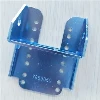

Hanging shelves is one of the most common residential and commercial improvement projects, but when it comes to storing heavy items, one question comes up more than any other: can I hang a heavy shelf on drywall? The short answer is yes - but only up to a certain weight limit, and only with the correct anchors, bracket design, and installation technique. Bare drywall alone is a relatively weak structural substrate, and misjudging its capacity can lead to collapsed shelves, damaged walls, broken belongings, and even safety hazards.
What counts as "heavy" also varies widely. For residential use, 50–150 lbs per shelf pair is typically considered heavy. For commercial or light industrial applications, heavy loads can reach 300 lbs or more - a range that is never safe on completely unsupported drywall. The key is understanding the limits of your wall, selecting hardware that distributes load effectively, and matching your bracket design to minimize stress on the drywall surface.
In this comprehensive guide, we break down exactly how much weight drywall can safely support for shelving, compare the best anchor types for heavy loads, outline proven installation methods for different weight ranges, and explain when you need to upgrade to structural mounting instead.
How Much Weight Can Drywall Actually Hold?
To understand drywall's load limits, it helps to start with how it is built. Standard drywall consists of a soft gypsum core sandwiched between two layers of heavy paper facing. The gypsum core resists vertical shear force reasonably well, but the paper face is easily torn, and the core crushes under concentrated outward pulling force.
This means drywall fails in two primary ways:
- Pull-through failure: The anchor rips through the paper face and gypsum core, pulling out of the wall. This is by far the most common failure mode for shelf brackets, as the lever effect of the shelf creates outward pulling force on the top mounting holes.
- Shear failure: The anchor slides downward through the gypsum under pure vertical load. This is less common but can occur with extremely heavy evenly distributed weight.
Standard 1/2-inch drywall is the most common residential thickness; 5/8-inch fire-rated drywall is roughly 25% stronger but still subject to the same pull-through limitations.
As a general guideline for properly installed hardware:
- Light duty (up to 50 lbs per bracket pair): Safe with basic hollow wall anchors, suitable for decorative shelves, books, and small household items.
- Medium duty (50–150 lbs per pair): Requires heavy-duty hollow wall anchors, suitable for kitchen pantry storage, small tool sets, and medium inventory.
- Heavy duty (150–300 lbs per pair): Requires direct stud mounting or a structural backing plate behind the drywall, suitable for heavy garage storage and commercial shelving.
- Ultra-heavy (over 300 lbs per pair): Requires full structural mounting into studs, concrete, or steel framing. Never install on bare drywall alone.
These ratings assume evenly distributed load and a 2:1 minimum safety factor. Concentrated point loads, extended shelf depth, and dynamic or vibration loads all reduce safe capacity significantly.
Best Anchor Types for Heavy Shelves on Drywall
Not all drywall anchors are created equal. The right anchor can multiply the safe load of a shelf installation; the wrong one can fail at a fraction of the expected weight. Below are the most common types, ranked by load capacity for shelving applications.
1. Heavy-Duty Snap Toggle Anchors
Also known as Toggler-style anchors, these are the strongest and most reliable option for hollow drywall installations. A spring-loaded toggle plate locks flat against the back side of the drywall, distributing pull force across a wide area of the wall.
- Typical safe load: 50–150 lbs per anchor
- Pros: High pull-out resistance, consistent performance, works in both 1/2-inch and 5/8-inch drywall, reusable if the screw is removed.
- Cons: Require a larger installation hole, more expensive than basic anchors.
For medium-heavy shelves installed without stud access, heavy-duty snap toggles are the gold standard.
2. Steel Molly Bolts (Hollow Wall Anchors)
Molly bolts feature an expandable steel sleeve that flares out against the back of the drywall when tightened. They are available in multiple sizes for different wall thicknesses.
- Typical safe load: 20–100 lbs per anchor
- Pros: Good all-around performance, flush finish, works well in thinner drywall.
- Cons: Lower capacity than snap toggles, can spin during installation if not set correctly.
3. Standard Wing-Style Toggle Bolts
Classic toggle bolts use a spring-loaded wing that opens behind the wall. They are widely available but less user-friendly than snap toggles.
- Typical safe load: 30–80 lbs per anchor
- Pros: Low cost, widely available.
- Cons: Wings fall off if the screw is removed, require large holes, inconsistent load distribution.
4. Plastic Conical Anchors
Basic ribbed plastic anchors are the most common and cheapest option, but they are not suitable for heavy shelves.
- Typical safe load: 10–25 lbs per anchor
- Pros: Inexpensive, easy to install.
- Cons: Very low pull-out resistance, easily tear through drywall paper face under load.
Important note: Never add anchor ratings together linearly. Load is never perfectly distributed across multiple anchors, so total system capacity should be calculated at roughly 70–80% of the sum of individual anchor ratings. Always apply a minimum 2:1 safety factor for overhead or safety-critical installations.
4 Reliable Methods to Hang a Heavy Shelf on Drywall
The best installation method depends on your load requirements and whether you have access to wall studs.
1. Hollow-Wall Anchor Installation (Medium Loads, No Stud Access)
For loads up to roughly 150 lbs per bracket pair when studs are not accessible, heavy-duty snap toggle anchors are the best solution.
- Use at least two anchors per bracket mounting plate, spaced as far apart as possible to maximize leverage resistance.
- Ensure anchors are set fully flush to the wall before tightening bracket screws.
- Keep shelf depth under 12 inches to minimize outward pull force.
2. Direct Stud Mounting (Heavier Loads, Aligned Brackets)
When shelf brackets align with wall studs (typically spaced 16 or 24 inches on center), screwing directly into the stud center delivers far higher capacity than any hollow wall anchor.
- Use 2.5-inch or longer wood screws or lag bolts driven into the center of the stud.
- Safe capacity ranges from 200–500 lbs per pair depending on bracket strength and screw size.
- This is the most reliable method for heavy residential and light commercial shelves.
3. Plywood Backing Plate (Heavy Loads, Misaligned Studs)
When brackets do not line up with studs but you need heavy load capacity, install a structural backing plate behind the drywall.
- Cut a strip of 3/4-inch plywood long enough to span at least two wall studs.
- Cut an opening in the drywall, screw the plywood securely to the studs, then repair and finish the wall.
- Mount shelf brackets anywhere along the plywood strip. This distributes load across multiple studs and a wide area of drywall, delivering near-stud capacity with flexible bracket placement.
4. French Cleat System (Wide, Uniform Heavy Loads)
A French cleat uses two interlocking angled strips - one mounted to the wall, one mounted to the shelf - to hang the shelf securely.
- Mount the wall cleat across multiple studs for maximum strength.
- Distributes load evenly along the full length of the shelf, reducing stress on any single point.
- Ideal for wide, heavy shelves such as garage storage systems and commercial display units.
Critical Rules for Safe Drywall Shelf Installation
Even with the best anchors, poor installation and loading practices can cause failure. Follow these rules to maximize safety and capacity:
1.Keep heavy items close to the wall.
- The farther weight sits from the wall, the more leverage it applies to the top mounting anchors. Loading only the front edge of a 12-inch shelf can double the outward pull force compared to weight placed against the wall.
2.Use more brackets.
- Adding extra brackets spreads load across more fasteners and more wall area, reducing stress on any single anchor point.
3.Choose triangular braced brackets over flat L-brackets.
- Triangular brackets with a diagonal support strut transfer far more load downward into vertical shear force, which drywall handles well, and reduce outward pulling force on the top anchors. This alone can increase effective safe wall capacity by 30–50%.
4.Avoid dynamic and vibration loads.
- Drywall anchors loosen over time under vibration or repeated impact loading. Never mount heavy power tools, machinery, or frequently bumped equipment on drywall-only supports.
5.Inspect periodically.
- Check brackets, screws, and surrounding drywall every few months for signs of loosening, cracking, or paper face tearing. Tighten or reinforce at the first sign of movement.
When You Should NOT Hang a Heavy Shelf on Drywall
Drywall has hard limits, and some applications are never safe on unsupported drywall:
- Ultra-heavy industrial loads over 300–500 lbs per bracket pair
- Overhead loads where failure could cause personal injury
- Vibration-prone equipment, power tools, or machinery
- Storage of hazardous, fragile, or extremely high-value materials
- Very long shelves with concentrated point loads at the ends
For these applications, always mount directly into structural studs, concrete, or steel framing.
Quality Brackets for Reliable Drywall & Structural Installations
Even with the best anchors and installation technique, a shelf is only as reliable as the brackets supporting it. Poorly designed brackets with undersized mounting plates, misaligned holes, or uneven load distribution can concentrate stress on individual anchors and cause premature wall failure, even if the total weight is within the rated limit. For consistent, engineered load performance, work with a metal manufacturer that understands load dynamics and bracket geometry.
Joyear Metalwork is an ISO 9001:2015 and ISO 14001:2004 certified metal manufacturing specialist with over 15 years of experience producing high-strength structural components for material handling, construction, electronics, and industrial markets. Our deep expertise in load-bearing design comes from our flagship forklift fork product line, which meets or exceeds ISO 2330 and ANSI/ITSDF B56.11.4 safety standards for heavy load performance. We apply that same engineering rigor to every shelf bracket we produce.
Our bracket range covers every installation scenario:
- Light to medium-duty stamped brackets with precision-formed mounting plates and consistent hole spacing for even load distribution, ideal for residential and commercial drywall installations. Our copper alloy precision stamping capabilities also extend to conductive mounting hardware for electronic shelving and display systems.
- Heavy-duty welded triangular brackets for installations with stud mounting or structural backing, delivering reliable load performance for commercial and light industrial storage. Every bracket is manufactured with tight dimensional tolerances to ensure flush wall contact and even stress distribution across all mounting fasteners.
We also offer full ODM & OEM support, with engineering input to optimize bracket geometry for specific mounting substrates, helping you maximize safe load capacity while minimizing stress on drywall or other wall surfaces.
Common Mistakes That Cause Drywall Shelf Failures
Avoid these frequent errors that turn seemingly secure installations into failures:
- Using basic plastic anchors for loads over 25 lbs
- Driving screws directly into drywall without any anchor
- Using only one anchor per bracket mounting plate
- Placing all heavy items at the very front edge of the shelf
- Ignoring stud placement and relying entirely on hollow wall anchors for heavy loads
- Choosing decorative brackets based on appearance without verifying load rating
Conclusion
So can you hang a heavy shelf on drywall? Yes - as long as you stay within the wall's load limits, use the correct heavy-duty anchors, select braced bracket designs that minimize outward pull force, and follow proper installation practices. For medium loads up to roughly 150 lbs per pair, high-quality snap toggle anchors provide reliable performance. For heavier loads, direct stud mounting or a plywood backing plate is required. For ultra-heavy industrial or safety-critical applications, bare drywall is never sufficient.
Ultimately, shelf strength is a system property: the bracket, fasteners, and wall all work together, and the weakest link determines the real capacity. By combining quality engineered brackets with proper mounting technique and an appropriate safety factor, you can install heavy shelves on drywall that perform reliably for years of service.
For precision-engineered shelf brackets and structural metal components backed by international quality certifications and heavy-load manufacturing expertise, explore the full range of capabilities at Joyear Metalwork and request a consultation for your next project.