




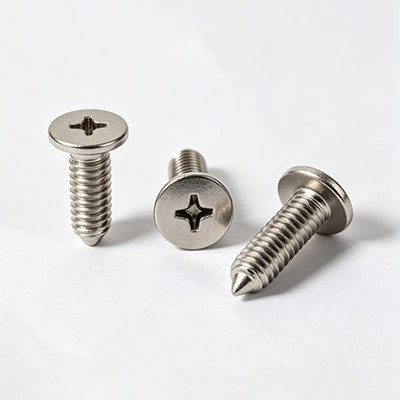
Metal Stud Screws
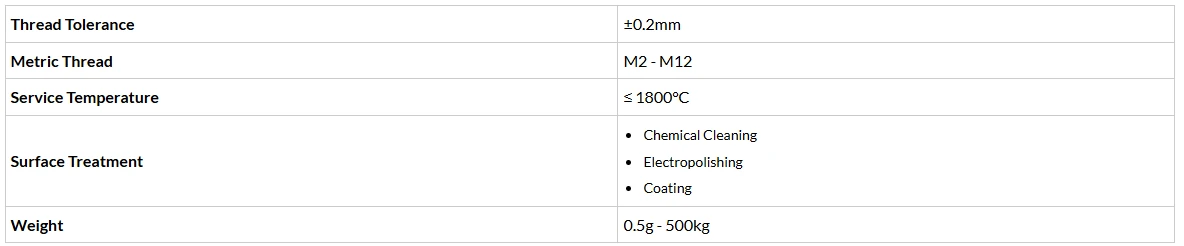
Weight Range : 0.5g–500kg
Dimensional tolerance : ±0.2 mm
Please provide product specifications so that we can offer specific pricing and MOQ.
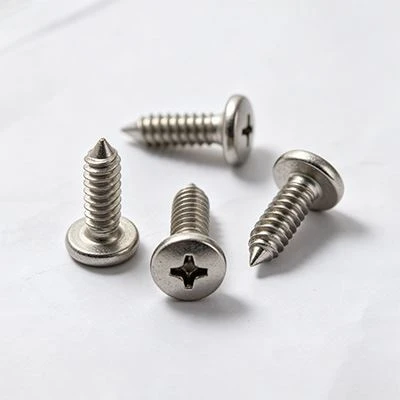
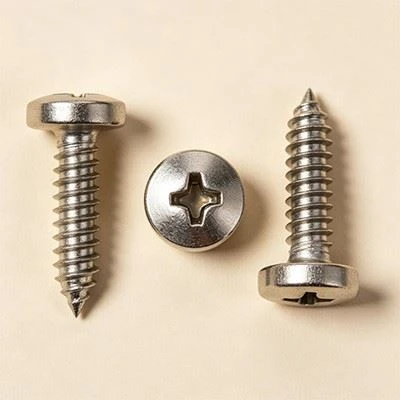
The head geometry of Metal Stud Screws has a direct impact on the adaptability and torque transmission efficiency of the installation tool. The dimensional accuracy of its cross groove or hexagonal groove determines the tendency of the bit to break away during high-speed tightening. According to ISO 7049's groove size regulations for cross-recessed countersunk head self-tapping screws, the groove depth deviation must be controlled within plus or minus 0.05 mm. When the PH2 bit is used for continuous tightening at a speed of 1,500 rpm, the wear rate of the groove contact surface accelerates significantly after the number of tightening exceeds 5,000 times. The torque transmission efficiency gradually decreases from the initial 95% to 87%. This change is mainly due to the plastic deformation caused by repeated impacts between the bit and the groove wall. Fatigue tests have shown that when the edge of the notch is deformed by more than 0.1 mm, the probability of slippage jumps from 2% to 18%. Therefore, the bits need to be replaced regularly in the automated assembly line, and a maintenance cycle of replacing the bits every 6,000 tightenings is set based on statistical data to maintain torque control accuracy.
In the combined connection that penetrates multi-layer thin plates, the thread shape of the metal column screws and the drilling ability of the tip directly affect the tightness and peeling resistance between the multi-layer plates. According to ISO 1478's regulations on the end structure of self-tapping screws, the tip guide cone angle is usually 20 to 30 degrees. Taking the ST4.8 specification as an example, when it is necessary to penetrate a layer of 0.8 mm galvanized steel plate and a layer of 2.0 mm cold-formed steel column, the screw should have sufficient drilling stroke to start tapping after penetrating the first layer of the board. Otherwise, the pre-drilled hole may be enlarged or the board may be delaminated. According to actual measurement data, when the length of the tip guide part is less than 40% of the total thread length, the gap between the two boards after penetration reaches an average of 0.2 mm, resulting in a reduction of about 10% in connection stiffness.
By optimizing the taper angle to 25 degrees and lengthening the guide section to 50 percent of the total thread length, the gap can be controlled within 0.08 mm. At the same time, the end of the screw is equipped with a small flat cutting edge. According to the DIN 7500 Part 1 test method for drilling force of self-tapping screws, the peak drilling force is about 280 Newtons, which is about 18% lower than the ordinary pointed structure. It reduces the output load of the electric screwdriver and makes the screw more adaptable in the combined installation of double-layer gypsum board and keel and the fastening operation of sandwich metal panels.
Parameter
Drawing Design & Confirm
Obtain drawings from customers or create drawings based on their specifications or samples.
The drawings, product raw materials, surface treatment, and other details are attested to by both parties.

Price & Order
Provide a quote, confirm the order quantity, and include all relevant information.
Like the terms of payment, the terms of trade, the kind of packaging, etc.

Production & Shipping
When manufacturing the goods, adhere precisely to the original drawings and samples.
After a final inspection, it was meticulously packaged and delivered to the customers.


Hot Tags: metal stud screws, China metal stud screws manufacturers, suppliers, factory
Previous
No InformationYou Might Also Like



Send Inquiry