

Track loader forks are essential attachments for heavy - duty machinery, offering a wide range of functionality in various industries such as construction, agriculture, and warehousing. As a supplier of Track Loader Forks, I am well - versed in the importance and functions of the attachment points on these forks. In this blog, we will explore the key functions of these attachment points and how they contribute to the overall performance of track loader forks.

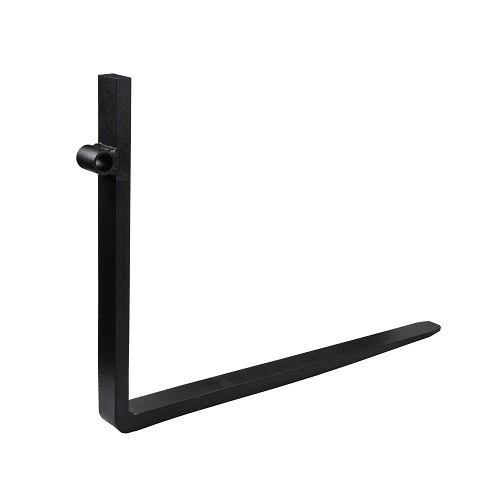
1. Secure Attachment to the Track Loader
The primary function of the attachment points on track loader forks is to provide a secure connection to the track loader. These attachment points are designed to fit precisely with the corresponding mounting mechanisms on the loader. For example, most track loader forks use a pin - and - bracket system. The pins are inserted through holes in the attachment points and the loader's mounting brackets, creating a stable and rigid connection. This secure attachment is crucial because it ensures that the forks can withstand the forces exerted during lifting and moving operations. Without a proper attachment, the forks could become loose, leading to dangerous situations and potential damage to the equipment or the load.
When the attachment is secure, the track loader can transfer power effectively from its hydraulic system to the forks. The hydraulic cylinders on the loader can then lift, lower, and tilt the forks smoothly, allowing for precise control of the load. This is especially important when working in tight spaces or when handling delicate loads. For instance, in a warehouse environment, operators need to be able to maneuver the forks accurately to pick up and place pallets on shelves. A secure attachment ensures that the forks respond precisely to the operator's commands.
2. Adaptability and Compatibility
Another significant function of the attachment points is to provide adaptability and compatibility. Different track loaders may have different mounting configurations, and the attachment points on the forks are designed to be compatible with a wide range of loader models. Our Track Loader Forks are engineered with standardized attachment points that can be easily adjusted or modified to fit various track loaders. This means that customers can use our forks with their existing track loaders without having to invest in additional equipment or make extensive modifications.
Moreover, the attachment points also allow for the interchangeability of different types of forks. For example, a customer may need to switch between Loader Fork Tines of different lengths or widths depending on the specific task at hand. With the right attachment points, this switch can be made quickly and easily, increasing the versatility of the track loader. In an agricultural setting, farmers may use shorter forks for handling bales and longer forks for moving large haystacks. The ability to change forks efficiently saves time and money.
3. Load Distribution
The attachment points play a vital role in load distribution. When a load is placed on the forks, the weight needs to be evenly distributed across the attachment points and the loader's mounting system. Well - designed attachment points are engineered to ensure that the load is transferred evenly to the loader's frame. This helps to prevent overloading of specific components and reduces the risk of structural damage to the loader.
For example, if the load is concentrated on one side of the forks or if the attachment points are not properly aligned, it can cause uneven stress on the loader's hydraulic cylinders, axles, and frame. Over time, this can lead to premature wear and tear, and even catastrophic failure. By distributing the load evenly, the attachment points help to extend the lifespan of the track loader and ensure its reliable operation. In a construction site, where heavy materials such as bricks, stones, or steel beams are frequently lifted, proper load distribution is essential for the safety and efficiency of the operation.
4. Safety Enhancement
Safety is of utmost importance in any heavy - machinery operation, and the attachment points on track loader forks contribute significantly to safety. A secure attachment reduces the risk of the forks detaching from the loader during operation. This is especially crucial when working at height or when handling heavy loads. If the forks were to come loose, it could cause the load to fall, potentially injuring workers or damaging property.
In addition, the attachment points are often designed with safety features such as locking mechanisms. These mechanisms prevent the pins from accidentally coming out during operation. For example, some attachment points use spring - loaded pins that require a specific action to be removed, ensuring that the connection remains secure at all times. Safety is also enhanced by the ability to quickly and easily inspect the attachment points for wear and damage. Regular inspections can identify potential problems before they become serious, allowing for timely maintenance and replacement of parts.
5. Facilitation of Maintenance
The attachment points on track loader forks also facilitate maintenance. Since they are the connection between the forks and the loader, they can be easily accessed for inspection, cleaning, and lubrication. Regular maintenance of the attachment points helps to ensure their proper functioning and extends their lifespan. For example, lubricating the pins and brackets can reduce friction and wear, preventing corrosion and rust.
When it comes to replacing parts, the attachment points are designed to allow for easy removal and installation of the forks. This is important because it reduces downtime in case of a fork failure or when maintenance is required. In a busy construction or industrial setting, minimizing downtime is crucial for maintaining productivity. Our Track Loader Forks are designed with user - friendly attachment points that make maintenance a straightforward process.
6. Performance Optimization
The design of the attachment points can also optimize the performance of the track loader forks. By ensuring a rigid and stable connection, the attachment points allow the forks to operate at their maximum efficiency. The forks can lift heavier loads, reach greater heights, and perform more precise movements. This is particularly important in industries where high - performance equipment is required to meet strict deadlines and productivity targets.
For example, in a large - scale warehousing operation, the ability to lift and move more pallets in a shorter period of time can significantly increase the throughput of the facility. The attachment points also play a role in reducing vibration and noise during operation. A well - attached fork system reduces the amount of vibration transferred to the loader and the operator's cab, providing a more comfortable and efficient working environment.
Conclusion
In conclusion, the attachment points on track loader forks serve multiple important functions. They provide a secure connection to the track loader, offer adaptability and compatibility, distribute the load evenly, enhance safety, facilitate maintenance, and optimize performance. As a supplier of Track Loader Forks, we understand the critical role that these attachment points play in the overall functionality of the forks.
If you are in the market for high - quality track loader forks or Loader Fork Tines and Wheel Loader Pallet Forks, we invite you to contact us for more information. Our team of experts can assist you in selecting the right forks for your specific needs and provide you with detailed product information and pricing. We are committed to providing our customers with the best products and services to ensure the success of their operations.
References
- Construction Equipment Handbook, various editions
- Agricultural Machinery Maintenance Guide, published by industry associations
- Warehouse Operations Best Practices Manual, industry - specific publications


