



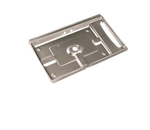


High Current PCB Screw Terminal
The printed circuit board (PCB) serves as a central component in electronic devices. Manufacturers create conductive copper foil traces on an insulated substrate through printing techniques to connect electronic components like resistors, capacitors, and chips. This process establishes electrical pathways while providing mechanical stability. Acting as the crucial interface between the PCB and external systems, the PCB terminal enables reliable connections with wires, cables, or other equipment, particularly in applications requiring frequent maintenance or component replacement.
PCB terminals typically consist of two primary elements: metal conductors and insulated housing. Factories specializing in terminal production primarily focus on manufacturing the metal conductors, though they may also produce custom plastic housings tailored to specific conductor designs. Workers begin the conductor production process by preparing metal sheets made from materials like brass or phosphor bronze. They then use high-speed stamping machines with precision molds to shape these sheets into terminal forms, maintaining strict dimensional accuracy to prevent conductive issues caused by bursts or imperfections.
After completing the stamping process, technicians perform electroplating treatments to enhance product performance. They first clean metal surfaces thoroughly to remove oils and contaminants before applying coatings such as tin, nickel, or gold. Each plating material offers distinct advantages – some improve corrosion resistance, while others enhance conductivity or withstand high temperatures. This selective coating process allows manufacturers to customize terminals for different operational requirements, ensuring optimal performance in diverse environments ranging from industrial machinery to consumer electronics.
The final production stages emphasize quality control through rigorous testing protocols. Engineers verify electrical conductivity by measuring resistance levels and inspect plating uniformity under magnification. Automated systems check mechanical durability through repeated insertion/extraction cycles and torque measurements for screw-type terminals. Factories employ advanced equipment like multi-cavity injection molds for housing production and robotic assembly lines for consistent component integration. These processes ensure terminals meet international standards for applications including power distribution in control panels, signal transmission in automotive systems, and LED lighting installations.

Drawing Design & Confirm
Get drawings from customers, or design drawings according to customers' detail requests or sample.
The two parties confirm the details of the drawings and product raw materials, surface treatment, etc.

Price & Order
Quote and confirm order quantity, specify all the details including trade terms, payment terms, type of package, etc.

Tooling Design & Manufacturing
Design and Make tooling according to the confirmed drawing, do the modification if needed while testing.

Sample Approval
Make first samples and inspect them according to the drawing strictly.
Send to the customer for approval after internal approval.

Production & Shipping
Strictly produce the goods as per the drawings and first samples.
Packed well after final inspection and ship to customers.


Introduction
The High Current PCB Screw Terminal is a specialized circuit board connector designed by our team to handle significantly higher electrical currents than standard terminals. Unlike conventional designs, our product focuses on maximizing current capacity while maintaining simplicity and reliability. The core structure consists of three key components: a metal conductor for optimal conductivity, a screw clamping mechanism for secure connections, and optional insulation based on client requirements. While we typically manufacture them without insulation shells to prioritize compactness and heat dissipation, we can easily add customized insulation upon request to meet specific safety or environmental needs.
To use our High Current PCB Screw Terminal, users simply insert the wire into the terminal hole and tighten the screw, creating a stable mechanical bond between the conductor and wire through controlled pressure. This direct contact allows large currents to flow efficiently across the metal conductor's cross-sectional area, which reduces heat generation and minimizes energy loss during operation. Our design eliminates complex welding processes, enabling quick installation and hassle-free maintenance. We ensure every terminal undergoes rigorous testing to withstand prolonged high-current loads without degradation.
By combining robust materials like copper alloys with precision engineering, we deliver terminals that outperform traditional connectors in durability and efficiency. Our team prioritizes both safety and performance-whether clients need basic uninsulated units for industrial machinery or insulated versions for sensitive applications, we adapt quickly to their specifications. This flexibility, paired with the terminal's straightforward screw-fastening method, makes our solution ideal for power supplies, motor controls, renewable energy systems, and other high-demand scenarios where reliability cannot be compromised.
Benefits
Our High Current PCB Screw Terminal offers multiple advantages that set it apart from standard connectors. We use low-resistance metal conductors with large cross-sectional areas, enabling our terminals to handle extremely high currents exceeding 100A+ reliably. By securing wires through mechanical pressure rather than traditional methods, our design ensures low contact resistance while maintaining stability even during power fluctuations or environmental vibrations. This screw-clamping mechanism prevents loosening over time, delivering consistent performance in demanding conditions.
Workers can complete connections effortlessly without soldering-they simply insert wires into the terminal holes and tighten the screws. This straightforward process significantly simplifies assembly workflows while saving labor time and reducing production costs. We prioritize user convenience by eliminating specialized tools or complex procedures, allowing quick installations and easy maintenance. Our terminals' robust construction combines durability with efficiency, as the optimized metal conductor design minimizes energy loss and heat buildup during high-current transmission.
Customization remains a key strength-while we typically produce these terminals without insulation shells for maximum heat dissipation, we can add protective insulation upon request to meet specific safety requirements. Every component undergoes strict quality control to ensure long-term reliability across industrial equipment, power systems, motor controls, and other high-load applications. By focusing on both performance and practicality, we create solutions that outperform conventional connectors in stability, adaptability, and cost-effectiveness.
Conclusion
Our High Current PCB Screw Terminal delivers exceptional performance through thoughtful engineering and user-centric design. We equip these terminals with low-resistance metal conductors featuring large cross-sectional areas, enabling them to handle currents exceeding 100A+ while minimizing energy loss and heat generation. By utilizing mechanical pressure to secure wires via screw clamping, we eliminate the need for soldering and ensure stable connections even under power fluctuations or harsh vibrations. Workers simply insert wires into the terminal holes and tighten the screws-this streamlined process cuts assembly time significantly while reducing labor costs. Our focus on simplicity extends to maintenance, as users can effortlessly replace or adjust wires without specialized tools or technical expertise.
We tailor these terminals to diverse industrial needs by offering optional insulation shells alongside standard uninsulated versions. While our default design prioritizes heat dissipation through exposed metal conductors, we readily add protective insulation upon request to meet specific safety or environmental standards. Rigorous quality checks guarantee durability across applications ranging from motor controls and power supplies to renewable energy systems. The combination of copper alloy materials, anti-loosening screw mechanisms, and vibration-resistant construction ensures long-term reliability in demanding settings like factory automation or electric vehicle charging stations. By balancing high-current capacity with operational flexibility, we provide connectors that outperform traditional solutions in both efficiency and adaptability.
Hot Tags: high current pcb screw terminal, China high current pcb screw terminal manufacturers, suppliers, factory
Previous
PCB Mount TerminalYou Might Also Like


Send Inquiry