

Extreme rainstorms in South Korea in recent years are driving an unprecedented evolution in fork technology. At the rescue site of the 2022 Seoul rainstorm that killed 14 people, conventional forks revealed their limitations in the muddy debris environment, prompting rescue authorities to implement a multifunctional attachment system. Bucket clamping device accurately gripped deformed containers, rotator quickly righted overturned vehicles, and extended fork effectively handled oversized building materials. These special forks increased the rescue efficiency by more than 35%, and Hyundai Heavy Industries' related orders exploded in the aftermath of the disaster.
Facing the problem of repeated flooding in the storage area, the company invested in upgrading the waterproof fork system. Lotte Logistics Center invested $2 million in a complete replacement of equipment after the 2023 rainstorm, adopting a sealed hydraulic system with IP68 protection level and stainless steel forks, whose corrosion resistance is eight times higher than that of ordinary steel. These forks are equipped with water depth sensors that automatically cut off power when the water level reaches the danger threshold, ensuring the safety of operators in flooded environments.
Technological breakthroughs are even more evident in the application of special rescue scenarios. The amphibious forklift developed by Doosan Infracore has a wading depth of 1.2 meters, and with electromagnetic suction cups, it can transfer a 1.5-ton submerged vehicle.1 In narrow alley rescue, the articulated forks can steer flexibly in a space less than 2 meters wide; and the vacuum glass clamp ensures the safe transfer of broken windows and doors to avoid secondary injuries. These innovative equipments realize rapid function switching through modular design to meet the changing needs of complex disaster situations.
The intelligent evolution of fork technology is reshaping the pattern of rescue system. The LIDAR navigation module breaks the operation dilemma of visibility less than 50 meters, the titanium alloy reinforced fork arm increases the carrying capacity by 40%, and completely solves the problem of deformation of the equipment caused by the weight gain of cargo immersion in water. From a simple handling tool to a comprehensive rescue platform, the fork has become an indispensable technical pillar in the modern disaster rescue system.
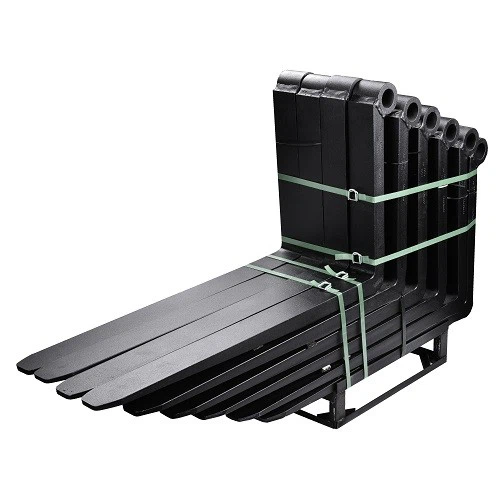
Telehandler Shaft forklift forks are engineered to deliver exceptional performance and reliability for demanding operational...
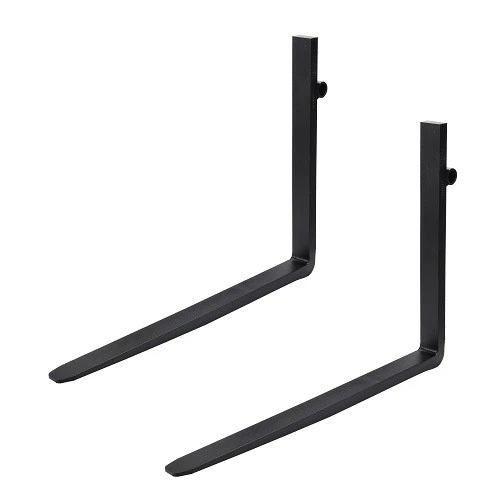
Track loader forklift fork embeds smart sensor arrays that track cargo mass and load positioning in real-time - a critical safety upgrade for...

Skid Mount Pallet Forks are specialized attachments designed for skid-steer loaders, compact construction equipment...
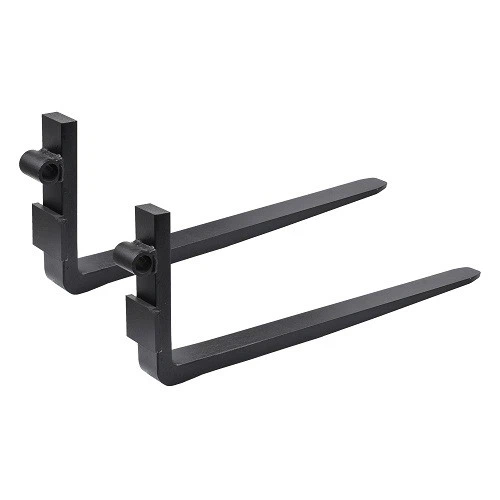
Pin Type Forks secure and connect lifting equipment through sturdy pins. These systems consist of forks, pins, and alignment holes or slots...


