
Rust is one of the biggest enemies of metal components, industrial machinery, hardware fittings, and construction structures. It weakens structural integrity, ruins surface appearance, increases maintenance costs, and drastically shortens the service life of steel parts. Whether you are sourcing forklift accessories, architectural hinges, sheet metal components, or precision stamping parts, one question always stands out: What is the best steel to avoid rust?
Not all steel grades offer the same corrosion resistance. Some ordinary carbon steel rusts within days, while premium stainless and alloy steels can remain rust-free for decades. Choosing the wrong steel leads to frequent replacements and unnecessary losses. In this guide, we rank the top rust-resistant steel types, analyze their pros and cons, match them with different application scenarios, and recommend reliable rust-proof steel components from Joyear Metalwork, an ISO-certified manufacturer with over 15 years of metal fabrication experience.
Why Choosing Rust-Resistant Steel Matters
Rust does not only affect appearance; it brings multiple practical risks:
- Structural deformation and cracking under heavy load
- Increased friction and failure of moving parts like hinges and forklift forks
- Oxidation contamination for electrical components such as PCB terminals
- Higher long-term repair and replacement expenses
- Unattractive discoloration for decorative metalwork
For industrial manufacturers and project designers, selecting the best steel to avoid rust is the most cost-effective way to ensure long-term product stability and durability.
Top Steel Types to Avoid Rust (Ranked by Corrosion Resistance)
1. 316 / 316L Stainless Steel (Best Overall)
316 and low-carbon 316L stainless steel are the best all-around steel to avoid rust. It contains extra molybdenum elements, higher nickel, and chromium content, forming a dense self-healing passive film on the surface.
Advantages:
- Excellent resistance to salt spray, coastal air, and chloride corrosion
- Tolerates acidic, alkaline, and humid industrial environments
- Resists pitting and crevice corrosion perfectly
- Weldable and easy to process for custom fabrication
Best for: Marine hardware, outdoor architectural parts, medical equipment, coastal construction, and high-humidity industrial components. Joyear Metalwork adopts 316 stainless steel for premium 72 Inch Stainless Steel Piano Hinges and outdoor long metal hinges.
2. 304 Stainless Steel (Best Budget Choice)
304 stainless steel is the most popular rust-proof steel for general use. With 18% chromium and 8% nickel, it delivers reliable everyday corrosion resistance without the high cost of 316.
Advantages:
- Rust-proof in normal indoor and outdoor atmospheric environments
- Food-safe and easy to clean
- Great machinability for sheet metal stamping
- Affordable mass production cost
Limitations: Not ideal for coastal salt air or strong chemical environments. It is widely used in our prototype sheet metal stamping and indoor hardware parts at Joyear Metalwork.
3. 2507 Super Duplex Stainless Steel (Harsh Environment King)
2507 duplex steel features a dual-phase structure with high chromium, nickel, and molybdenum. Its corrosion resistance far exceeds 316, making it the top choice for extreme harsh conditions.
- Advantages: Unmatched resistance to seawater, industrial acid, and high chloride environments; ultra-high strength and low-temperature toughness.
- Limitations: Expensive and harder to machine, only for high-end industrial projects.
4. High Nickel Alloy Steel
Nickel alloy steel is an affordable upgrade from carbon steel. Though not fully rust-proof like stainless steel, its high nickel content slows rust formation significantly.
- Advantages: Better toughness and low-temperature performance; cost-effective for heavy-load parts like forklift forks.
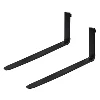
- Limitations: Will eventually rust under long-term coastal exposure. Joyear uses high nickel steel for durable Telehandler Shaft Forks and Blank Forklift Forks.
5. Weathering Steel (Corten Steel)
Corten steel forms a stable protective rust layer that stops further corrosion. It never needs painting and is ideal for outdoor architectural structures.
- Limitations: Not suitable for high-touch hardware or electrical components.
What Is the Best Steel to Avoid Rust for Different Scenarios?
There is no one-size-fits-all answer, but we have clear recommendations for common applications:
- Coastal & Salt Air Areas: Choose 316L Stainless Steel - the ultimate defense against salt corrosion.
- General Indoor & Outdoor Use: Choose 304 Stainless Steel - perfect balance of price and rust resistance.
- Heavy Machinery & Forklift Parts: Choose High Nickel Steel - high strength and moderate rust resistance.
- Chemical & Petrochemical Environments: Choose 2507 Duplex Steel - withstands strong acid and alkali.
- Decorative Architectural Projects: Choose 304 or Corten Steel - durable and aesthetic.
Steel Rust Resistance Comparison Table
| Steel Type | Rust Resistance | Cost | Strength | Best Application |
|---|---|---|---|---|
| 316L Stainless | Excellent | High | High | Coastal, marine, medical |
| 304 Stainless | Very Good | Medium | Medium | General hardware, sheet metal |
| 2507 Duplex | Superior | Very High | Ultra-High | Chemical, offshore |
| High Nickel Steel | Moderate | Low-Medium | High | Forklift forks, machinery |
| Carbon Steel | Poor | Low | Medium | Dry indoor structure only |
Premium Rust-Resistant Steel Parts from Joyear Metalwork
If you need high-quality rust-proof steel components for machinery, hardware, sheet metal, or electrical use, Joyear Metalwork is your ideal manufacturing partner.
Founded in 2008, we are a family-owned ISO 9001:2015 and ISO 14001:2004 certified factory with over 15 years of metal fabrication experience. Our facility covers 5,000+ square meters, with 300+ skilled employees and 100+ global cooperating partners. All products meet ISO 2330 and ANSI industrial standards.
We professionally select the best steel to avoid rust for every product:
- Forklift Forks: High nickel steel for strength and slow corrosion
- 72 Inch Stainless Steel Piano Hinges & Long Metal Hinges: 304/316 stainless steel for long-term rust resistance
- Prototype Sheet Metal Stamping: Custom 304/316 stainless steel brushed finishes
- Copper Alloy Precision Stamping Parts & PCB Welding Terminals: Matched rust-resistant steel for assembly compatibility
We provide ODM/OEM customization, professional anti-rust surface treatment, strict quality control, and fast global delivery.
How to Make Steel Even More Rust-Proof
Even the best steel to avoid rust can last longer with simple maintenance:
- Apply powder coating or anti-rust paint on carbon and nickel steel surfaces.
- Keep metal parts dry and well-ventilated to avoid long-term moisture exposure.
- Clean dust and salt deposits regularly for outdoor steel components.
- Let professional manufacturers like Joyear Metalwork handle material selection and surface finishing.
Common Myths About Rust-Proof Steel
- Myth: Stainless steel never rusts.
Fact: 304 stainless steel can still rust in severe coastal salt air; 316 is far more reliable.
- Myth: Nickel steel is completely rust-proof.
Fact: High nickel steel only slows rust, it cannot avoid it forever.
- Myth: The most expensive steel is always the best.
Fact: 304 is enough for most regular projects; no need to overpay for 316.
Conclusion
To answer What is the best steel to avoid rust? clearly: 316L stainless steel is the overall best for maximum corrosion resistance, ideal for coastal, marine, and chemical environments. 304 stainless steel is the top budget choice for general indoor and outdoor use. High nickel steel is perfect for heavy-load machinery like forklift forks, while 2507 duplex steel serves extreme industrial scenarios.
Choosing the right rust-resistant steel saves maintenance costs and extends product lifespan drastically. For custom rust-proof steel hinges, forklift parts, sheet metal stamping, and precision components, trust the professional material selection and manufacturing strength of Joyear Metalwork.
Visit https://www.joyearmetalwork.com/ to explore our full range of corrosion-resistant metal products and custom fabrication solutions.