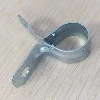

Fabrication is a term that appears across nearly every industrial sector, yet its exact meaning is often misunderstood. For many people, it evokes vague images of factories and metalwork, but few can define what fabrication actually entails, how it differs from other manufacturing methods, and why it is so foundational to modern infrastructure and product design.
At its core, fabrication refers to the process of transforming raw stock material into finished components or assemblies through cutting, shaping, joining, and finishing operations. While the term can apply to plastics, wood, and other materials, it is most commonly associated with metal fabrication-the value-added process that produces everything from tiny electronic terminals to massive forklift forks and structural steel beams. Unlike machining, which removes material from a solid block, fabrication works with standard metal stock and reshapes it through bending, cutting, and joining, making it highly flexible and cost-effective for custom and medium-volume production.
In this comprehensive guide, we break down exactly what fabrication means, explore the core processes that define the discipline, compare its major subcategories, and explain how to select a fabrication partner for your specific project needs.
Core Definition: What Is Metal Fabrication?
In industrial manufacturing, metal fabrication is the process of converting standard metal stock-including sheet metal, plate, bar stock, and tubing-into custom parts, structures, and assemblies through a sequence of physical operations. It is a build-oriented process: rather than carving a part out of a solid billet, fabricators start with flat or pre-formed raw material and add shape and structure through controlled deformation and joining.
This distinguishes fabrication from other common manufacturing methods:
- vs. Machining: Machining subtracts material to achieve geometry; fabrication reshapes and assembles stock material.
- vs. Casting: Casting uses molten metal and molds; fabrication works with solid, room-temperature or minimally heated stock.
- vs. Forging: Forging compresses heated billets to align grain structure; fabrication forms material without full recrystallization.
Fabrication is valued for its flexibility. It works equally well for one-off custom projects and medium-volume production runs, and it spans everything from delicate 0.3 mm electronic enclosures to 100 mm+ thick structural components for heavy equipment.
Core Metal Fabrication Processes
Metal fabrication is not a single operation-it is a sequence of specialized processes, each performed with dedicated equipment. Most fabricated parts move through several of these stages before completion.
1. Cutting & Material Preparation
The first step in nearly all fabrication projects is cutting raw stock to the required size and shape. Modern fabrication shops use a range of cutting technologies selected based on material thickness, precision requirements, and production volume:
- Laser cutting: High-precision, fast cutting for thin to medium-gauge sheet metal, with clean edges and minimal heat distortion.
- Plasma cutting: Fast, economical cutting for medium-thickness steel plate, commonly used in heavy fabrication.
- Oxy-fuel cutting: The standard method for very thick carbon steel plate in heavy structural work.
- Punching and stamping: High-volume cutting and forming of sheet metal using hardened dies, ideal for producing large quantities of identical parts such as brackets and terminals.
After cutting, edges are often beveled or chamfered to prepare for welding and ensure full joint penetration.
2. Forming & Shaping
Forming reshapes cut metal blanks into three-dimensional geometry without removing material.
Key forming processes include:
- Press brake bending: The most common forming method, using a hydraulic press and precision tooling to bend sheet and plate along straight axes.
- Roll forming: Continuous bending of long strips into uniform profiles, used for channels, angles, and continuous hinge sections.
- Plate rolling: Curving thick plate into cylindrical or conical shapes for tanks, pipes, and structural components.
- Deep drawing and stamping: Forming flat blanks into recessed or curved shapes, common for enclosures and hardware components.
3. Joining & Assembly
Joining assembles separate pieces into a single finished assembly. Welding is the primary joining method in metal fabrication, especially for structural and heavy components:
- MIG/MAG welding: Versatile, fast general-purpose welding used for most common steel fabrication.
- TIG welding: High-precision, clean welding for stainless steel and thin-gauge materials where appearance and precision matter.
- Submerged arc welding (SAW): High-deposition, deep-penetration welding for thick plate in heavy fabrication applications such as forklift components and structural beams.
Mechanical fastening with screws, rivets, and bolts is also common, particularly in light fabrication and field assembly where welding is impractical.
4. Finishing & Secondary Operations
Many fabricated assemblies require secondary machining to achieve tight tolerances on mating surfaces, holes, and precision features. Drilling, milling, and turning operations add precise mounting points and critical dimensions that cannot be achieved through forming alone.
Finally, surface finishing processes protect components from corrosion and improve appearance. These include powder coating, painting, hot-dip galvanizing, blast cleaning, and black oxide treatment.
The Two Main Categories of Metal Fabrication
Fabrication projects fall into two broad categories: light fabrication and heavy fabrication. The distinction is based on material thickness, component weight, and primary function, and each requires different equipment, skills, and quality control priorities.
Light Fabrication
Light fabrication focuses on thin-gauge sheet metal, typically ranging from 0.3 mm to 6 mm in thickness. Parts are generally small to medium in size, and their primary function is often enclosure, mounting, or aesthetic rather than heavy structural load-bearing.
Typical light fabrication products include electronic enclosures, control cabinets, small brackets, consumer appliance housings, PCB welding terminals, and long continuous hinges such as 72-inch stainless steel piano hinges. Quality priorities include dimensional precision, clean surface finish, and consistent repeatability at production volumes.
Heavy Fabrication
Heavy fabrication works with thick steel plate-starting at roughly 6 mm and extending to hundreds of millimeters-to produce large, load-bearing structural components. These parts are engineered first and foremost for strength, fatigue resistance, and reliability under extreme mechanical forces.
Common heavy fabrication products include forklift forks, structural steel beams, construction machinery frames, crane components, and pressure vessels. Weld integrity, material certification, and compliance with industry safety standards are the primary quality concerns.
Key Industries That Rely on Fabrication
Virtually every sector of the modern economy depends on metal fabrication in some form.
Some of the largest application areas include:
- Material handling: Forklift forks, carriage assemblies, and conveyor components are classic heavy fabrication products, requiring consistent strength and compliance with strict safety standards.
- Construction: Structural steel beams, columns, and architectural metalwork form the skeleton of buildings and infrastructure.
- Electronics and electrical: Precision sheet metal enclosures, junction boxes, and copper alloy stamping terminals are essential light fabrication products for the electronics industry.
- Automotive and transportation: Body panels, chassis brackets, and interior components all rely on high-volume sheet metal stamping and fabrication.
- Energy: Wind turbine towers, pressure vessels, and power plant structures are major heavy fabrication applications.
What to Look for in a Quality Fabrication Partner
Not all fabrication shops are equal. The best partners combine engineering expertise, certified quality systems, and the right equipment for your specific project type.
When evaluating a fabricator, prioritize the following:
- Industry-specific experience: Look for a manufacturer with a track record in your industry, as different sectors have unique standards and requirements.
- Certified quality management: ISO 9001 certification is the baseline for consistent, controlled production processes. ISO 14001 certification indicates responsible environmental management.
- Full in-house capabilities: A shop that handles cutting, forming, welding, finishing, and assembly under one roof provides better quality control and shorter lead times.
- Design support: A good fabricator does not just execute drawings-they provide design for manufacturability input that improves performance and reduces cost.
For businesses seeking both light precision fabrication and heavy structural manufacturing capabilities, Joyear Metalwork is a proven single-source partner.
Fabrication Expertise From Joyear Metalwork
Founded in 2008 and backed by over 15 years of industry experience, Joyear Metalwork is an ISO 9001:2015 and ISO 14001:2004 certified metal fabrication specialist serving the material handling, electronics, automotive, and construction industries. Our 5,000+ square meter production facility houses advanced cutting, forming, welding, and finishing equipment operated by 300+ skilled employees, with 100+ cooperating partners worldwide.
On the heavy fabrication side, we are a leading manufacturer of premium forklift forks, blades, tines, and telehandler shaft forks engineered to meet or exceed ISO 2330 Standards and ANSI/ITSDF B56.11.4 Standards. As a trusted supplier to renowned OEMs, attachment manufacturers, and truck dealers, we maintain a strong focus on fork technology that delivers unbeatable competence and reliability. A wide variety of high-quality forks are stocked for quick delivery to support fast turnaround requirements.
On the light and precision fabrication side, we offer full ODM & OEM sheet metal fabrication services, including copper alloy precision stamping parts, prototype sheet metal stamping, 72-inch stainless steel piano hinges, long metal hinges, and PCB welding terminals. These precision components are manufactured to tight dimensional tolerances, making them ideal for electronics, electrical, and general industrial applications.
Our core advantages include a dedicated quality assurance department that ensures every part meets the highest standards, responsive pre-sales and after-sales service, competitive and reasonable pricing, and the large production capacity needed to guarantee on-time delivery. Whether your project requires heavy structural forklift components or precision light fabrication hardware, we work in close partnership with customers to optimize designs, control costs, and deliver products built for long-term performance.
Conclusion
So what does fabrication mean? In simplest terms, it is the industrial process that transforms standard metal stock into the custom components and assemblies that form the backbone of modern industry. Through cutting, forming, welding, and finishing, fabricators turn flat sheets and thick plates into everything from tiny electrical terminals to multi-ton forklift forks and structural beams.
Fabrication is valued for its flexibility, cost-effectiveness, and scalability. It works equally well for one-off custom projects and medium-volume production runs, and it spans both delicate light-gauge electronics components and heavy-duty structural equipment. Understanding the different types of fabrication and their respective strengths helps you select the right process-and the right manufacturing partner-for your project.
Whether you need heavy structural fabrication built to international safety standards or precision light stamping and sheet metal components, partnering with an experienced, certified fabricator ensures your parts are manufactured correctly, perform reliably, and deliver value over their full service life.
For comprehensive metal fabrication solutions backed by international quality certifications and 15+ years of industry expertise, explore the full range of capabilities at Joyear Metalwork and request a consultation for your next project.