
In the fields of industrial manufacturing, construction engineering, plumbing systems, and heavy equipment assembly, fittings are the indispensable components that connect, fix, redirect, and seal pipes, tubes, and structural parts. Knowing the exact names and functions of common fittings is critical for engineers, procurement specialists, and on-site technicians. It ensures accurate material selection, seamless project execution, and long-term operational safety of the systems. With a vast array of fittings available for different scenarios, this guide sorts out the most widely used fitting names by industry category, explains their core applications, and highlights how Ningbo Joyear Metalwork Co., Ltd. provides high-precision, durable fitting components to support global projects.
Founded in 2008, Joyear Metalwork is an ISO 9001:2015 and ISO 14001:2004 certified family-run enterprise. It specializes in forklift forks, industrial hinges, copper alloy precision stamping parts, and custom OEM/ODM solutions. Boasting a 5,000+ square meter production facility, over 300 skilled employees, and 15+ years of industry experience, the company has become a trusted partner for renowned OEMs, attachment manufacturers, and truck dealers worldwide. Its strict quality control system guarantees defect-free products with tight tolerances, even during high-volume production, while its fast delivery service ensures projects stay on schedule.
1. Plumbing & Pipeline Fittings: Core Components for Fluid System Connections
Plumbing and pipeline fittings are designed to manage the flow of liquids or gases in residential, commercial, and industrial settings. Their names are typically based on their shapes and functions. Here are the most common types:
Elbow
- Elbows are curved fittings that redirect fluid flow at specific angles, with 45° and 90° being the two most widely used variants. Long-radius elbows are suitable for high-flow rate systems to reduce resistance, while short-radius elbows are ideal for compact installation spaces, such as under kitchen sinks or inside industrial machinery cabinets. Galvanized steel elbows are often used for outdoor water lines due to their corrosion resistance, while copper elbows are preferred for indoor plumbing.
Tee
- Tees are T-shaped fittings that split a single fluid pipeline into two branches or combine two pipelines into one. They are essential components in irrigation systems, where a main water line needs to supply multiple sprinkler heads, and in chemical processing plants for fluid mixing operations. Tees can be made of stainless steel, copper alloy, or plastic, depending on the fluid type and pressure requirements.
Coupling
- Couplings are cylindrical fittings used to connect two straight pipes of the same diameter. They are divided into threaded couplings and clamp-type couplings. Threaded couplings are easy to disassemble for maintenance, making them suitable for temporary pipelines. Clamp-type couplings create a leak-tight seal without specialized tools, which is perfect for emergency repairs.
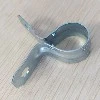
Ferrule
- Ferrules are small ring-shaped fittings that work with clamps to seal pipe joints in high-pressure systems. Their precision dimensions are critical for preventing leaks, especially in hydraulic pipelines of heavy equipment. Poor-quality ferrules can lead to pressure loss or even system failure.
How Joyear Metalwork Supports You
The performance of ferrules depends on tight dimensional tolerances and high-quality raw materials. Joyear's copper alloy precision stamping parts are manufactured with advanced fourslide metal stamping technology. This ensures each ferrule meets strict industry standards and fits perfectly with steel, copper, and PEX pipes.
The company's ISO-certified quality management process eliminates the risk of size deviations, making its ferrules a top choice for industrial hydraulic systems and high-pressure pipelines. For more details on its precision stamping capabilities, visit https://www.joyearmetalwork.com/.
2. Structural Fittings: Building Blocks for Stable Frameworks
Structural fittings are used to connect metal beams, panels, and components in construction projects and industrial machinery. They prioritize load-bearing capacity and stability over fluid sealing. The following are the most common names in this category:
Piano Hinge
- Also known as a continuous hinge, a piano hinge runs the entire length of the connected parts, such as warehouse doors, machinery enclosures, and construction equipment cab panels. It provides uniform support and prevents sagging even after thousands of uses. Construction-grade piano hinges require high-strength materials and precise machining to withstand heavy loads and frequent opening and closing.
SS304 Continuous Hinge
- Made of corrosion-resistant 304 stainless steel, this type of hinge is ideal for outdoor or humid environments, such as shipping container doors and marine equipment panels. Its rust-proof properties ensure long-term durability without maintenance, even in harsh conditions like coastal areas or chemical plants.
Bracket Fitting
- Bracket fittings are L-shaped or U-shaped components that secure pipes, beams, or machinery parts to walls or floors. They are widely used in construction scaffolding and forklift attachment systems to enhance structural stability. The thickness and material of bracket fittings must be strictly calculated according to the load they bear.
How Joyear Metalwork Supports You
Joyear Metalwork is a leading supplier of construction usage piano hinges and SS304 continuous hinges. These products are manufactured with precision cutting and bending technology, ensuring consistent thickness and smooth rotation. All hinges meet international quality standards and can support heavy loads without deformation.
The company's collaborative design service allows customers to customize hinge lengths and materials based on specific project needs. With its large production capacity, Joyear can deliver high-volume orders quickly, helping you keep construction or manufacturing projects on track.
3. Heavy Equipment Fittings: Specialized Components for Forklifts & Telehandlers
Heavy equipment fittings are customized components for forklifts, telehandlers, and other industrial machinery. They must withstand extreme pressure, vibration, and wear, so precision and durability are non-negotiable. Key names in this category include:
Forklift Hydraulic Fittings
- These fittings connect the hoses and tubes in a forklift's hydraulic system, which powers the lifting mechanism. They must be leak-proof and pressure-resistant to ensure the forklift can safely lift heavy loads. The fit between hydraulic fittings and hoses directly affects the efficiency and safety of the equipment.
Telehandler Shaft Fittings
- Telehandler shaft fittings secure the telescopic arm of a telehandler, enabling it to extend and retract smoothly. Made of high-strength steel, these fittings can withstand the stress of lifting heavy materials at long distances. Their precise machining ensures no gap or looseness during operation.
Forklift Fork Attachments
- Although not traditional pipe fittings, these attachments act as connection components that extend the functionality of forklift forks, such as side shifters and pallet pushers. They need to be firmly installed on the forklift tines to avoid accidents during operation.
How Joyear Metalwork Supports You
As a professional manufacturer of blank forklift forks and telehandler shaft forks, Joyear Metalwork has in-depth expertise in heavy equipment component production. Its forklift forks meet or exceed ISO 2330 and ANSI/ITSDF B56.11.4 standards, ensuring compatibility with various hydraulic fittings and attachments.
The company's collaborative design process allows customers to customize fitting positions on the forks to match their specific equipment models. With its focus on defect-free production, Joyear's heavy equipment components reduce the risk of breakdowns and improve operational safety.
Key Tips for Choosing the Right Fittings by Name
Selecting the correct fitting requires more than just knowing its name. You need to consider three critical factors:
- Application Requirements: Choose plumbing fittings based on fluid type and pressure. Select structural fittings according to load-bearing capacity. Pick heavy equipment fittings that match the equipment's model and standards.
- Material Compatibility: Ensure the fitting material is resistant to corrosion, high temperature, or chemical corrosion in the working environment.
- Quality Certification: Prioritize fittings from ISO-certified manufacturers like Joyear Metalwork to guarantee consistent quality and performance.
Conclusion
Understanding the names and functions of different fittings is the first step to ensuring the success of industrial, construction, or plumbing projects. From plumbing elbows and structural piano hinges to heavy equipment hydraulic fittings, each type plays a unique and irreplaceable role. For over 15 years, Joyear Metalwork has been dedicated to producing high-precision, durable fitting components. Its ISO-certified processes, advanced manufacturing technology, and customer-centric service make it a reliable partner for businesses worldwide.
Whether you need custom copper alloy ferrules, heavy-duty piano hinges, or forklift fork attachments, Joyear Metalwork has the expertise and capacity to deliver tailored solutions. Visit https://www.joyearmetalwork.com/ today to explore its full range of products and take your projects to the next level.