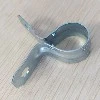

Metal stamping is a foundational manufacturing process that delivers high-precision, repeatable metal components at scale. From automotive brackets and electrical terminals to construction hardware and appliance parts, stamping powers production across nearly every industrial sector. At its core, stamping uses mechanical or hydraulic presses and custom-built dies to shape flat metal sheet or coil into finished geometries. While the technology is widely used, consistent quality, cost efficiency, and on-time delivery all depend on a disciplined, 7-step stamping method.
For product engineers, procurement managers, and business owners, understanding each stage of the stamping workflow helps set realistic expectations, optimize designs, and select the right manufacturing partner. In this comprehensive guide, we walk through the 7 core steps of the metal stamping process, explain the purpose of each phase, and share industry best practices for achieving superior results.
Step 1: Product Design & Design for Manufacturability (DFM) Analysis
Every successful stamping project begins long before any metal is cut. The first step in the stamping method is collaborative product design and a thorough DFM review.
During this phase, the manufacturer's engineering team works with the customer to evaluate part drawings, 3D models, and performance requirements. The goal is to refine the design so that it can be stamped reliably, efficiently, and at the lowest possible cost without sacrificing functionality. Engineers analyze critical features such as bend radii, wall thicknesses, hole diameters, tolerances, and draft angles to identify potential production issues early.
Key DFM optimizations include:
- Adjusting bend radii to reduce cracking and springback
- Standardizing hole sizes to minimize tooling complexity
- Simplifying part geometry to reduce the number of die stations
- Selecting appropriate material grades based on strength and formability
Skipping a formal DFM review often leads to costly tooling revisions, high scrap rates, and delayed production. Partnering with an experienced stamping manufacturer at the design stage can reduce overall project costs by 20–30% and significantly shorten time to market.
Step 2: Tooling Design & Precision Fabrication
Once the part design is finalized, the second step is tooling design and manufacturing. The die is the heart of the stamping process-it determines the final shape, dimensional accuracy, and production speed of every part.
Stamping dies are custom-engineered based on part geometry, production volume, and material specifications. Manufacturers select from three primary die types:
- Progressive dies: Ideal for high-volume production, with multiple stations that perform sequential operations in a single press cycle.
- Compound dies: Perform blanking and piercing in one stroke, best for simple, flat parts.
- Transfer dies: Handle larger, deeper-formed parts that are moved between separate forming stations.
Tool fabrication involves precision CNC machining, electrical discharge machining (EDM), grinding, and heat treatment to ensure die components are durable and dimensionally exact. After assembly, the die undergoes a tryout phase: test runs are produced, measured, and compared to part specifications. Engineers make adjustments to die clearances, punch alignment, and forming depth until sample parts meet all requirements.
High-quality tooling directly extends production lifespan, reduces maintenance downtime, and delivers consistent part quality over millions of cycles.
Step 3: Material Selection, Coil Preparation & Feeding
With tooling ready, the third step focuses on material preparation and feeding into the press. Material selection is a critical decision made jointly during the design phase, based on the part's functional requirements, corrosion resistance needs, and budget.
Common stamping materials include low-carbon steel, stainless steel, aluminum, copper, and brass alloys. Most high-volume stamping uses metal coil stock, which is loaded onto a decoiler at the press line. The coil passes through a straightener (leveler) to remove curl and ensure flat, uniform material before entering the feed system.
Servo-driven feeders precisely advance the material into the die at a consistent rate and position. Accurate feeding is essential to maintain tight tolerances and minimize scrap. For smaller production runs or thicker materials, pre-cut sheet blanks may be loaded manually or by robotic arms instead of coil feeding.
At Joyear Metalwork, we support a full range of stamping materials-from standard mild steel to high-precision copper alloy precision stamping parts for electronics and electrical applications. Our material specialists help customers balance performance, cost, and availability for every project.
Step 4: Blanking & Piercing Operations
The fourth step marks the first active forming stage: blanking and piercing.
These are shearing operations that separate the metal sheet into the desired outline and internal features.
- Blanking: Cuts the outer perimeter of the part from the parent material. The cut-out piece becomes the workpiece, while the remaining skeleton is scrap.
- Piercing: Creates holes, slots, notches, or other internal cutouts in the part. The punched material is discarded as scrap.
Both operations rely on precisely aligned punches and dies with controlled clearance between the cutting edges. Proper clearance is critical: too little causes excessive tool wear, and too much creates large burrs and deformed edges. In progressive die stamping, blanking and piercing are often performed at separate stations within the same press stroke, maximizing throughput.
Step 5: Forming & Shaping Processes
The fifth step is where flat metal takes on its final three-dimensional form. Forming encompasses a range of processes that bend, stretch, draw, or reshape the blank without removing material.
The most common forming operations include:
- Bending: Folds the metal along a straight axis to create angles, channels, or brackets. Springback-elastic rebound after bending-is a key challenge that requires precise die compensation.
- Deep drawing: Pulls a flat blank into a die cavity to create deep, hollow shapes such as enclosures, cups, and housings.
- Stretching & embossing: Tension-forms the metal or creates raised features, logos, or reinforcement ribs on the part surface.
- Coining: Compresses the metal under extreme pressure to produce precise, sharp features or controlled thickness.
This step requires careful calibration of press force, stroke speed, and lubrication to prevent tearing, wrinkling, and dimensional variation. Complex parts may require multiple forming passes or progressive die stations to achieve the final shape.
Step 6: Secondary Operations & Surface Finishing
After the primary stamping cycle, most parts go through a sixth step of secondary operations and finishing to meet final functional and aesthetic requirements.
Common secondary processes include:
- Deburring: Removes sharp edges and residual burrs from cutting operations for safety and proper fit.
- Tapping, threading & fastener insertion: Adds threaded holes or installed hardware for downstream assembly.
- Welding & riveting: Joins multiple stamped components into complete subassemblies.
- Surface finishing: Includes galvanizing, powder coating, electroplating, polishing, or passivation to improve corrosion resistance and visual appearance.
Offering complete secondary operations in-house streamlines production, reduces lead times, and ensures consistent quality across every process step. For customers, this means a single-source solution rather than managing and coordinating multiple separate suppliers.
Step 7: Quality Inspection, Packaging & Delivery
The seventh and final step in the stamping method is quality assurance, packaging, and shipment. This phase ensures every part meets customer specifications and arrives at its destination undamaged.
Rigorous quality control takes place at multiple checkpoints:
- First Article Inspection (FAI): Comprehensive measurement of the first production run parts to validate conformance to drawings and industry standards.
- In-process inspection: Regular sampling during full production to catch dimensional drift or tool wear early.
- Final audit: Dimensional verification, visual inspection, and functional testing before parts are released for shipment.
Leading manufacturers use coordinate measuring machines (CMMs), optical comparators, and calibrated gauges to maintain tight tolerances. Certified quality systems such as ISO 9001:2015 formalize these processes and ensure consistent, repeatable results across every production batch.
Approved parts are then packaged with protective materials to prevent scratching, denting, or corrosion during transit. For international orders, custom packaging solutions protect components through long-distance shipping and handling.
Key Factors That Improve Stamping Process Efficiency
Beyond following the 7 core steps, several best practices help manufacturers reduce costs, speed up production, and boost overall quality:
- Early supplier involvement: Bringing your stamping partner into the design phase eliminates costly rework and tooling modifications later.
- Proactive tool maintenance: Regular die sharpening, inspection, and upkeep extend tool life and prevent unexpected quality defects.
- Material standardization: Using common, readily available alloy grades reduces material lead times and lowers per-unit costs.
- Automation integration: Robotic loading, servo feed systems, and in-line inspection increase throughput and reduce human error.
Frequently Asked Questions About the Stamping Method
Q: What is the most critical step in the metal stamping process?
- A: Tooling design and fabrication is widely considered the most critical step. A well-engineered die produces consistent, high-quality parts for millions of cycles, while poor tooling leads to endless adjustments, high scrap rates, and premature failure.
Q: What's the difference between stamping and custom sheet metal fabrication?
- A: Stamping uses hardened dies to mass-produce identical parts at high speed and low per-unit cost. Traditional sheet metal fabrication uses press brakes, lasers, and welding for lower-volume, highly custom projects.
Q: How long does a typical stamping project take from start to finish?
- A: Timeline varies by part complexity. Tooling fabrication usually takes 2–6 weeks, followed by sample approval and full production. Once tooling is qualified, high-volume runs can often be completed in just a few days.
Q: Can stamping produce very small, high-precision electronic parts?
- A: Yes. Precision stamping can produce tiny electrical terminals, contact pins, and PCB components with tolerances measured in hundredths of a millimeter. Miniature progressive dies are commonly used for electronics and connector parts.
Why Partner with Joyear Metalwork for Your Stamping Projects?
Executing the 7-step stamping method consistently requires deep technical expertise, advanced production equipment, and a systematic commitment to quality. Joyear Metalwork is an ISO 9001:2015 and ISO 14001:2004 certified metal stamping and sheet metal fabrication manufacturer with over 15 years of industry experience.
Founded in 2008, our 5,000+ square meter production facility employs more than 300 skilled professionals and serves OEMs, attachment manufacturers, and industrial clients worldwide. We offer full-spectrum stamping support from initial DFM consultation and tool design to prototype sheet metal stamping, high-volume production, and complete finishing services.
Our core capabilities include:
- Precision copper alloy stamping for electrical terminals and PCB welding terminals
- Progressive die and deep draw stamping
- Prototype and low-volume sheet metal stamping
- In-house secondary operations and surface treatment
- Fast turnaround and reliable global delivery
We work closely with customers across electronics, automotive, construction, material handling, and appliance industries to optimize designs, reduce production costs, and deliver parts that meet the highest international quality standards.
To learn more about our full sheet metal fabrication and stamping capabilities, visit our homepage at https://www.joyearmetalwork.com/ or contact our engineering team to discuss your next project.
Final Thoughts
The 7-step stamping method is a proven, industry-standard framework for producing high-quality metal parts efficiently and at scale. From initial design review to final delivery, each phase builds on the previous one to ensure dimensional accuracy, material integrity, and cost-effective production.
While the basic process structure is standard across the industry, real-world results vary significantly based on the skill, equipment, and quality systems of your manufacturing partner. Working with an experienced stamping supplier ensures that every step is executed with precision, helping you bring better products to market faster and at a lower total cost of ownership.