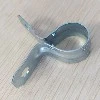

Metal stamping is a highly efficient manufacturing process that transforms flat sheet metal into precision‑formed components using dies and presses. While stamping soft, ductile materials like mild steel and aluminum is relatively straightforward, working with hard metals presents unique engineering challenges. High‑strength steels, stainless alloys, and hardened metals require specialized tooling, optimized process parameters, and careful engineering to produce quality parts without excessive tool wear, cracking, or dimensional inaccuracy.
For product engineers, production managers, and procurement professionals, understanding how to stamp hard metal correctly is critical for achieving consistent part quality, controlling tooling costs, and maintaining reliable production throughput. In this comprehensive guide, we explain the fundamentals of hard metal stamping, review the most common hard metal materials, walk through proven stamping methodologies, and share industry best practices for successful production.
What Is Considered "Hard Metal" in Stamping?
In the stamping industry, "hard metal" refers to materials with high tensile strength, high yield strength, and elevated hardness values that resist plastic deformation. These materials require significantly higher press force and more robust tooling than standard low‑carbon steel.
Common hard metals used in stamping applications include:
- High‑strength low‑alloy (HSLA) steels: Yield strengths from 350 MPa up to 700 MPa or higher, used in automotive structural and chassis components
- Advanced high‑strength steels (AHSS): Including dual‑phase (DP), transformation‑induced plasticity (TRIP), and martensitic steels with ultra‑high strength
- Stainless steel grades: Particularly 301, 410, and 420 stainless in harder tempers, as well as precipitation‑hardening grades
- Carbon steels in hardened conditions: Higher carbon grades such as 1050, 1075, and spring steel tempers
- Tool steels: In certain specialty applications requiring extreme wear resistance
- Titanium and nickel alloys: Used in aerospace and high‑temperature applications
Hard metals are valued for their exceptional strength‑to‑weight ratios, wear resistance, and ability to perform under extreme mechanical loads. However, their high hardness makes them far more difficult to stamp than conventional mild steel.
Core Challenges of Stamping Hard Metal
Stamping hard metals introduces several technical challenges that must be addressed through careful engineering:
1. Higher Press Tonnage Requirements
- Harder materials require substantially more force to shear and form. A part that stamps easily in 1010 mild steel on a 60‑ton press may require 120 tons or more when produced in HSLA steel. Insufficient press tonnage results in incomplete forming, excessive springback, and dimensional variation.
2. Accelerated Tool Wear
- Hard metals abrade tooling surfaces much faster than soft materials. Punch and die edges dull more quickly, leading to burrs, poor cut quality, and dimensional drift. Without proper tool materials and coatings, die life can be reduced by 50% or more compared to stamping mild steel.
3. Increased Springback
- Springback-the elastic rebound of metal after forming-is significantly more pronounced in high‑strength materials. This makes it difficult to achieve accurate bend angles and consistent part geometry. Harder materials often require over‑bending compensation and advanced die design techniques.
4. Greater Risk of Cracking and Tearing
- Hard, high‑strength materials have lower formability and ductility. Sharp bends, deep draws, and high stretch ratios can cause micro‑cracking or complete fracture during forming. This limits the complexity of geometries that can be produced reliably.
5. Higher Risk of Galling
- Certain hard metals-particularly stainless steels and high‑nickel alloys-are prone to galling (adhesive wear) during stamping. Material transfers from the workpiece to the die surface, degrading part quality and accelerating tool failure.
Key Methods and Technologies for Stamping Hard Metal
Successfully stamping hard metals requires a combination of specialized tooling, optimized process parameters, and advanced forming techniques. Below are the most important methods used in industry today.
1. Progressive Die Stamping with Station‑by‑Station Forming
For high‑volume production of hard metal components, progressive die stamping is the preferred method. Rather than forming the part in a single heavy stroke, the die forms the geometry gradually across multiple stations. Each station performs a small amount of deformation, reducing the strain on both the material and the tooling.
This incremental forming approach reduces peak force requirements, minimizes cracking risk, and improves dimensional control. For very hard materials, designers may add additional forming stations to distribute deformation more gradually.
2. Warm and Hot Stamping
For extremely high‑strength materials that cannot be formed reliably at room temperature, warm stamping and hot stamping technologies are used.
- Warm stamping: The material is heated to moderate temperatures (typically 200–400°C) before forming. Heating reduces yield strength and improves ductility, allowing deeper draws and sharper bends without cracking.
- Hot stamping (press hardening): Boron steel blanks are heated above their austenitization temperature (approximately 900°C), then transferred to a cooled die where they are simultaneously formed and quenched. The result is an ultra‑high‑strength part with tensile strengths exceeding 1500 MPa.
Hot stamping is widely used in the automotive industry for safety‑critical structural components such as bumper beams, door intrusion beams, and pillar reinforcements.
3. Four‑Slide / Multi‑Slide Forming
For small, complex hard‑metal components such as springs, clips, and terminals, four‑slide and multi‑slide machines offer excellent precision. These machines use multiple forming tools that approach the workpiece from different directions, enabling complex bends and forms with high accuracy and repeatability.
4. Fine Blanking (Fineblanking)
Fine blanking is a precision shearing process that produces parts with smooth, straight‑sided edges and excellent flatness. By using a V‑ring stinger to clamp the material tightly around the cut perimeter and applying triple‑action press motion, fine blanking achieves clean, burr‑free edges even in hard materials. This process is ideal for hard metal components requiring precise edge quality and tight dimensional tolerances.
Step‑by‑Step Guide to Stamping Hard Metal
Following a structured, engineering‑driven process is essential for consistent, cost‑effective hard metal stamping production.
Step 1: Material Selection and Feasibility Assessment
Begin by selecting the appropriate hard metal grade for the application. Consider not only strength and hardness requirements but also formability, corrosion resistance, and cost. Work closely with your stamping partner to evaluate whether the proposed geometry is feasible in the target material. Some designs that work perfectly in mild steel may need modification for AHSS or hardened stainless steel.
Step 2: Design for Manufacturability (DFM) Optimization
Hard metal stamping is far less forgiving of poor design than soft metal stamping.
Optimize the part design with the following guidelines:
- Increase bend radii to reduce stress concentrations and cracking risk
- Limit draw depths and stretch ratios to stay within the material's formability limits
- Provide generous draft angles and wall tapers for deep drawn features
- Avoid sharp corners and sudden changes in cross‑section
- Consider adding relief notches or cutouts to improve material flow
A thorough DFM review prevents costly tooling revisions and production problems later.
Step 3: Tooling Design and Material Selection
Tooling is the single most critical factor in hard metal stamping success. Use premium tool steels such as D2, M2, or powdered metal grades for punch and die components. Apply advanced surface coatings such as titanium nitride (TiN), titanium carbonitride (TiCN), or diamond‑like carbon (DLC) to reduce friction, resist abrasion, and extend die life.
Tool design should incorporate:
- Optimized punch‑to‑die clearances for the specific material and thickness
- Springback compensation through over‑bending angles
- Robust stripper systems with adequate spring force
- Rigid die construction to minimize deflection under high loads
- Guide systems with minimal play for precise alignment
Step 4: Press Selection and Process Parameter Setup
Select a press with sufficient tonnage capacity. As a general rule, hard metals require 1.5 to 2.5 times more force than mild steel for equivalent operations. Calculate blanking and forming forces conservatively and ensure the press operates well within its rated capacity.
Set process parameters carefully:
- Use slower press speeds for forming operations to allow material flow
- Apply appropriate lubrication to reduce friction and galling
- Calibrate ram parallelism and die alignment precisely
- Verify shut height with trial strokes before full production
Step 5: Prototype Testing and Process Validation
Before full production, run prototype trials to validate the process. Produce sample parts, measure critical dimensions, and inspect for cracking, thinning, and surface defects. Adjust die parameters, bend angles, and lubrication as needed. For production‑grade projects, perform a formal First Article Inspection (FAI) to document conformance to specifications.
At Joyear Metalwork, our prototype sheet metal stamping service enables customers to validate hard metal designs and process parameters before committing to full‑scale production tooling. Our engineering team works closely with clients to optimize designs for manufacturability in high‑strength and hardened materials.
Step 6: Production Run with In‑Process Quality Monitoring
- Once the process is qualified, begin full production. Implement regular in‑process inspection to catch tool wear and dimensional drift early. Schedule periodic tool maintenance and sharpening based on production volume rather than waiting for visible quality degradation.
Step 7: Secondary Operations and Finishing
- Hard metal parts often require secondary operations such as deburring, heat treatment, shot peening, and surface coating. Deburring is particularly important after stamping hard metals because sheared edges can be sharp and may carry residual burrs.
Tooling Best Practices for Hard Metal Stamping
Tooling represents a significant investment in any stamping project, and this is especially true for hard metal applications. Follow these best practices to maximize tool life and minimize per‑part cost.
Use the Right Tool Steel Grade
- Production volume < 50,000 parts: D2 tool steel with standard heat treatment
- Medium volume 50,000–250,000 parts: M2 high‑speed steel or equivalent
- High volume > 250,000 parts: Powdered metal tool steels such as PM‑M4 or Vanadis 4 Extra
Apply Advanced Surface Coatings
- TiN coating: Good general‑purpose wear resistance
- TiCN coating: Higher hardness and better abrasion resistance for high‑strength steels
- DLC coating: Excellent low‑friction properties for stainless steel and galling‑prone materials
- CVD/PVD coatings: For the most demanding high‑volume production
Implement Proactive Tool Maintenance
- Establish a scheduled sharpening program based on stroke count
- Inspect tooling regularly for wear, chipping, and galling
- Keep detailed tooling maintenance records to predict life cycles
- Store dies properly in clean, dry conditions between production runs
Common Defects and Troubleshooting
Even with careful planning, hard metal stamping can produce defects. Here are the most common issues and how to address them.
Edge Cracking and Tearing
- Causes: Excessive deformation per station, bend radius too small, material ductility too low. Solutions: Increase bend radius, add forming stations to distribute strain more gradually, consider warm forming, or switch to a more formable grade.
Excessive Springback
- Causes: High yield strength of the material, insufficient over‑bend compensation. Solutions: Increase over‑bend angle, use bottoming or coining techniques at the end of the forming stroke, add restrike stations in progressive dies.
Rapid Tool Wear
- Causes: Insufficient tool hardness, lack of coating, poor lubrication, excessive cutting speed. Solutions: Upgrade tool steel grade, apply wear‑resistant coating, optimize lubrication, reduce press speed, increase die clearance slightly.
Galling and Material Pickup
- Causes: Adhesive wear between workpiece and tool, common with stainless steel and nickel alloys. Solutions: Apply low‑friction DLC coating, use high‑performance stamping lubricants, polish die surfaces, optimize die clearance.
Dimensional Variation
- Causes: Tool deflection, press misalignment, inconsistent material properties, springback variation. Solutions: Increase die rigidity, improve press alignment, tighten material specification tolerances, add in‑process restriking.
Frequently Asked Questions About Hard Metal Stamping
Q: Can you stamp hardened steel?
- A: Yes, but it requires specialized tooling, higher press tonnage, and careful process engineering. Very hard materials may require warm or hot stamping methods. Most high‑volume hard metal stamping is done on materials in their annealed or semi‑hard condition, with final hardening applied as a post‑stamping heat treatment.
Q: What is the hardest metal that can be stamped?
- A: This depends on thickness and part geometry. In cold stamping, advanced high‑strength steels with tensile strengths up to approximately 1000–1200 MPa can be formed with progressive methods. For higher strengths, hot stamping technology can process materials exceeding 1500 MPa tensile strength.
Q: Does hard metal stamping cost more than standard stamping?
- A: Yes, hard metal stamping generally costs more due to higher material prices, more expensive tooling, higher press tonnage requirements, shorter tool life, and slower production speeds. However, the performance benefits of hard metal components often justify the additional cost.
Q: Can stainless steel be stamped?
- A: Absolutely. Stainless steel is routinely stamped across many industries. Austenitic grades like 304 stamp well in their annealed condition. Harder tempers and martensitic grades require more robust tooling and process optimization.
Q: How does tool life compare between mild steel and hard metal stamping?
- A: Tool life when stamping hard metals is typically 30–70% shorter than when stamping mild steel, depending on the specific material and hardness. Premium tool steels and coatings can narrow this gap significantly.
Why Partner with Joyear Metalwork for Hard Metal Stamping?
Stamping hard metals successfully demands deep engineering expertise, precision tooling, and robust quality systems. Joyear Metalwork is an ISO 9001:2015 and ISO 14001:2004 certified metal stamping and sheet metal fabrication manufacturer with over 15 years of experience serving industrial clients worldwide.
Founded in 2008, our 5,000+ square meter production facility houses advanced press equipment, in‑house tooling capabilities, and a team of more than 300 skilled professionals. We have extensive experience stamping a wide range of materials-from soft copper alloys for precision electronic terminals to high‑strength steels for heavy‑duty forklift forks and structural components.
Our core stamping capabilities include:
- High‑strength steel stamping for material handling and industrial equipment
- Copper alloy precision stamping parts for electronics and electrical applications
- Prototype sheet metal stamping for rapid design validation and process development
- Stainless steel stamping for long metal hinges, piano hinges, and corrosion‑resistant components
- Complete in‑house tooling design, secondary operations, and quality assurance
We serve OEMs, equipment manufacturers, and industrial customers across the material handling, automotive, construction, electronics, and appliance sectors. Our engineering team works closely with every customer during the design phase to optimize part geometry, select the most cost‑effective material grade, and ensure reliable, repeatable production.
To learn more about our full range of stamping and sheet metal fabrication capabilities, visit Joyear Metalwork or contact our technical team to discuss your hard metal stamping project.
Final Thoughts
Stamping hard metal is significantly more challenging than working with conventional mild steel, but with proper engineering, tooling, and process control, it is entirely possible to produce high‑quality, dimensionally accurate components at production volumes. The keys to success are thorough DFM optimization, premium tooling with appropriate coatings, correctly sized press equipment, and a disciplined approach to process validation and maintenance.
Whether you are working with HSLA steel, stainless steel, or advanced high‑strength alloys, partnering with an experienced stamping manufacturer is the most reliable way to achieve consistent quality, reasonable tool life, and competitive per‑part costs.