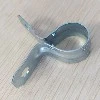

If you have ever shopped for mounting hardware, you have likely wondered: are there different types of metal brackets? The short answer is yes - there are dozens of distinct metal bracket designs, each engineered for specific load capacities, mounting environments, and functional purposes. From tiny corner braces holding furniture together to heavy-duty structural brackets supporting tons of industrial equipment, brackets are one of the most versatile and widely used metal components across residential, commercial, and industrial sectors.
Choosing the wrong bracket style for an application can lead to bent hardware, damaged inventory, or even safety hazards. Understanding the different categories, their strength profiles, and ideal use cases helps you select hardware that performs reliably for the full service life of your project. In this guide, we break down the most common metal bracket types by shape, material, and function, explain how to match the right bracket to your requirements, and introduce custom manufacturing solutions for specialized applications.
Common Metal Bracket Types by Shape & Structure
The most useful way to categorize metal brackets is by their geometric design, as shape is the primary driver of load capacity and functional purpose. These are the most widely used styles found across industries.
1. L-Shaped Angle Brackets
The simplest and most universal bracket style, L-shaped (or angle) brackets feature two perpendicular flat arms joined at a 90-degree corner.
They are used to reinforce right-angle joints and mount objects flush to walls or frames.
- Load capacity range: 10–200 lbs per pair, depending on thickness and reinforcement
- Typical applications: Furniture bracing, cabinet installation, small shelf support, trim reinforcement, and general light structural fastening
- Variations: Basic flat-stamped L-brackets are lowest strength, while ribbed or flanged L-brackets offer improved rigidity without diagonal bracing.
2. Braced Triangular Shelf Brackets
Triangular brackets add a diagonal support strut between the horizontal and vertical arms, creating the inherently stable geometry that makes this the strongest standard design for wall-mounted shelving. The triangle cannot deform without changing the length of one side, so load transfers directly into the mounting wall rather than concentrating stress at the corner.
- Load capacity range: 100 lbs to over 2,000 lbs per pair for heavy welded models
- Typical applications: Garage shelving, commercial retail displays, warehouse storage, industrial workstations, and heavy equipment mounting
- Construction variations: Economy models use riveted or bolted struts, while heavy-duty industrial versions feature fully welded construction for maximum joint strength.
3. U-Shaped Brackets (Channel / Clevis Brackets)
U-shaped brackets have two parallel side flanges connected by a flat base, forming a channel profile. They are designed to cradle or secure round stock, tubing, pipes, and movable components.
- Load capacity range: 50–500 lbs depending on size and thickness
- Typical applications: Pipe and conduit mounting, rod support, hinge clevis joints, automotive mounting points, and equipment guard attachment
- Many U-brackets include pre-drilled holes on both side flanges for through-bolting of pivoting or stationary components.
4. Z-Shaped Brackets
Z-brackets feature two offset 90-degree bends that create a stepped, offset profile. This design bridges gaps between two non-flush surfaces, allowing mounting at a set distance from the wall or frame.
- Load capacity range: 30–300 lbs
- Typical applications: Electrical panel offset mounting, cable tray support, siding attachment, and equipment installation that requires clearance from a mounting surface
- The offset distance can be customized to accommodate specific insulation, wiring, or ventilation requirements.
5. Gusseted Heavy-Duty Brackets
Gusseted brackets add solid triangular reinforcement plates welded into the inside corner, dramatically increasing bending resistance and ultimate load capacity. The gusset distributes stress across a wider area, preventing corner deformation under extreme weight.
- Load capacity range: 500 lbs to several tons per pair
- Typical applications: Machinery mounting, material handling attachments, structural bracing, pallet rack accessories, and construction support brackets
- This is the strongest standard design for cantilevered load applications.
6. Cantilever Rack Brackets
Purpose-built for industrial cantilever racking systems, these heavy brackets attach to vertical rack columns to support long, bulky materials such as lumber, pipe, and steel bar stock.
They feature a hooked or bolted mounting end that locks into the rack's column profile.
- Load capacity range: 500 lbs to 3,000+ lbs per arm
- Typical applications: Warehouse storage of long inventory, lumber yards, metal supply yards, and manufacturing material staging
7. Hidden / Floating Shelf Brackets
Hidden brackets are designed to mount entirely inside the shelf material, leaving no visible hardware on the exterior for a clean, seamless appearance.
They rely purely on the bending strength of the cantilevered arm inside the shelf.
- Load capacity range: 20–150 lbs per pair
- Typical applications: Residential floating shelves, high-end retail displays, architectural feature walls
- While aesthetically popular, hidden brackets support significantly less weight than equivalent exposed triangular brackets.
Metal Brackets by Material Type
Material selection determines strength, corrosion resistance, cost, and special properties such as electrical conductivity. These are the most common bracket materials.
1.Mild Carbon Steel Brackets
Mild steel is the workhorse material for industrial and structural brackets. It offers excellent strength, good formability, and low cost, making it the default choice for most indoor applications. Carbon steel brackets are almost always finished with paint, powder coating, black oxide, or zinc plating to prevent rust.
- Best for: Heavy-duty structural brackets, warehouse shelving, equipment mounting, and general industrial use
2.Stainless Steel Brackets (304 & 316 Grades)
Stainless steel delivers excellent corrosion resistance with good structural strength. Grade 304 is suitable for general outdoor and moderately corrosive environments, while grade 316 offers superior resistance to saltwater, chemicals, and sanitary washdowns.
- Best for: Food processing equipment, marine installations, pharmaceutical facilities, outdoor fixtures, and sanitary environments
3.Copper & Brass Alloy Brackets
Copper and brass brackets are valued for their excellent electrical conductivity, natural corrosion resistance, and decorative appearance. While not as strong as steel, they are irreplaceable for electrical and electronic mounting applications.
- Best for: Electrical terminal brackets, electronic enclosure mounting, decorative architectural hardware, and low-voltage connection components
4.Galvanized Steel Brackets
Hot-dip galvanized brackets are carbon steel parts coated in a protective zinc layer for durable outdoor corrosion resistance at a much lower cost than stainless steel.
- Best for: Outdoor construction brackets, fence and railing hardware, solar panel mounting, and exterior infrastructure
5.Aluminum Brackets
Aluminum brackets are lightweight, corrosion-resistant, and non-magnetic, but significantly less strong than steel at equivalent thickness.
Best for: Light-duty decorative mounting, electronics enclosures, aerospace fixtures, and applications where weight savings are a priority
How to Choose the Right Metal Bracket
With so many styles available, selecting the right bracket means matching the design to your actual operating conditions.
Use these four criteria:
- Load requirements. For loads under 50 lbs, basic L-brackets are sufficient. For 50–500 lbs, braced triangular brackets work well. For anything above 500 lbs, choose welded gusseted heavy-duty brackets or custom engineered designs. Always apply a 3:1 minimum safety factor for general use, and 4:1 or higher for overhead or safety-critical installations.
- Operating environment. For dry indoor settings, plain or painted carbon steel is the most economical choice. For outdoor or humid environments, select galvanized or stainless steel. For chemical or marine exposure, use 316 stainless steel.
- Mounting substrate. Even the strongest bracket will underperform if mounted into weak material. Heavy brackets require solid structural mounting - wood studs, structural steel, or concrete with wedge anchors. Mounting into drywall alone drastically reduces real-world load capacity.
- Aesthetic priorities. If visible hardware is acceptable, exposed triangular brackets deliver the best strength per dollar. If a clean appearance is required, hidden floating brackets or polished stainless styles are appropriate, but expect lower load ratings.
Custom Metal Brackets for Specialized Applications
Standard off-the-shelf brackets work for most common projects, but many industrial, material handling, and OEM applications require custom dimensions, hole patterns, load ratings, or material specifications. For these projects, partnering with a metal manufacturer that offers both precision stamping and heavy fabrication capabilities ensures you get brackets optimized for your exact requirements.
Joyear Metalwork is an ISO 9001:2015 and ISO 14001:2004 certified metal manufacturer with over 15 years of experience producing both precision light-gauge brackets and heavy-duty structural brackets for material handling, construction, electronics, and automotive industries. Founded in 2008, our 5,000+ square meter facility houses advanced stamping, forming, welding, and finishing equipment operated by 300+ skilled employees, serving over 100 cooperating partners worldwide.
Our bracket manufacturing capabilities cover the full range of product types:
- Light to medium-duty stamped brackets produced via high-speed precision stamping for electronics, electrical, and general industrial clients. Our copper alloy precision stamping capabilities extend to conductive terminal brackets and electronic mounting hardware, while prototype sheet metal stamping supports fast development of custom bracket designs.
- Heavy-duty welded industrial brackets engineered for high load requirements, built from thick steel plate with full-penetration welds. We apply the same rigorous structural engineering and quality standards used in our flagship forklift fork line - which meets or exceeds ISO 2330 Standards and ANSI/ITSDF B56.11.4 Standards - to every custom heavy bracket we produce.
- Full ODM & OEM support from collaborative design optimization through volume production, with engineering input to maximize strength while minimizing material cost. We also manufacture complementary hardware such as 72-inch stainless steel piano hinges and PCB welding terminals, making us a single-source partner for complete metal assembly solutions.
Conclusion
So are there different types of metal brackets? Absolutely - from simple L-shaped corner braces to heavy gusseted structural brackets rated for tons of load, the wide range of styles exists because every application has different strength, environmental, and functional requirements. Shape is the biggest driver of capacity, with triangular braced and gusseted designs delivering far more strength than basic L-brackets at equivalent material thickness. Material selection then determines corrosion resistance, special properties, and final cost.
For common residential and light commercial projects, standard off-the-shelf brackets will usually suffice. For industrial, material handling, or specialized OEM applications, custom engineered brackets deliver the best combination of strength, fit, and long-term reliability. Working with an experienced metal fabrication partner ensures your brackets are designed, manufactured, and finished to perform reliably under your specific operating conditions.
For custom metal brackets and precision metal components backed by international quality certifications and 15+ years of manufacturing expertise, explore the full range of capabilities at Joyear Metalwork and request a consultation for your next project.