Hey there, folks! As a supplier of Wheel Loader Forks, I've seen my fair share of questions about how to adjust the angle of these essential attachments. Today, I'm gonna break it down for you in a simple and easy-to-understand way.
First off, why do you even need to adjust the angle of wheel loader forks? Well, different tasks require different fork angles. For instance, when you're picking up a pallet, you might want the forks to be at a slight upward angle to ensure the load stays on the forks securely. On the other hand, when you're dumping a load, a downward angle can make the process much smoother.
Let's get into the nitty - gritty of how you can actually adjust the fork angle.
Manual Adjustment
Some wheel loader forks come with a manual adjustment mechanism. This usually involves a series of pins and holes on the fork carriage. To adjust the angle manually:
- Park the wheel loader safely: Make sure the machine is on a level surface and the engine is turned off. Engage the parking brake to prevent any accidental movement.
- Locate the adjustment pins: These are typically located on the sides of the fork carriage. You'll see a set of holes where the pins fit.
- Remove the pins: Use a suitable tool, like a pin puller or a hammer, to gently remove the pins. Be careful not to damage the pins or the holes.
- Adjust the fork angle: Depending on your needs, you can move the forks up or down to achieve the desired angle. You might need to use some force, but don't overdo it.
- Re - insert the pins: Once the forks are at the correct angle, align the holes and insert the pins back in place. Make sure they are fully seated and secure.
Manual adjustment can be a bit time - consuming, but it's a reliable option, especially for smaller wheel loaders.
Hydraulic Adjustment
Many modern wheel loaders are equipped with hydraulic systems for fork angle adjustment. This is a much more convenient and precise way to change the fork angle.
- Understand the hydraulic controls: Familiarize yourself with the hydraulic control levers in the wheel loader cab. There will usually be a specific lever or button for fork angle adjustment.
- Start the engine: Turn on the wheel loader and let the hydraulic system warm up for a few minutes.
- Adjust the angle: Use the hydraulic control to move the forks up or down. You can make small, incremental adjustments until you reach the perfect angle. The hydraulic system allows for smooth and quick changes, which is great when you're working on a time - sensitive project.
- Test the angle: Once you think you've set the right angle, pick up a test load. Check if the load sits securely on the forks and if the dumping process is easy. If not, make further adjustments as needed.
Tips for Adjusting Fork Angle
- Measure twice, adjust once: Before making any adjustments, take a good look at the task at hand and estimate the ideal fork angle. You can use a protractor or a simple angle - measuring tool to get an accurate reading.
- Keep the forks level: When adjusting the angle, make sure both forks are at the same angle. This will prevent the load from shifting and ensure safe operation.
- Regular maintenance: Check the fork adjustment mechanisms regularly for any signs of wear or damage. Lubricate the moving parts to keep them functioning smoothly.
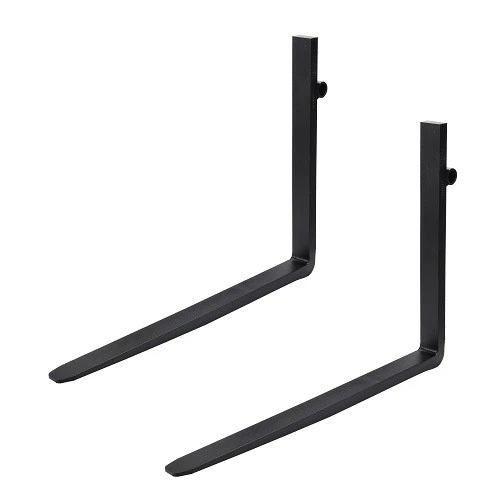
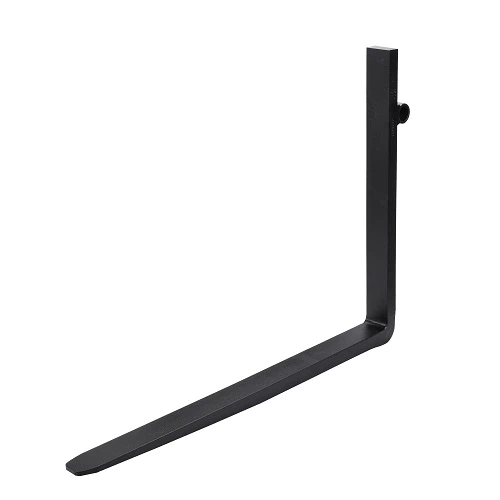
Now, let me tell you a bit about the products we offer as a Wheel Loader Forks supplier. We have a wide range of Wheel Loader Pallet Forks. These forks are designed to handle different types of pallets and loads with ease. Our Fork Attachments for Wheel Loaders are also top - notch. They can be easily attached to your existing wheel loader and provide additional functionality. And if you need replacement Loader Fork Tines, we've got you covered. Our tines are made from high - quality materials to ensure durability and long - lasting performance.
Whether you're a small - scale contractor or a large construction company, having the right wheel loader forks and knowing how to adjust their angles can make a huge difference in your productivity and safety.
If you're interested in our Wheel Loader Forks products or have any questions about fork angle adjustment, don't hesitate to reach out. We're here to help you find the perfect solution for your needs. Contact us to start a procurement discussion, and let's work together to get your wheel loader equipped with the best forks on the market.
References
- Construction Equipment Handbook
- Wheel Loader Operator's Manuals