



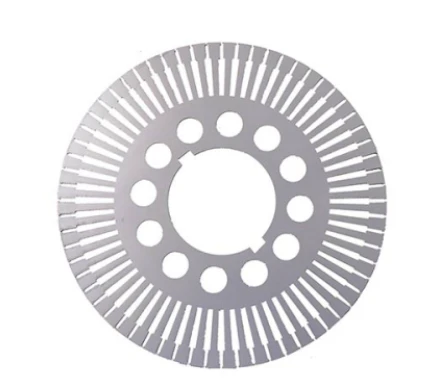

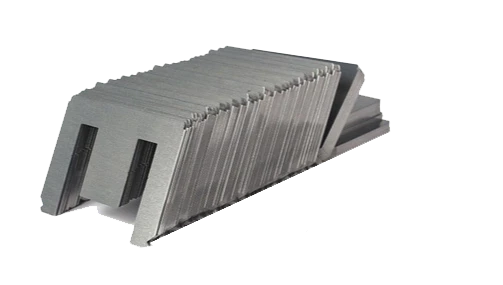
Silicon Steel Stamping
Silicon steel stamping is essentially a process that uses stamping machines and molds to shape silicon steel sheets into specific metal components. Silicon steel, a specialized electrical steel, primarily consists of iron and silicon, with silicon content typically ranging between 1% and 4.5%. This material stands out for its high magnetic permeability and low core loss, making it exceptionally suitable for manufacturing magnetic conductive parts in electromagnetic devices. The process transforms flat silicon steel sheets into precise geometries required for applications like motor cores and transformer laminations while maintaining strict dimensional accuracy.
The key advantage of silicon steel lies in its high magnetic permeability. This property allows the material to become easily magnetized and efficiently conduct magnetic fields, minimizing energy loss during operation. Adding silicon to steel increases its electrical resistivity, which directly reduces eddy current losses. Eddy currents refer to wasteful heat generation caused by circulating electrical currents within conductive materials exposed to alternating magnetic fields. By suppressing these losses, silicon steel ensures more energy remains dedicated to useful work rather than dissipating as heat. This characteristic proves critical for improving the efficiency of electrical equipment.
Silicon steel maintains stable performance even under alternating magnetic fields, making it ideal for high-frequency applications. Unlike ordinary steel, which might suffer from rapid magnetic degradation or excessive heating in dynamic environments, silicon steel retains its magnetic properties over extended periods. This stability ensures consistent performance in devices like high-speed motors or power transformers operating under fluctuating loads. Additionally, the material's mechanical properties support reliable processing through industrial methods like stamping and lamination without compromising structural integrity.
Another significant benefit of silicon steel is its adaptability to complex manufacturing processes. The material's ductility allows it to undergo high-speed stamping operations that produce intricate shapes with tight tolerances. Manufacturers can efficiently create layered components (e.g., stacked motor cores) by combining multiple stamped silicon steel pieces, ensuring both precision and cost-effectiveness. Compared to alternatives like brittle amorphous alloys or heavy conventional steels, silicon steel strikes an optimal balance between workability, magnetic performance, and durability. This combination makes it indispensable for modern electromagnetic systems prioritizing energy efficiency and miniaturization.
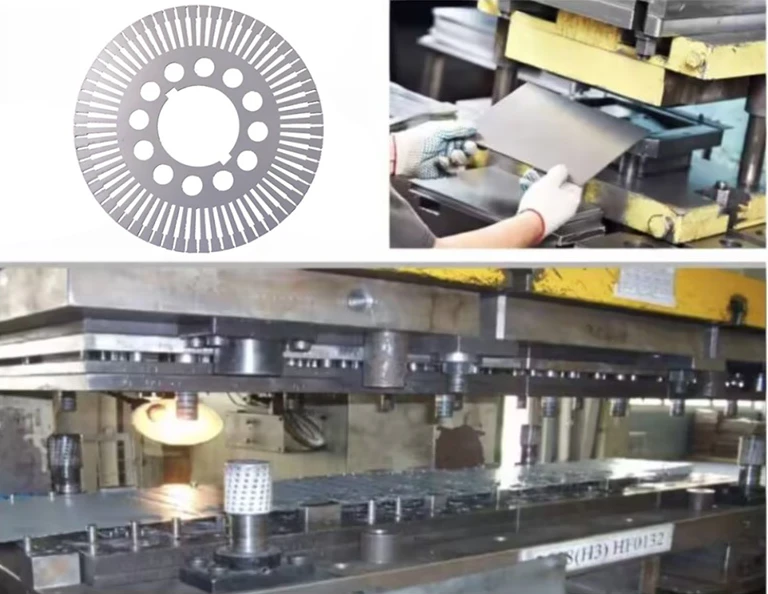
Drawing Design & Confirm
Get drawings from customers, or design drawings according to customers' detail requests or sample.
The two parties confirm the details of the drawings and product raw materials, surface treatment, etc.

Price & Order
Quote and confirm order quantity, specify all the details including trade terms, payment terms, type of package, etc.

Tooling Design & Manufacturing
Design and Make tooling according to the confirmed drawing, do the modification if needed while testing.

Sample Approval
Make first samples and inspect them according to the drawing strictly.
Send to the customer for approval after internal approval.
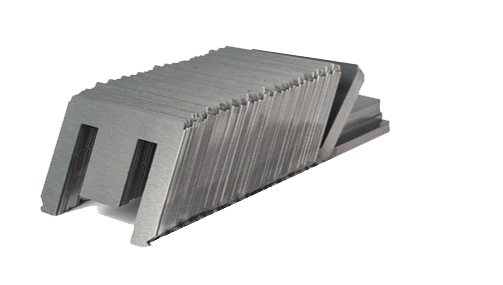
Production & Shipping
Strictly produce the goods as per the drawings and first samples.
Packed well after final inspection and ship to customers.


Why Choose Us
The core reason for choosing our silicon steel stamping over other materials lies in the unique physical and electromagnetic properties of silicon steel. Compared to stamped metal parts made from alternative materials, silicon steel offers critical advantages including high magnetic permeability, low core loss, easy stamping capability, and excellent stability. Its main disadvantage remains higher costs compared to ordinary steel. These characteristics make silicon steel irreplaceable in applications demanding precision and energy efficiency, particularly for electromagnetic devices requiring minimal energy waste and reliable long-term performance.
Ordinary low-carbon steel provides cost savings but suffers from significant limitations. While cheaper to produce, this material exhibits high core loss and low magnetic permeability. During operation, it generates excessive heat due to inefficient magnetic field conduction. These drawbacks directly impact equipment performance – motors using low-carbon steel components show reduced efficiency and shorter lifespans. The initial cost advantage quickly diminishes when accounting for higher energy consumption and frequent maintenance needs.
Non-crystalline alloys present another alternative with ultra-low core loss, but they face practical challenges. Despite their superior magnetic properties, these materials prove too brittle for standard stamping processes. Complex shaping often requires specialized equipment or secondary treatments, drastically increasing production costs. Additionally, amorphous alloys cost 3-5 times more than silicon steel while offering limited improvements in most industrial applications. This cost-performance imbalance restricts their use to niche high-frequency scenarios rather than mainstream manufacturing.
Our silicon steel stamping delivers unmatched efficiency by dramatically reducing energy waste. Tests confirm silicon steel components incur only one-third the energy losses of ordinary steel equivalents. The material's magnetic conductivity outperforms standard steel by over 100%, enabling stronger magnetic field transmission with less electrical input. For instance, devices using our stamped silicon steel parts require smaller currents to achieve equivalent magnetic field strength, cutting power consumption by 15-30% in typical applications. This combination of precision stamping compatibility and electromagnetic excellence establishes silicon steel as the optimal choice for modern energy-conscious industries. While marginally more expensive upfront, it ensures substantial long-term savings through enhanced durability and operational efficiency
Conclusion
Silicon steel stamping provides unmatched advantages for manufacturing electromagnetic components due to the material's unique properties. Silicon steel combines iron with 1-4.5% silicon, achieving high magnetic permeability and low energy loss. This allows efficient magnetic field conduction while minimizing wasteful heat generation. The material adapts well to precision stamping processes, enabling mass production of complex shapes like motor cores with tight tolerances. Unlike brittle alternatives such as amorphous alloys, silicon steel maintains structural integrity during high-speed stamping. Its stability under alternating magnetic fields ensures reliable performance in demanding applications like power transformers and high-frequency motors.
Ordinary low-carbon steel initially appears cost-effective but proves unsuitable for energy-sensitive applications. Though cheaper, it suffers from rapid energy loss and excessive heating due to poor magnetic conductivity. Devices using low-carbon steel components require more power and cooling systems, increasing long-term operational costs. Non-crystalline alloys offer lower core loss than silicon steel but remain impractical for most industrial uses. Their extreme brittleness complicates stamping, demanding specialized equipment and raising production expenses. Amorphous alloys also cost 3-5 times more than silicon steel while providing marginal performance gains outside niche high-frequency scenarios.
Our silicon steel stamping solutions deliver superior energy efficiency and cost-effectiveness over time. Tests show silicon steel reduces core losses by 66% compared to ordinary steel, directly cutting electricity consumption in devices like industrial motors. The material's magnetic conductivity doubles that of standard steel, allowing smaller currents to generate equivalent magnetic fields. A motor using our stamped silicon steel parts typically achieves 15-30% power savings without sacrificing output. While silicon steel costs slightly more upfront than low-carbon steel, it extends equipment lifespan and reduces maintenance needs. Factories adopting this material often recover the initial investment within 2-3 years through energy bill reductions. This balance of performance, durability, and efficiency makes silicon steel stamping indispensable for modern sustainable manufacturing.
Hot Tags: silicon steel stamping, China silicon steel stamping manufacturers, suppliers, factory, Sheet Metal Stamping Parts, Other Metal Parts, Stamping Hardware, Automotive Metal Stamping Parts, Precision Stamping Parts, Steel Copper Aluminum Stamping Parts
Previous
Tungsten StampingYou Might Also Like


Send Inquiry