
Forks offer greater stability than booms during lifting tasks. They handle heavy loads close to the ground effectively. This position keeps the machine's center of gravity low. Operators feel more confident moving dense materials like steel blocks or machinery parts. The forks distribute weight evenly across their tines. They prevent loads from swaying dangerously. This reduces the risk of tipping accidents significantly. Booms extend outward and upward, creating leverage forces. These forces challenge machine stability with heavy weights.
Forks provide superior precision for pallet operations. Workers slide them smoothly under standard pallet openings. They position goods accurately onto warehouse shelves or trucks. The simple vertical lifting motion allows fine control. Operators adjust fork height and tilt with small movements. Booms require more skill to position loads precisely. Their articulated arms introduce multiple pivot points. This complexity makes delicate placement harder to achieve. Forks excel at everyday material handling tasks near ground level.
Forks accept various attachments expanding their versatility. Workers easily swap standard forks for clamp arms or rotators. Clamp arms handle cylindrical loads like paper rolls securely. Rotators turn materials like drums into perfect positions. Special fork extensions carry oversized pallets safely. These quick changes adapt the machine to different jobs rapidly. Booms primarily lift objects via hooks or platforms. They lack this quick adaptability for diverse cargo types. Attaching tools to boom tips often takes more time and effort.
Forks simplify operator training and daily use. New operators learn basic fork functions quickly. The controls involve straightforward lift, lower, and tilt actions. Maintenance crews service fork mechanisms more easily. Replacing worn fork tines costs less than repairing complex booms. Hydraulic systems for forks face lower stress levels. Booms involve intricate hydraulic circuits and joints. These demand advanced troubleshooting skills. Forks deliver reliable performance with minimal downtime. They keep operations running smoothly in busy warehouses or yards.
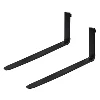
ITA Class III Forklift forks are essential components for medium-sized forklifts, commonly found in warehouses, logistics centers, factories, and retail stores. Designed to meet international standards, they ensure safe and efficient handling of medium-weight items such as pallets, boxes, and machinery.
Constructed from high-strength alloy steel, these forks feature a hardened surface that resists wear and bending, even under frequent use.
Whether for routine warehouse tasks or demanding industrial operations, ITA Class III Forklift forks offer reliable performance and exceptional durability. They are an indispensable tool for improving efficiency and productivity.