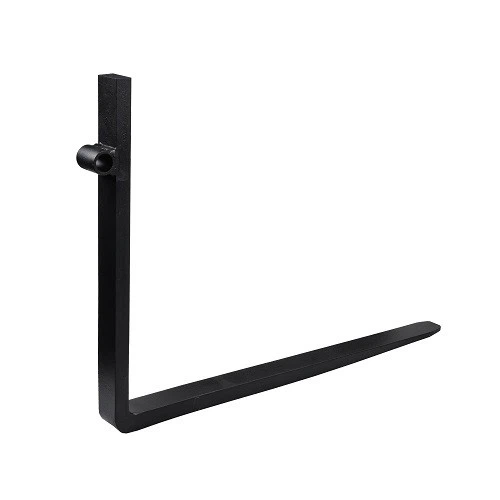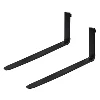

Double forklifts, also known as twin-fork forklifts, feature a unique design with two separate sets of forks mounted parallel to each other. These forks operate independently or synchronously, enabling the handling of multiple pallets or oversized loads in a single lift. Unlike conventional forklifts, the dual forks can adjust their spacing horizontally to accommodate varying cargo widths, such as non-standard pallets, long metal beams, or bulky industrial materials. This adaptability reduces the need for manual repositioning and significantly enhances operational efficiency in environments requiring frequent load adjustments.
The forks are engineered for precision and durability, often constructed from high-strength alloy steel to withstand heavy loads and repetitive stress. Advanced models incorporate hydraulic or electric systems to control fork movement, allowing operators to tilt, lift, or shift each fork individually. This dual-control mechanism ensures stability when transporting irregularly shaped items, preventing slippage or imbalance. Additionally, some designs include sensors to detect load distribution, further optimizing safety during complex maneuvers.
Applications span industries like manufacturing, warehousing, and construction. In automotive assembly lines, dual forks streamline the simultaneous transport of paired components, such as engines and transmissions, maintaining production rhythm. Logistics centers utilize them to move double-stacked pallets in narrow aisles, minimizing aisle congestion. For construction sites, the ability to handle oversized materials-steel girders, concrete panels, or piping-reduces reliance on cranes for minor lifts, cutting downtime and costs.
Maintenance of dual forks demands attention to alignment and wear. Misaligned forks may cause uneven stress distribution, leading to premature equipment failure. Regular lubrication of sliding mechanisms and inspection of hydraulic lines are critical. Emerging trends include smart forks embedded with IoT sensors to monitor load weight, fork angle, and structural integrity in real time, integrating with fleet management systems. As automation grows, hybrid models combining dual forks with autonomous navigation are redefining material handling in high-demand sectors like e-commerce fulfillment centers.
Skid Steers Forks